




On this page13 sections
- Overview
- Flying from Kuala Lumpur to Makassar
- Sultan Hasanuddin Airport to Makassar
- Where to stay in Makassar
- Things to do in Makassar
- Makassar dishes worth seeking out
- Halal food and prayer spaces
- Getting around the city
- A practical four-day itinerary
- Money, SIM cards and practical tips
- Day trip to Rammang-Rammang
- Before you go
- FAQ
Makassar is South Sulawesi’s energetic gateway, shaped by maritime trade, Bugis and Makassarese culture, and a serious appetite for seafood. Malaysian travellers will find the city pleasantly familiar but distinct: most food is halal, prices are manageable, and direct flights from KLIA make a short break practical. Spend time around Fort Rotterdam and Losari waterfront, then venture beyond the city to the limestone towers and waterways of Rammang-Rammang. This guide covers terminals at KLIA, airport transfers, sensible places to stay, essential local dishes, daily costs and the entry steps Malaysians need to complete before flying.
Flying from Kuala Lumpur to Makassar
AirAsia and Malaysia Airlines fly direct from Kuala Lumpur International Airport to Makassar’s Sultan Hasanuddin International Airport (UPG) as of September 2026. AirAsia normally uses KLIA Terminal 2, while Malaysia Airlines uses KLIA Terminal 1. Check the terminal again in your booking or airline app because operational changes can happen. A direct flight takes roughly three hours and 20 minutes, and Makassar keeps the same time as Malaysia.
Our fare scan updated on 22 September 2026 shows AirAsia one-way fares from RM 401 for travel on 24 February 2027, with no stop. The median one-way fare found was RM 439. A one-stop option through Jakarta appeared from RM 680 one-way, but it saves neither time nor money at that price.
Allow extra room in your budget for checked baggage, meals and seat selection on a low-cost ticket. Makassar is popular during Indonesian holidays, Hari Raya periods and school breaks, so book earlier if your dates are fixed.
Sultan Hasanuddin Airport to Makassar
Sultan Hasanuddin International Airport sits northeast of central Makassar. Traffic determines the journey: allow about 35 to 60 minutes for Losari or the city centre, and longer during the weekday rush or heavy rain. For conversion, IDR 10,000 is roughly RM 2.60, although exchange rates move.
- Airport bus: DAMRI buses are normally the cheapest practical choice, with fares around IDR 30,000 to IDR 50,000 (RM 8 to RM 13). Routes and frequency can change, so confirm the current city stop at the official counter before boarding. It may not suit a late arrival.
- Ride-hailing: Grab and Gojek operate in Makassar. A car to central districts commonly costs around IDR 90,000 to IDR 150,000 (RM 24 to RM 40), depending on demand, tolls and pickup arrangements. Follow signs or app instructions to the designated meeting area.
- Airport taxi: use an official counter or clearly marked rank. Expect roughly IDR 120,000 to IDR 200,000 (RM 32 to RM 53) to central Makassar.
Keep your accommodation name and address ready in the app, as similar street and hotel names can cause confusion.
Where to stay in Makassar
Losari and Ujung Pandang are the most convenient choices for a first visit. You can reach the waterfront, Fort Rotterdam, restaurants and sunset snack stalls without spending much time in traffic. The promenade becomes busy in the evening, so request a room away from the road if you sleep lightly.
Panakkukang suits shoppers, families and travellers who prefer modern malls, chain restaurants and easy ride-hailing. It is farther from the historic waterfront, but everyday facilities are plentiful. Traffic can make cross-city trips slow at peak times.
The Fort Rotterdam and Chinatown side of central Makassar works well for history, street photography and access to the old commercial quarter. Choose a well-reviewed property on a well-lit street, especially if you plan to return late.
Tanjung Bunga, south of Losari, offers newer developments, malls and space for families. It is useful if your plans focus on the southern side of the city, though less atmospheric for a short cultural visit. Indicative nightly rates start around RM 60 to RM 110 for a simple room and RM 150 to RM 280 for comfortable mid-range accommodation.
Things to do in Makassar
- Fort Rotterdam: Explore the preserved colonial fort and learn how Makassar’s strategic port connected Sulawesi with the wider archipelago. Museum access and individual buildings can follow different schedules.
- Losari waterfront: Join local families for the late-afternoon breeze, harbour views and a glowing western sky. It is a promenade rather than a swimming beach.
- Paotere Harbour: See traditional wooden pinisi vessels and the working side of Makassar’s maritime economy. Go in daylight, dress modestly and ask before photographing workers closely.
- Somba Opu Street: Browse gold shops and stalls selling South Sulawesi snacks, coffee, textiles and souvenirs.
- Amirul Mukminin Mosque: View Makassar’s distinctive waterfront mosque respectfully, avoiding prayer times if you only want to look around.
- La Galigo Museum: Visit the museum complex within Fort Rotterdam for regional history and Bugis-Makassarese culture. Confirm opening conditions locally.
- Akkarena area: Head south for another sunset perspective and casual family recreation.
- Samalona Island: Arrange a weather-dependent boat trip for swimming or snorkelling, agreeing on the return time, equipment and full boat price first.
- Bantimurung: Make a longer outing toward Maros for limestone scenery, waterfalls and butterfly habitats.
Makassar dishes worth seeking out
Makassar is one of Indonesia’s great eating cities, particularly if you enjoy rich beef soups, grilled ribs and seafood. Coto Makassar is the signature bowl: beef and offal in a deeply spiced broth, usually served with compact rice cakes called ketupat. Pallubasa is similarly hearty but has its own roasted coconut character. Ask about the cuts included if you prefer meat without offal.
Konro appears as dark beef-rib soup or konro bakar, grilled ribs coated with a sweet, savoury sauce. Sop saudara combines beef, vermicelli and potato cakes in a filling soup. Mie titi consists of crisp noodles under thick gravy, while ikan bakar and prawns show the city’s connection to the sea.
Around Losari, try pisang epe, flattened grilled banana with palm-sugar sauce. Barongko is a soft banana parcel, and local coffee makes a good finish.
For seafood, choose busy family restaurants or established stalls where prices are displayed. Confirm whether the quote is per portion, per 100 grams or per kilogram before ordering fish, crab or prawns. A local meal commonly costs IDR 25,000 to IDR 60,000 (RM 7 to RM 16), with seafood costing more.
Halal food and prayer spaces
Makassar is Muslim-majority, so halal meals and places to pray are generally easy to find. Most traditional coto, konro, pallubasa, grilled fish and rice restaurants serve Muslim customers, but certification is not universal. If formal assurance matters to you, look for Indonesia’s official halal logo or ask whether the business is Muslim-owned. Mall restaurants are more likely to display clear halal information.
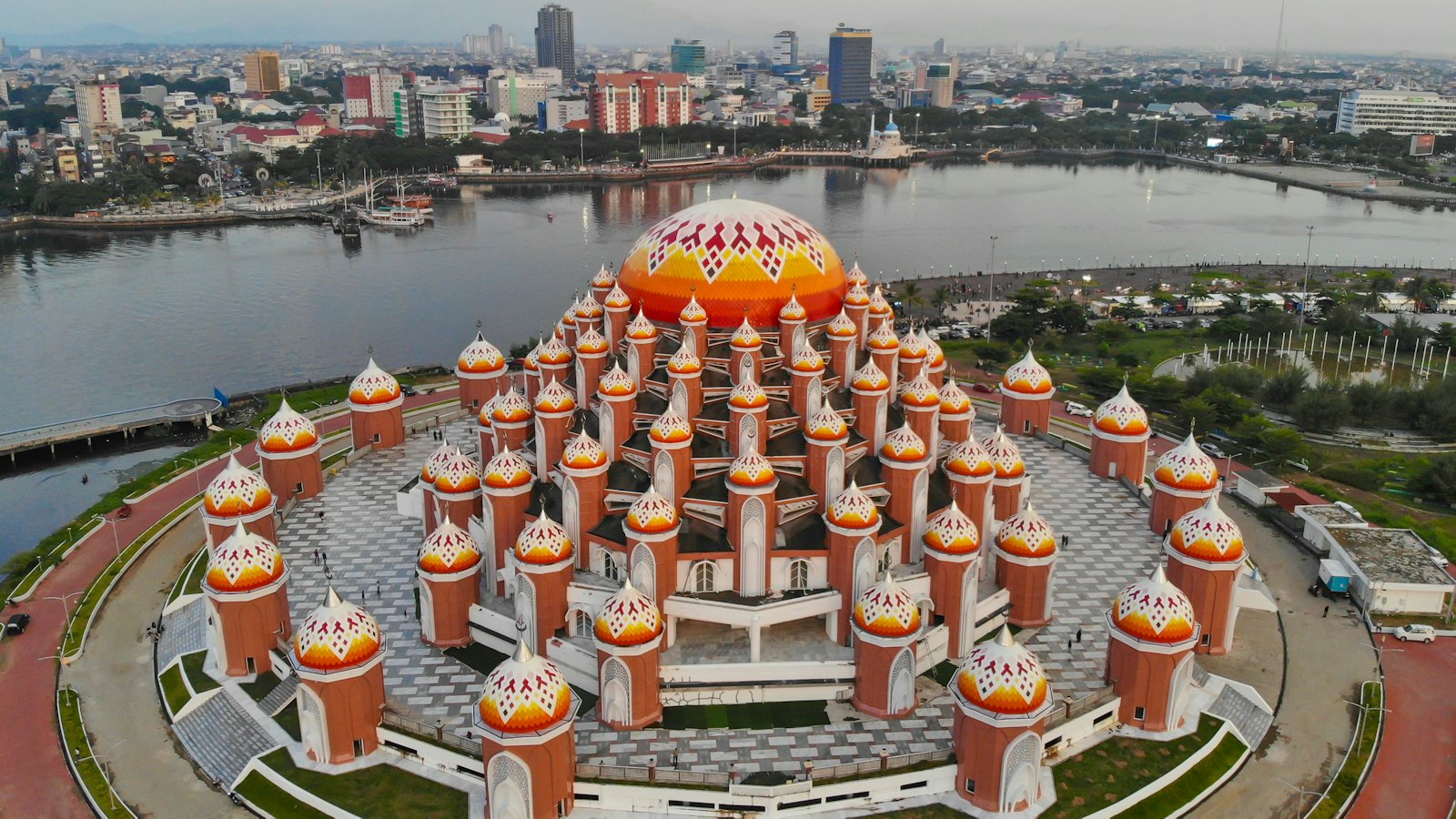
Masjid 99 Kubah near the waterfront and the floating Amirul Mukminin Mosque are prominent places of worship. Numerous neighbourhood mosques provide convenient prayer stops, while large malls commonly have a musolla. Sultan Hasanuddin Airport also provides prayer facilities; follow the terminal signs and allow time for security and the walk to your gate.
Pork is uncommon in mainstream Makassarese restaurants, but it is still sensible to check sauces and shared kitchens at Chinese, international or alcohol-serving venues. Useful phrases include “halal?” and “tidak pakai babi”, meaning no pork. Google Maps, Grab and Indonesia-focused halal directories can help, but recent reviews and visible certification are stronger evidence than an old app label.
Getting around the city
Grab and Gojek are the easiest transport choices for most Malaysian visitors. Both offer motorcycle rides and cars, with the fare shown before confirmation. Short car trips often cost around IDR 20,000 to IDR 50,000 (RM 5 to RM 13), while motorcycles cost less and can move through traffic faster. Wear the supplied helmet and avoid carrying loose bags on a motorcycle.
Makassar also has pete-pete, small shared minibuses following local routes. They are cheap, commonly only several thousand rupiah, but routes are difficult for newcomers to interpret and vehicles may not be comfortable with luggage. The city has no tourist-friendly urban rail system or universal visitor transit card, so most short-stay travellers combine ride-hailing with walking.
Use official taxis or reputable app bookings, and ask for the meter if taking a street taxi. Central sights around Fort Rotterdam, Somba Opu Street and parts of Losari can be linked on foot, but pavements are uneven and road crossings require care. Build spare time into every cross-city trip. Congestion around commercial districts can turn a modest distance into a long ride, particularly near evening rush hour.
A practical four-day itinerary
- Day 1: Check in around Losari, walk the waterfront in the cooler late afternoon and visit the Amirul Mukminin Mosque area. Stay for sunset, then begin your Makassar makan list with grilled fish or coto and pisang epe.
- Day 2: Start at Fort Rotterdam and the La Galigo Museum, then browse Somba Opu Street. Continue to Paotere Harbour in daylight to see the pinisi boats. Return to central Makassar for konro bakar and an easy evening.
- Day 3: Leave early for a guided or pre-arranged trip to Rammang-Rammang near Maros. Combine its karst landscape and waterways with nearby countryside, allowing most of the day. Confirm what the quoted transport price includes before departure.
- Day 4: Choose Samalona Island if the sea and weather are suitable, or keep the day on land with a trip toward Bantimurung. Families wanting a lighter schedule can spend the morning shopping in Panakkukang or Tanjung Bunga before heading to the airport.
Three days are enough for the city plus one major excursion. Four days provide useful flexibility for rain, traffic and a slower final day.
Money, SIM cards and practical tips
Indonesia uses the rupiah (IDR). A workable mental estimate is IDR 10,000 to about RM 2.60, but check the current rate before exchanging money. Carry smaller notes for stalls, local transport and modest purchases. Cards are accepted in malls and larger restaurants, while cash remains useful in markets and villages. Malaysian DuitNow QR should not be treated as universally available, even where a merchant displays Indonesia’s QRIS code; keep a card and cash as backups.
Local prepaid SIMs and travel eSIMs are widely available. Check coverage outside Makassar if visiting Maros or more rural areas, and arrange data before relying on ride-hailing. Indonesia uses Type C and Type F plugs at 230V, so Malaysia’s Type G plug needs an adaptor.
Tipping is optional. Round up for good service or leave a modest amount when no service charge appears. Watch belongings in crowds, use hotel safes and keep phones away from the road edge. Reject unofficial airport transport approaches, confirm seafood pricing by weight, and agree on boat costs before setting off. Tap water is not for drinking; use sealed or properly filtered water.
Day trip to Rammang-Rammang
Rammang-Rammang is the standout excursion from Makassar, offering limestone towers, rivers, rice fields and village scenery in the Maros karst region. It usually takes around one to two hours each way by car, depending on traffic and your starting point. An early departure gives you cooler conditions and more time before afternoon rain.
The visit commonly involves a local boat journey from the jetty followed by walking through the settlement and surrounding landscape. Surfaces can be muddy or slippery, so wear shoes with grip and bring sun protection, insect repellent and drinking water. Cash is useful for boats, local access charges, snacks and small community purchases.
Ride-hailing may get you there, but securing a return car can be less predictable. A private driver or organised day trip is simpler for a group. Before leaving Makassar, agree on the vehicle, waiting time, parking, boat fare and any entrance costs. Prices vary with group size and route, so treat online quotations as indicative. Keep noise low, ask before photographing residents and carry your rubbish back.
Before you go
- Best time to go
- The most comfortable period for Makassar is generally June to September, when conditions tend to be drier and outdoor plans are easier. The city stays hot and humid throughout the year, commonly feeling warm even after sunset. Rain is usually more disruptive from around November to April, although showers can occur in any month and seasonal patterns are not exact. July and August can bring stronger demand, while Malaysian and Indonesian school holidays, Hari Raya periods and long weekends may raise flight and room prices. For Rammang-Rammang or island trips, start early and keep a weather backup. Lightweight clothing, sun protection and a compact rain layer are useful in every season.
- Visa for Malaysians
- As of September 2026, Malaysian passport holders can visit Indonesia visa-free for up to 30 days, free of charge, and the stay cannot be extended or changed to another permit. Your passport needs at least six months of validity from arrival, and immigration can ask for a return or onward ticket. Complete the free All Indonesia arrival declaration at allindonesia.imigrasi.go.id or through its official app within three days before landing, then save the QR code. It combines immigration, customs and health information. If you enter through another Indonesian airport, immigration is completed there before your domestic connection to Makassar. Arrange the correct visa in advance through evisa.imigrasi.go.id if staying longer. Confirm current requirements on imigrasi.go.id before you fly.
- Honest budget guide
- Budget around RM 140 to RM 300 per person per day in Makassar, excluding flights and major private excursions. One-way fares from Kuala Lumpur start at about RM 401 on AirAsia, with a median of RM 439 in the latest scan. A simple room commonly costs RM 60 to RM 110 per night, while comfortable mid-range accommodation is roughly RM 150 to RM 280. Allow RM 35 to RM 80 per person daily for food and RM 15 to RM 45 for city transport. A four-day trip for two people can total roughly RM 2,300 to RM 4,000 including return flights, a shared room, meals and local rides, but excluding shopping and a private Rammang-Rammang tour. All figures are indicative.
Frequently asked questions
Do Malaysians need a visa for Makassar?
No. As of September 2026, Malaysian passport holders can enter Indonesia visa-free for tourism for up to 30 days. The stay is free but cannot be extended or converted. Your passport needs at least six months of validity, and you should carry proof of onward or return travel. Complete the free All Indonesia declaration within three days before arrival and confirm the latest position on Indonesia’s official immigration website.
Is there a direct flight from Kuala Lumpur to Makassar?
Yes. AirAsia and Malaysia Airlines fly direct from KLIA to Sultan Hasanuddin International Airport as of September 2026. The flight takes roughly three hours and 20 minutes. AirAsia normally departs from KLIA Terminal 2, while Malaysia Airlines uses Terminal 1. Check your booking on departure day. One-way AirAsia fares in the latest fare scan started around RM 401.
Is Makassar Muslim-friendly?
Yes. Makassar is Muslim-majority, mosques are widespread and most traditional Makassarese dishes are readily available in halal settings. Formal certification is not displayed everywhere, so look for Indonesia’s official halal logo or ask whether a restaurant is Muslim-owned when assurance matters. Large malls, the airport and major mosques provide convenient prayer facilities.
How many days are enough for Makassar?
Three days cover the waterfront, Fort Rotterdam, local food and one substantial excursion. Four days are better if you want Rammang-Rammang plus an island, Bantimurung or a relaxed shopping day. Traffic and weather can affect plans, so avoid packing a distant day trip and your departing flight into the same day.
What is the best month to visit Makassar?
June to September is generally the easier period for sightseeing because rainfall tends to be lower. July and August can be busier, so June or September often provides a useful balance. Makassar remains hot and humid throughout the year. For Rammang-Rammang and boat outings, begin early and check local weather conditions regardless of month.
How much money do I need for four days in Makassar?
For two people sharing a room, roughly RM 2,300 to RM 4,000 can cover return flights from Kuala Lumpur, three nights, local meals and routine city transport. Private drivers, Rammang-Rammang arrangements, island boats and shopping add to that figure. Carry some rupiah because small food stalls, village operators and local fees may be cash-only.
Can I use Grab in Makassar?
Yes. Grab operates in Makassar, and Gojek is another widely used option. Both offer cars and motorcycle rides, with prices displayed in the app. A short car journey often costs around IDR 20,000 to IDR 50,000. At the airport, follow the app’s directions to the designated pickup area and allow for tolls or demand-based pricing.
Is Rammang-Rammang worth visiting from Makassar?
Yes, particularly if you enjoy landscapes and quiet rural travel. Its limestone formations, waterways and rice fields feel very different from central Makassar. Set aside most of a day and leave early. A hired driver is more dependable than relying on a return ride-hailing pickup. Confirm whether the quoted price covers waiting, parking, boat transport and access charges.
Jom pergi
Ready to go Makassar? Compare available flights and hotels for your dates. Check baggage, cancellation terms and the final total on the booking provider before paying.






