




On this page12 sections
- Overview
- Flying from Kuala Lumpur and continuing to Sapa
- Choosing a transfer from Noi Bai Airport
- Where to stay in Sapa: the most practical areas
- Things to do in Sapa in changing weather
- Mountain dishes and everyday food choices
- Managing halal meals and daily prayers
- Local transport, walking and trekking safety
- A weather-aware four-day itinerary
- Cash, connectivity and practical precautions
- Before you go
- FAQ
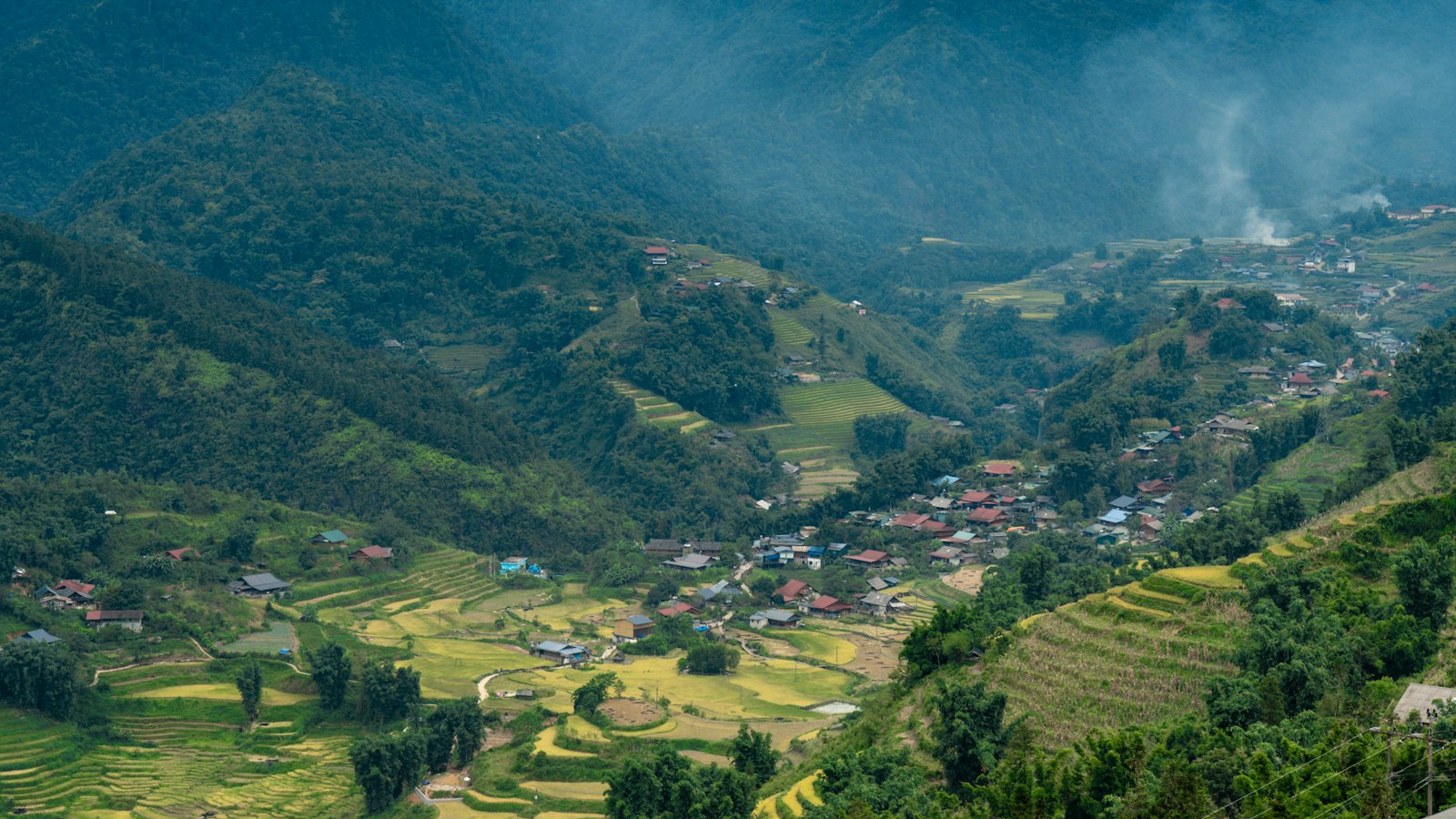
Sapa reveals a highland side of Vietnam shaped by steep rice terraces, ethnic minority villages, shifting clouds and temperatures far cooler than Malaysia. Reaching it requires two stages because the town has no airport. Travellers first fly from KLIA to Hanoi, then spend about five to six hours travelling north by road, or take a night train to Lao Cai before climbing to Sapa. This guide explains the journey, suitable neighbourhoods, seasonal weather, trekking options, halal challenges and realistic expenses, helping Malaysians plan for mountain conditions that can change several times in one day.
Flying from Kuala Lumpur and continuing to Sapa
Begin with a flight from Kuala Lumpur to Noi Bai International Airport in Hanoi, identified by the code HAN. A nonstop journey normally lasts slightly more than three hours. Sapa itself has no commercial airport.
In September 2026, direct services on this route are offered by AirAsia, Batik Air Malaysia, Malaysia Airlines, VietJet Air and Vietnam Airlines. Check the terminal shown in your reservation shortly before departure because KLIA terminal assignments differ between carriers and may be revised.
Our fare search found an AirAsia ticket for RM 317 one way on 10 January 2027. It was a nonstop flight, while the median one-way result in the same search was RM 347. AirAsia and Batik Air both appeared among the results. Treat these as basic fares because luggage, preferred seats and onboard food may add to the final amount.
After landing, the road trip to Sapa generally needs five to six hours. Travellers who prefer rail can enter Hanoi, take a night train to Lao Cai and finish the ascent by taxi or minivan.
Choosing a transfer from Noi Bai Airport
Several transport types connect the Hanoi area with Sapa, and convenience depends on your arrival time, group size and tolerance for overnight travel. The ringgit estimates here use an approximate conversion of RM 1 to 6,000 Vietnamese dong.
- Airport bus or limousine van: Expect five to six hours on the road, normally with a rest break. A seat is commonly priced between 300,000 and 500,000 dong, approximately RM 50 to RM 85. Ask whether the service reaches central Sapa and includes your hotel.
- Sleeper or private-cabin coach: Typical prices range from 250,000 to 450,000 dong, or about RM 40 to RM 75. Berths recline deeply or lie flat, although legroom can be uncomfortable for taller passengers.
- Chartered car: A vehicle usually costs 2,800,000 to 4,500,000 dong, equal to roughly RM 470 to RM 750. It becomes attractive when the fare is divided among a family or four travellers.
- Train through Lao Cai: First reach central Hanoi, then spend close to eight hours on the railway. Cabins are generally 500,000 to 1,200,000 dong, or RM 85 to RM 200. The onward climb costs about 60,000 to 500,000 dong, or RM 10 to RM 85.
Leave substantial spare time before any outbound international flight because traffic, rain and mountain fog may delay the return.
Where to stay in Sapa: the most practical areas
Although Sapa's centre covers a modest area, steep gradients make accommodation location important. A hotel that looks nearby on a map may require a tiring uphill walk, especially with children, suitcases or a stroller. Inspect recent guest photos and ask about vehicle access.
- Sapa Lake and the town centre: A practical base for newcomers, families and visitors using coach services. Food, shops and ticket counters are nearby, but street noise can continue into the evening.
- Stone church and central square: Choose this zone for easy access to tour departures, evening activity and the railway leading towards Fansipan. Request a rear-facing room if noise is a concern.
- Muong Hoa Road: Hotels here often combine valley scenery with reasonable access to town. Properties lower down the slope feel calmer, although the return walk is strenuous. Ask if a complimentary shuttle operates.
- Ta Van and Muong Hoa Valley: These places suit guests seeking homestays, rural mornings and more time among the terraces. Dining choices are fewer, and transport becomes limited after sunset.
Cat Cat is convenient for sightseeing, but its steep approach is awkward for limited mobility. Simple rooms often cost RM 70 to RM 130, while comfortable mid-range properties are commonly RM 160 to RM 350 nightly.
Things to do in Sapa in changing weather
Cloud can hide a viewpoint within minutes, so reserve at least one flexible half-day instead of fixing every outdoor activity to a rigid schedule.
- Fansipan: Combine the mountain railway, cable car and either steps or the upper funiculars to approach Vietnam's highest summit. Carry warm clothing because conditions above can be dramatically colder than in Sapa.
- Muong Hoa Valley: Trek between terraces and settlements with a local guide who can select a safe route for the day's weather.
- Cat Cat Village: Take the developed downhill circuit past scenery, cultural presentations and handicraft stalls, remembering that the return is steep.
- Lao Chai and Ta Van: Spend time in the valley communities or arrange a homestay rather than treating them as a hurried photo stop.
- Ham Rong Mountain: Follow landscaped uphill paths for elevated views when the clouds lift.
- Stone church and square: Come after sunset to see one of the town's main gathering places.
- O Quy Ho Pass: Arrange a car or guided motorbike outing for waterfalls, high roads and broad mountain outlooks.
- Bac Ha: Consider the long excursion for countryside scenery and its famous market, confirming the operating day locally.
Use locally employed guides for village visits, and obtain permission before taking close photographs of residents.
Mountain dishes and everyday food choices
The cool highland climate favours warming meals, grilled ingredients and robust vegetables. Sapa's cooking therefore feels different from the lighter coastal Vietnamese food familiar to many Malaysian visitors.
Salmon and sturgeon hotpot are local specialities made with cold-water farmed fish, mushrooms, noodles, greens and a sharp broth. Muslim diners should confirm that neither pork nor cooking wine has entered the soup base. Com lam, which is sticky rice prepared inside bamboo, can be a convenient meat-free snack when ordered plain. Evening vendors also sell corn, sweet potatoes, eggs and vegetable skewers.
Distinctive regional foods include black chicken, preserved buffalo meat and thang co. The last is a powerful traditional stew often containing horse meat and offal, so ask what is inside every unfamiliar pot. Pho and bun are widely available at breakfast, but their broths frequently use meat that is not halal.
The centre offers the widest mix of Vietnamese and international restaurants. Homestays commonly provide one shared set meal, making advance notice of dietary needs essential. Vegetarian guests should also question the use of fish sauce, animal stock and common utensils.
Managing halal meals and daily prayers
Muslim visitors need to prepare carefully because certified halal dining is difficult to find in Sapa. Pork, lard, alcohol and animal stock are routine kitchen ingredients, while vegetarian, seafood and no-pork descriptions do not prove halal handling.
Contact a hotel or trekking operator before paying and ask whether staff can cook plain fish, vegetables or eggs without rice wine, pork products or meat broth. Separate pans and utensils should be requested clearly. A Vietnamese translation card can reduce misunderstandings, while sealed snacks and instant food provide useful insurance. Fresh fruit, packaged goods, steamed rice and boiled eggs are possible fallbacks. Recent listings on Zabihah or Google Maps may help with research, but call the business because management and certification can change.
Sapa does not have a prominent tourist-oriented mosque in its centre. Most Muslim travellers will need to pray in their room or request a clean private area from their host. Pack a small prayer mat and save qibla directions offline for coaches and trails. At Noi Bai Airport, ask an information desk about an appropriate quiet location because a dedicated prayer room may not be accessible from every part of the terminals.
Local transport, walking and trekking safety
Walking works well for central sights, but Sapa's gradients, uneven paving and rain-slick steps demand shoes with dependable grip. On narrow rural paths, a lightweight raincoat is usually easier to manage than an umbrella.
Hotels and transport desks can summon local taxis. A brief journey often comes to 50,000 to 150,000 dong, approximately RM 8 to RM 25. Longer valley trips depend on mileage and driver waiting time. Before departure, establish whether the meter will be used or settle the complete charge. Grab sometimes displays cars or motorbikes locally, but supply is far less consistent than in Hanoi. Do not make it your only option for dawn departures or isolated homestays.
Daily motorbike hire is frequently 120,000 to 250,000 dong, equivalent to around RM 20 to RM 42, excluding fuel. Fog, sharp inclines and wet surfaces make a professional driver the wiser choice for anyone lacking mountain experience. Verify that both your licence and insurance permit riding in Vietnam.
A guide adds real value when rain turns trekking routes into mud and markers become hard to follow. For Fansipan, O Quy Ho Pass or scattered attractions, groups may prefer a reserved van or car. Sapa has neither an urban travel card nor a comprehensive city bus system like Hanoi.
A weather-aware four-day itinerary
- Day 1: Take a nonstop flight from KLIA to Hanoi, then board an afternoon or evening transfer to Sapa. After checking in near the centre, stroll around the church and square before resting. If your plane lands late, stay in Hanoi and leave the following morning instead of forcing a tight connection.
- Day 2: Join a locally guided walk through Lao Chai and Ta Van. Match the distance to fitness, rainfall and trail quality. Pause for lunch in the valley, then return to town or remain overnight at a homestay.
- Day 3: Attempt Fansipan early if the visibility forecast is promising. When dense cloud is expected, exchange it with another day's activity. Use the afternoon for Ham Rong Mountain, Sapa Lake or the central market streets.
- Day 4: Head towards O Quy Ho Pass for a short outing, or return to a viewpoint previously obscured by mist. Travel back to Hanoi with ample contingency time. An overnight stay there is sensible before an early flight abroad.
Three complete days can cover the principal attractions, but four allow a more relaxed visit and make weather-related changes easier.
Cash, connectivity and practical precautions
Vietnam's currency is the dong, abbreviated VND. Using RM 1 as approximately 6,000 dong is convenient for rough mental arithmetic, although the actual exchange rate should be checked before travelling. Bring smaller cash notes for rural meals, guides, local shops and transport. Cards are more readily accepted at major hotels and cable-car facilities, sometimes with an added fee. DuitNow QR from Malaysia generally cannot substitute for Vietnam's local QR payment networks.
Tourist SIM cards and eSIM plans are readily available for unlocked devices. Reception is ordinarily sufficient within town but may fade between mountains or inside valleys. Store offline maps, reservations and Vietnamese translation phrases before starting a trek.
Vietnam operates on 220V, and sockets commonly accommodate plug Types A, C and F. Carrying a universal adaptor avoids uncertainty. Tips are voluntary, though a small amount or rounded bill is welcomed after particularly helpful service.
Visitors should watch for unofficial excursion sellers, excessive taxi offers and claims that an admission payment automatically provides a guide. Secure valuables during coach journeys. Mist can sharply reduce road visibility, and rainfall makes clay tracks and stone stairs hazardous. Avoid solo hiking after nightfall and tell your accommodation which route you intend to follow.
Before you go
- Best time to go
- March through May and the period from late September to November usually offer Sapa's most agreeable trekking conditions. Spring often combines mild air, blossoms and intermittent mist. Autumn tends to provide cooler temperatures and less rain underfoot. Summer terraces are generally green, while golden fields appear near harvest, with the exact dates varying by altitude and annual weather. June, July and August bring greater humidity, frequent downpours, slippery tracks and occasional disruption on mountain roads. From December through February, Sapa can become genuinely cold, with dense fog and sometimes ice on higher ground. Malaysians should pack insulating layers, not merely a thin cardigan. Demand increases over weekends, Vietnamese public holidays and Malaysian school breaks, so reserve rooms and transport earlier for those periods. Whatever the month, retain some flexibility because the mountains can remain hidden even during a normally favourable season.
- Visa for Malaysians
- Malaysian citizens may enter Vietnam without obtaining a visa for visits lasting no more than 30 days per trip, based on the rules in September 2026. Anyone planning a longer visit must apply through the official e-visa website at evisa.gov.vn. An e-visa can cover as many as 90 days and costs US$25 for one entry or US$50 for multiple entries. Avoid lookalike commercial application sites. Foreign passengers landing at a Vietnamese airport must also follow the current arrival declaration process at prearrival.immigration.gov.vn. The system accepts an arrival date of either the current day or one of the next two days. Travellers may alternatively use the QR code or paper method supplied upon arrival, then show the resulting QR code to immigration. Ensure the passport has at least six months of validity and retain evidence of onward or return travel. Since procedures may be revised, verify them with the Vietnamese embassy and official portal shortly before departure.
- Honest budget guide
- A sensible daily allowance for Sapa is RM 180 to RM 450 per traveller, before flights and the intercity journey from Hanoi. Our current search located a one-way Kuala Lumpur to Hanoi fare of RM 317, with RM 347 representing the median one-way result. Optional meals and checked luggage can increase those prices. Basic accommodation often falls between RM 70 and RM 130 for a room, whereas a comfortable mid-range room generally costs RM 160 to RM 350. Plan around RM 45 to RM 100 per person each day for meals. A shared coach between Hanoi or its airport and Sapa is approximately RM 40 to RM 85 in each direction, depending on service type. Fansipan tickets, privately guided walks and exclusive vehicles can lift spending considerably. For four days, an overall estimate of RM 1,500 to RM 2,800 per person can cover flights, shared ground transport, lodging and moderate activities. Final expenditure varies with weather, baggage choices and whether accommodation is shared.
Frequently asked questions
Do Malaysians require a visa to visit Sapa?
Malaysian passport holders may stay in Vietnam visa-free for up to 30 days per trip under the rules applicable in September 2026. An ordinary Sapa visit needs no additional regional permit, although attractions and individual villages can collect admission charges. For a longer stay, apply through Vietnam's official e-visa portal and recheck the latest arrival declaration procedure before flying.
Can I fly straight from Kuala Lumpur to Sapa?
No, because Sapa does not have an airport. As of September 2026, nonstop Kuala Lumpur to Hanoi flights are operated by AirAsia, Batik Air Malaysia, Malaysia Airlines, VietJet Air and Vietnam Airlines. Once at Noi Bai Airport, travellers normally reach Sapa by coach, shared van or hired car in approximately five to six hours.
What is the easiest way from Hanoi Airport to Sapa?
For most visitors, an airport coach or shared limousine van is the simplest arrangement. The ride usually lasts five to six hours, and seats are typically 300,000 to 500,000 dong, around RM 50 to RM 85. Families may value the flexibility of a private car. Rail travel requires an extra transfer into Hanoi and another vehicle from Lao Cai.
How long should I spend in Sapa?
Three full days allow time for a valley walk, Fansipan and the central town. Choose four days if you want to sleep in a homestay, explore O Quy Ho Pass or reschedule an excursion because of fog. Remember that road or rail travel from Hanoi takes additional time, and avoid placing your international departure directly after the return journey.
Which months are most suitable for Sapa?
April, May, October and November often combine comfortable air with relatively manageable rainfall. Fields may turn gold in late September, although each year's harvest varies with elevation and conditions. Summer produces lush scenery alongside heavier rain, while winter is chilly and often misty. Fansipan can disappear behind cloud in any season, making a flexible schedule valuable.
Is Sapa suitable for Muslim visitors?
Sapa is possible with preparation, but it has few certified halal restaurants or public prayer facilities. Local cooking regularly includes pork, lard, alcohol and animal broth. Discuss food requirements with accommodation staff before booking, request separate equipment and bring emergency meals. A travel prayer mat, offline qibla tool and Vietnamese dietary card are particularly helpful during trekking days.
Is Grab reliable in Sapa?
The app may list a small number of cars or motorbikes, but availability is unpredictable compared with Hanoi. A local taxi, driver booked by your hotel or advance van reservation is safer for time-sensitive trips and countryside stays. Settle whether the driver will use a meter or an agreed total, and organise both directions before visiting an isolated valley.
What should a four-day Sapa holiday cost?
Expect approximately RM 1,500 to RM 2,800 for each person when combining return flights through Hanoi, shared transfers, accommodation, meals and a moderate amount of sightseeing. The total rises with checked bags, single occupancy, private guides, hired cars or Fansipan tickets. Keep dong available for small rural businesses and use a payment card mainly at larger establishments.
Jom pergi
Ready to go Sapa? Compare available flights and hotels for your dates. Check baggage, cancellation terms and the final total on the booking provider before paying.






