




On this page13 sections
- Overview
- Getting there from KL: flights and routings
- Jaipur Airport to the city
- Where to stay in Jaipur
- Things to do in Jaipur
- What to eat in Jaipur
- Halal food and prayer spaces
- Getting around Jaipur
- A 4-day Jaipur itinerary
- Money, SIM and practical tips
- Adding Delhi and Agra: the Golden Triangle
- Before you go
- FAQ
Jaipur, the capital of Rajasthan, shows off India's royal past better than almost anywhere you can cover in a long weekend: hilltop forts, a walled old city washed in terracotta pink, and bazaars stacked with gems, block-printed cotton and embroidered slippers. For Malaysians it pairs neatly with Delhi and Agra, and it is gentler on Muslim visitors than many Indian tourist towns, thanks to a large Muslim community and mosques dating back to Mughal times. This guide covers what KLIA flyers need: the free 30-day e-Tourist Visa, the one-stop flight options, the ride in from the airport, halal food and prayer spaces, a four-day plan and realistic costs in ringgit.
Getting there from KL: flights and routings
Jaipur has no non-stop service from Kuala Lumpur as of late September 2026, so every itinerary includes a connection.
- Via Bangkok: AirAsia from KLIA Terminal 2 to Don Mueang, then Thai AirAsia to Jaipur. That second leg was paused for the 2026 low season and is scheduled to return on 17 November 2026, four times a week, for a flight of roughly four hours. Check your dates are really on sale.
- Via Abu Dhabi: Etihad from KLIA Terminal 1, a westward detour on a full-service airline.
- Via Delhi: Malaysia Airlines, Batik Air and Air India all fly non-stop to Delhi from KLIA Terminal 1 in roughly five and a half hours. Continue by domestic flight, train or car (see the Golden Triangle section).
Amaboxly's KL scan of 21 September 2026 priced the cheapest one-way seats at about RM 1,030 with AirAsia and Thai AirAsia through Bangkok, and about RM 1,290 with Etihad through Abu Dhabi. Some December Etihad dates topped RM 3,000, so lock in year-end trips early. Prices move daily.
Clocks in Jaipur sit two and a half hours behind KL.
Jaipur Airport to the city
Jaipur International Airport (JAI) is in Sanganer, about 10 km south of the city centre. International flights use Terminal 1, while domestic flights, including connections from Delhi, use Terminal 2, a separate building. No metro line reaches the airport yet. All prices are indicative (about ₹23.5 per ringgit).
- Uber: the app handles airport pickups. Uber's own averages put a Go car at about ₹330 (RM 14) and an Auto at about ₹180 (RM 8) for the 14 km ride into the city, roughly 30 minutes. Autos are paid to the driver in cash or UPI.
- Airport or prepaid taxi: journey planners estimate around ₹350 to ₹450 (RM 15 to RM 19) to the old city, about 30 minutes and longer at rush hour. Confirm the fare before you set off.
- City bus: JCTSL buses run from the airport towards Ram Niwas Garden for well under RM 5, but the trip takes around an hour with little room for luggage.
- Hotel pickup: many hotels and havelis will send a car, the easiest option after a late landing.
Politely refuse anyone in arrivals offering a cheap ride with a shop stop on the way.
Where to stay in Jaipur
Sights are split between the walled Pink City and Amer, about 11 km north, so pick a base by priority.
- Walled City: walk to Hawa Mahal, City Palace, the Jama Masjid and the bazaars, with Muslim-run eateries nearby. Converted havelis have charm, but the lanes are loud and cars struggle to reach some doors.
- MI Road, C-Scheme and Bani Park: just outside the walls, near Sindhi Camp bus stand and Jaipur Junction station, with the widest spread of budget and mid-range hotels. Bani Park is the quieter corner.
- Amer Road: heritage-style resorts facing the Aravalli hills and Jal Mahal, peaceful at night and close to the forts, but you need a car for everything else.
- Malviya Nagar and Tonk Road: modern hotels and malls near the airport, good for families and early flights, though 30 minutes or more from the old city.
A night or two in a restored haveli, with painted walls and a rooftop view, is what many Malaysians come for. The best ones fill early for Diwali and the December school holidays.
Things to do in Jaipur
The state's composite ticket covers Amber Fort, Hawa Mahal, Jantar Mantar, Nahargarh Fort, the Albert Hall Museum and several gardens for ₹1,700 (about RM 72) per foreign adult, valid for two days and sold on the official OBMS portal. City Palace charges separately.
- Amber (Amer) Fort: the UNESCO-listed hill palace above Maota Lake, with the mirrored Sheesh Mahal. Go at opening, and walk or take a jeep up rather than an elephant.
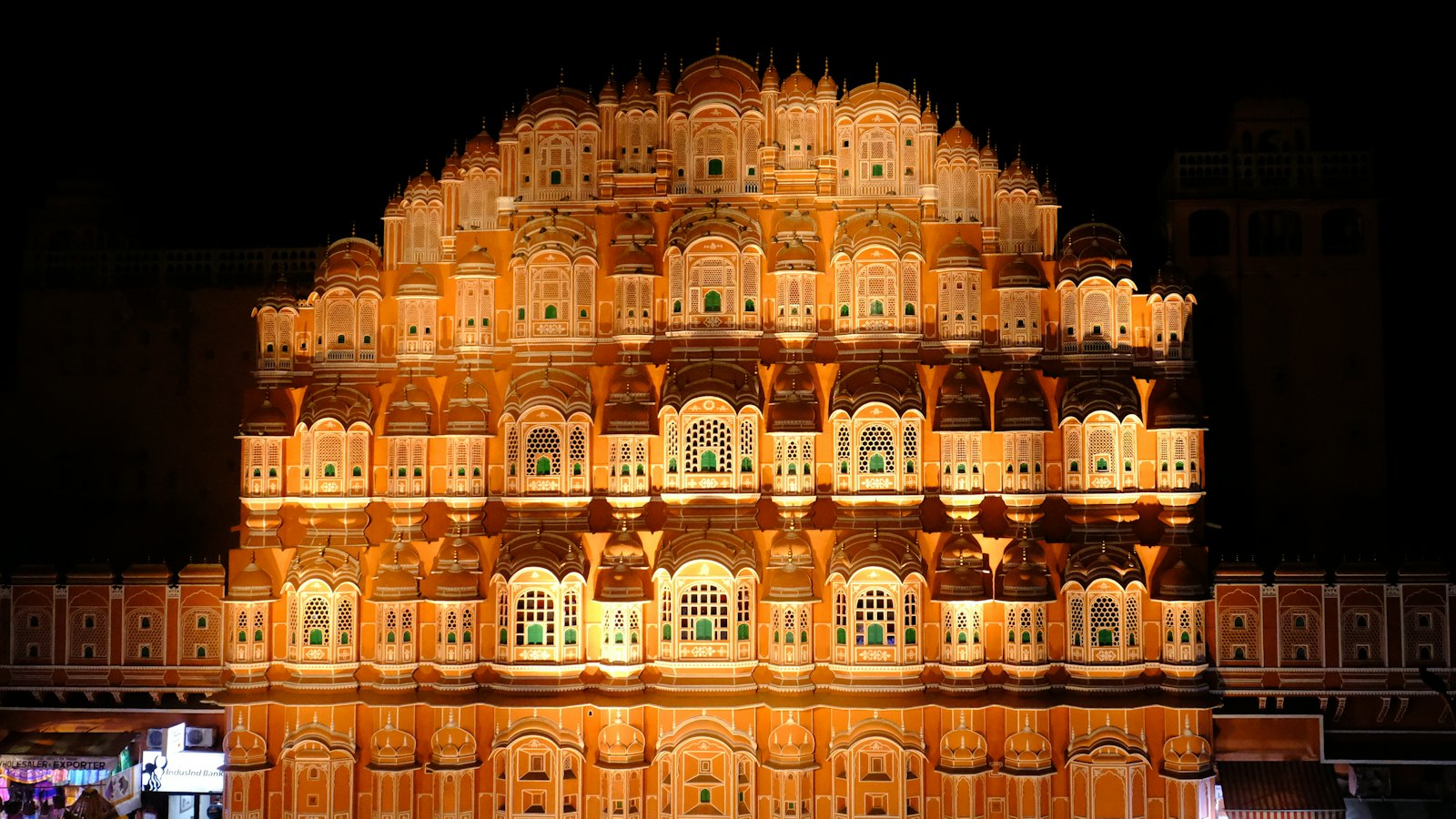
- Hawa Mahal: the Palace of Winds, a pink facade with 953 small windows, best photographed in early light from the cafes opposite.
- City Palace: courtyards, royal costumes and the painted Peacock Gate.
- Jantar Mantar: an 18th-century observatory of giant stone instruments, also on the UNESCO list.
- Nahargarh Fort: sunset over the city from the ridge, with Jaigarh Fort further along.
- Albert Hall Museum: the state museum, lit up after dark.
- Patrika Gate: painted pastel arches at the entrance to Jawahar Circle, a quick photo stop.
- Jal Mahal: the water palace in Man Sagar Lake, seen from the Amer Road promenade.
- Bazaars: Johari for gems and silver, Bapu for block-printed cotton, tie-dye dupattas and embroidered jootis.
What to eat in Jaipur
Rajasthani cooking grew up in a dry desert state, leaning on lentils, gram flour, ghee, dried beans and pickles, and much of Jaipur's Hindu and Jain food is fully vegetarian. Muslims should read the halal section before ordering meat.
- Dal baati churma: baked wheat balls soaked in ghee, with spiced lentils and a sweet crumbled wheat mix. The signature plate.
- Gatte curry: gram-flour dumplings in a tangy yoghurt gravy.
- Ker sangri: dried desert beans and berries, usually part of a thali.
- Pyaaz kachori and mirchi bada: an onion-filled pastry and a stuffed chilli fritter, the breakfast favourites.
- Laal maas: a fiery red mutton curry from the Rajput kitchens; eat it at a Muslim-run restaurant if you need it halal.
- Ghevar: a lacy, syrup-soaked sweet, piled up everywhere around the monsoon festival of Teej.
- Lassi: thick sweet yoghurt, often served in clay cups.
A thali, a steel platter of small dishes with breads and rice, is the easy introduction. The Jaipur Development Authority's open-air Masala Chowk food court in Ram Niwas Garden, near the Albert Hall, gathers popular street-food stalls in one place for a token entry fee (₹10 at the time of writing). Ask for less chilli, and drink bottled water.
Halal food and prayer spaces
Jaipur is easier for Muslim travellers than many Indian tourist towns. Close to one in five residents is Muslim (18.6% in the 2011 census), and historic mosques sit near the main sights. Halal certificates on restaurant walls are rare, though: in practice halal means Muslim-owned, and Muslim travel guides list such places as serving no alcohol.
- Old city: the Jama Masjid on Johari Bazaar, a short walk from Hawa Mahal, is the obvious choice for Jumaat, and Muslim-run eateries are easiest to find in the walled-city lanes around it. Ask worshippers after prayers where they eat.
- Chandpole and MI Road: Muslim travel guides have recommended Muslim-owned restaurants near Chandpole for chicken korma and tandoori dishes, and a kebab and biryani stall beside the Mumtaz Bagh mosque at Panch Batti on MI Road.
- Amer: the Akbari Masjid, a mosque from Emperor Akbar's reign, stands below the fort, handy for Zohor.
- Vegetarian fallback: pure-vegetarian thali restaurants serve no meat at all.
We could not confirm a prayer room at Jaipur Airport, so ask at the information desk or pray before leaving your hotel. Muslim Pro covers prayer times and qibla, and the HalalTrip app maps mosques and Muslim-friendly restaurants. Recommendations date quickly as ownership changes, so check recent reviews.
Getting around Jaipur
Grab has no service in India. Download Uber before you fly; it covers Jaipur with cars, autos and motorbike rides, and Uber autos are paid to the driver in cash or UPI, so keep small notes. Indian apps such as Ola and Rapido are also widely used.
- Auto-rickshaws: use the app fare as a guide and agree the price before getting in. Drivers offering very cheap day tours usually earn commission at shops.
- Jaipur Metro: one Pink Line of 11 stations runs from Mansarovar through Sindhi Camp and Chandpole to Badi Chaupar near Hawa Mahal. Tokens cost about ₹10 to ₹30 (under RM 1.50), and one-day and three-day tourist cards are sold, but it reaches few sights.
- Car with driver: the comfortable way to link Amer, Nahargarh and the old city. Hotels and local agencies quote day rates by car size and hours, so compare a couple of quotes and agree hours, fuel and parking first.
- On foot: the old city's bazaars are best walked, but pavements are uneven and cows, carts and motorbikes share the road.
A 4-day Jaipur itinerary
- Day 1: Pink City on foot. Hawa Mahal at opening, then City Palace and Jantar Mantar. Zohor at the Jama Masjid, lunch in the lanes around it and an afternoon in Johari and Bapu bazaars. End with Albert Hall lit up and dinner at Masala Chowk.
- Day 2: Forts. Amber Fort as the gates open, then the Akbari Masjid and the Panna Meena ka Kund stepwell in Amer town. Photo stop at Jal Mahal, then up the ridge to Jaigarh and Nahargarh for sunset.
- Day 3: Crafts and colour. Patrika Gate in the morning, then Sanganer, near the airport, for hand block printing and handmade paper. Rest through the afternoon heat, then shop or book a Rajasthani dinner with folk music.
- Day 4: An early leopard safari at Jhalana (book ahead on the state portal) or a gentle morning at Sisodia Rani Bagh. Last gifts, then fly out or carry on to Delhi or Agra.
If one of your days is a Friday, swap Days 1 and 2 so Jumaat falls in the old city. Short on time? Days 1 to 3 cover the essentials.
Money, SIM and practical tips
- Currency: rupees (₹). In late September 2026 one ringgit fetched about ₹23.5, so ₹100 is roughly RM 4.25.
- Cash and cards: hotels, malls and larger restaurants take Visa and Mastercard; autos, street stalls and small shops want cash, ideally small notes. Check your bank's ATM fees.
- UPI and DuitNow: almost every stall shows a UPI QR code. Visitors can load UPI One World, a prepaid rupee wallet opened with a passport and visa. PayNet and NPCI International agreed in February 2026 to let Malaysian banking apps pay UPI codes, but for now do not rely on DuitNow here.
- SIM: a local SIM needs your passport and visa, and activation can take a while; installing a travel eSIM at home saves the hassle.
- Plugs: sockets take Type C, D or M plugs (230 volts); bring a universal adapter.
- Tipping: around 10% in sit-down restaurants without a service charge, plus a little for drivers and guides.
- Scams: Jaipur's classic is the gem scam, where a friendly stranger suggests buying stones to resell back home. Walk away, and ignore self-appointed guides at fort gates.
- Etiquette: dress modestly, remove shoes at mosques and temples, and hide food from the monkeys at Galta Ji.
Adding Delhi and Agra: the Golden Triangle
The non-stop flights from KLIA land in Delhi, so many Malaysians make Jaipur one corner of the Golden Triangle with Delhi and Agra.
- Delhi to Jaipur: at the time of writing the Vande Bharat Express from Delhi Cantonment takes about three and a half hours (no service on Wednesdays), and the Ajmer Shatabdi leaves New Delhi at 06:10 and arrives around 10:35. By road, allow five hours or more, depending on traffic.
- Jaipur to Agra: roughly four to five hours by car, with Akbar's red sandstone city of Fatehpur Sikri on the way, about 36 km before Agra. The Taj Mahal is closed on Fridays.
- Delhi: the Jama Masjid, Humayun's Tomb and Nizamuddin are highlights for Muslim travellers.
Seven or eight days works well: two nights in Delhi, one in Agra and three or four in Jaipur, flying in and out of Delhi. If you book a package, get halal meals and prayer stops confirmed in writing, especially when travelling with elderly parents.
Before you go
- Best time to go
- October to March is the best time for Jaipur, with dry, sunny days and cool nights, though December and January evenings can drop below 10°C. Average highs range from about 22°C in January to 34°C in October. April to June is punishing, with highs near 40°C, and the July to September monsoon brings sticky heat and storms. Key dates: Diwali on 8 November 2026 lights up the bazaars and fills hotels; kites crowd the sky for Makar Sankranti in mid-January; the Jaipur Literature Festival is usually held in late January or early February; and Holi, the colour festival, falls in March (around 22 March in 2027, so check the exact date). Malaysia's year-end school holidays (from 4 or 5 December, depending on the state, to 31 December 2026) overlap with India's winter peak, so book flights and havelis early.
- Visa for Malaysians
- As of September 2026, Malaysians cannot enter India visa-free, but India's official fee table charges Malaysians nothing for the 30-day e-Tourist Visa. Submit the online form no later than four days before you land (the window opens 120 days out). That 30-day permit starts on your first arrival and covers multiple entries. For repeat trips, the 1-year option is US$40 and the 5-year US$200, both limited to 180 days in India each calendar year. Your passport should have six or more months of validity on the application date, plus two empty pages. Jaipur airport accepts e-Visa arrivals, immigration records fingerprints, and an e-Arrival card can be submitted up to 72 hours ahead through the Indian Visa Su-Swagatam app or the website. Ignore copycat agent sites that add fees, and always double-check indianvisaonline.gov.in for changes before booking.
- Honest budget guide
- Expect roughly RM 120 to RM 200 per person per day travelling cheaply, and RM 300 to RM 500 with a mid-range hotel plus a car and driver, flights not included. As of late September 2026 our KL fare scan starts at about RM 1,030 one-way (AirAsia and Thai AirAsia via Bangkok), with Etihad via Abu Dhabi from about RM 1,290. Budget hotels run around ₹1,000 to ₹2,000 (RM 45 to RM 85) a night, and mid-range hotels or heritage havelis ₹3,000 to ₹7,000 (RM 130 to RM 300). Allow ₹800 to ₹1,500 (RM 35 to RM 65) a day for food, ₹300 to ₹800 (RM 13 to RM 35) for app rides and autos, and ₹1,700 (RM 72) for the composite ticket. For four days, one traveller sharing a mid-range room and flying return (at roughly double our one-way fares) should set aside around RM 3,200 to RM 4,600. All numbers are indicative.
Frequently asked questions
Do Malaysians need a visa for Jaipur?
Yes. Malaysians need an Indian visa, and the e-Tourist Visa is the easy route. As of September 2026 India's official fee table lists the 30-day e-Tourist Visa as free for Malaysians, with 1-year and 5-year versions at US$40 and US$200. Apply at least four days before you fly on indianvisaonline.gov.in, with six months' passport validity.
Is there a direct flight from KL to Jaipur?
No, not as of September 2026. The usual choices are AirAsia out of KLIA Terminal 2 with a change at Don Mueang onto Thai AirAsia (that leg is scheduled to return on 17 November 2026), Etihad through Abu Dhabi, or a non-stop flight to Delhi followed by a train, car or domestic hop. The lowest one-way price in our scan was about RM 1,030.
Is Jaipur Muslim-friendly?
Fairly, by Indian standards. Around a fifth of residents are Muslim, the Jama Masjid stands on Johari Bazaar Road, and Muslim travel guides point to Muslim-owned restaurants around Chandpole and MI Road. Certified halal restaurants are rare, so halal usually means Muslim-owned. Pure-vegetarian thali restaurants make a safe fallback.
How many days in Jaipur is enough?
Three full days covers the essentials: one for the Pink City and its bazaars, one for Amber, Jaigarh and Nahargarh forts, and one for crafts, Patrika Gate and shopping. A fourth day adds a leopard safari at Jhalana or a slower pace. With Delhi and Agra as well, plan seven or eight days.
What is the best month to visit Jaipur?
November, February and early March are the sweet spots, with warm sunny days and comfortable nights. December and January are lovely but chilly after dark and busier, and Diwali (8 November 2026) brings lights and crowds. Avoid April to June, when highs reach about 40°C.
What budget do I need for four days in Jaipur?
Excluding flights, allow roughly RM 500 to RM 800 per person on a budget, or RM 1,200 to RM 2,000 with a mid-range or heritage hotel and a car and driver. Adding return flights at roughly double our scanned one-way fares, most four-day trips come to around RM 2,500 to RM 4,600. These figures are indicative.
Can I use Grab in Jaipur?
No. Grab's network stops at Southeast Asia and does not include India. Use Uber, which works in Jaipur for cars, auto-rickshaws and motorbike rides and allows airport pickups. Ola and Rapido are common local apps. For a full sightseeing day, a car with a driver is often better value and far less tiring.
Should I fly into Delhi and take the train to Jaipur?
It suits you if you want a non-stop flight from KLIA or plan to see Delhi and Agra too. Delhi has non-stop flights from KLIA on Malaysia Airlines, Batik Air and Air India, and the Vande Bharat Express from Delhi Cantonment reaches Jaipur in about three and a half hours. For Jaipur alone, a one-stop flight saves a day of transfers.
Jom pergi
Ready to go Jaipur? Compare available flights and hotels for your dates. Check baggage, cancellation terms and the final total on the booking provider before paying.






