




On this page12 sections
Bengaluru, also commonly known as Bangalore, blends spacious gardens and traditional markets with technology hubs, energetic neighbourhoods and outstanding South Indian breakfasts. Its elevated position gives it a softer climate than many cities in the region, which helps when exploring on foot. Direct services from KLIA make the journey relatively simple for Malaysians, while familiar dishes ease the transition into local dining. Road congestion is the main complication, so choosing the right district matters. Below you will find practical advice on flights, airport transfers, accommodation, halal meals, prayer facilities, transport and expected spending in ringgit.
Flying to Bengaluru from Kuala Lumpur
In September 2026, travellers can choose nonstop Kuala Lumpur to Bengaluru services operated by AirAsia, Batik Air Malaysia, IndiGo and Malaysia Airlines. The journey in the air is usually close to four hours and 15 minutes, although weather and the route assigned to the aircraft may alter that slightly. Local time in Bengaluru is two hours and 30 minutes behind Malaysia, allowing some evening departures to reach India before midnight.
KLIA terminal assignments vary by airline and are subject to change. Check the terminal shown in your latest airline notification or booking record before heading to the airport, and confirm the same for your return leg.
Amaboxly's Kuala Lumpur fare check, current when this guide was prepared, found a direct AirAsia seat for RM578 on 10 January 2027 as the lowest one-way option. Across the flights examined, the middle one-way price was RM745, with AirAsia, Batik Air and IndiGo represented. Deepavali, Malaysian school breaks and the December holiday period can make seats more expensive. Connecting through Chennai or Colombo typically costs more than flying direct, so a connection rarely makes sense unless direct seats are sold out.
Reaching the city from Bengaluru Airport
Kempegowda International Airport lies approximately 35 km north of Bengaluru's central districts. Road conditions matter more than distance here. A central transfer can take between one hour and 90 minutes, with additional delays during rush hour, storms or major events. For an approximate conversion, ₹1,000 equals RM47, but the actual rate will fluctuate.
- Vayu Vajra bus: These air-conditioned airport buses run to Majestic, MG Road, Koramangala, Electronic City, Whitefield and other districts. Tickets generally range from ₹250 to ₹450, about RM12 to RM21. Depending on the route and congestion, travel may last from 75 minutes to beyond two hours.
- Uber or Ola: Follow airport signs to the assigned app-car collection zone. A central journey is commonly ₹900 to ₹1,600, approximately RM42 to RM75, before demand surcharges, tolls or vehicle upgrades.
- Airport taxi: Official counters provide a useful alternative when you lack working mobile data. Expect roughly ₹1,000 to ₹1,800, or RM47 to RM85, for many central destinations.
- Reserved transfer: A driver booked beforehand typically costs ₹1,500 to ₹2,500, around RM70 to RM118. Families, late-night arrivals and groups carrying bulky luggage may appreciate the simpler pickup.
Do not build an itinerary around an airport metro journey without first checking the latest operating coverage.
Choosing an area to stay
Select accommodation according to your daily plans rather than the cheapest map pin. Travelling across Bengaluru during busy periods can remove several hours from a sightseeing day.
- MG Road and Church Street: This central pairing is convenient for a first visit. Metro stations, dining, shopping and bookshops sit nearby, while Cubbon Park and several landmarks require little travel. Hotels can be pricier, but the location reduces dependence on cars.
- Indiranagar: Choose this neighbourhood for independent boutiques, coffee shops, varied restaurants and an active evening scene. Metro access helps with journeys towards the centre. The road transfer to the airport is still considerable.
- Koramangala: This district has abundant casual food, contemporary services and youthful energy. It is useful for appointments in southern technology areas, though rail connections are less convenient than around MG Road.
- Jayanagar and Basavanagudi: These calmer residential districts suit visitors interested in traditional markets and vegetarian Karnataka cooking. Lalbagh, Gandhi Bazaar and Bull Temple are close, and selected metro stations offer helpful links.
Whitefield and Electronic City make sense when employment or meetings require you to be there. Holidaymakers focused on historic and central attractions may find either area unnecessarily remote.
Essential Bengaluru sights
- Cubbon Park: Follow shaded paths beneath mature rain trees in the city's green heart. Morning offers cooler air and a more relaxed atmosphere.
- Bengaluru Palace: Tour a richly decorated royal property distinguished by towers and imposing interior rooms. Ask at admission about current access and camera fees.
- Lalbagh Botanical Garden: Wander among old trees, planted landscapes and the celebrated glass house. An early visit is particularly comfortable.
- KR Market: Observe the fast-moving trade in flowers, produce and household goods. Closed footwear and secure storage for valuables are sensible.
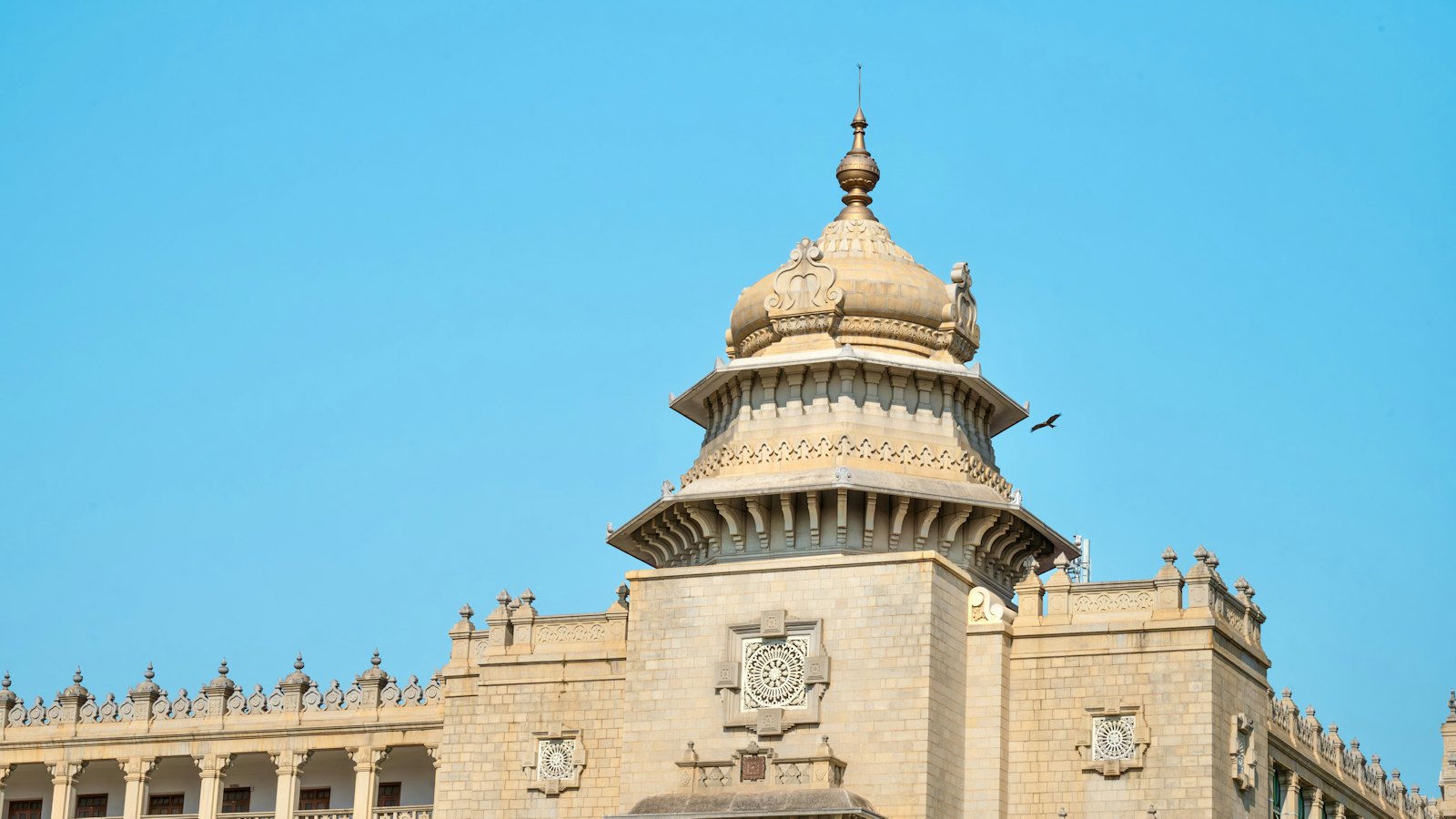
- Vidhana Soudha: Admire Karnataka's vast legislative building from the surrounding streets. Public entry is limited, but its exterior remains an important sight.
- Tipu Sultan's Summer Palace: Explore a relatively small teak palace connected to the Mysore ruler, then continue through the neighbouring commercial streets.
- Bull Temple: View the immense Nandi figure before exploring the older lanes of Basavanagudi.
- National Gallery of Modern Art: Enjoy Indian modern works inside a gracious heritage property away from the busiest streets.
- Church Street: Look through books, records and cafes before continuing into the MG Road evening scene.
Organise these places into central, northern and southern clusters. Trying to combine the palace, the southern gardens and eastern dining districts in a single day creates more driving than discovery.
Bengaluru food worth trying
Breakfast deserves special attention in Bengaluru. Visit a busy darshini, a quick-service vegetarian eatery where seating may be limited, for crisp masala dosa, pillowy idli, vada and coconut chutney. Finish with a metal cup of filter coffee. Local dishes to seek out include set dosa, rava idli, bisi bele bath, khara bath and sweet kesari bath. A banana-leaf meal may combine rice with sambar, rasam, vegetables, curd and dessert.
Basavanagudi, Gandhi Bazaar, Malleswaram and the streets near KR Market are good hunting grounds for older city flavours. Jayanagar has dependable vegetarian choices. For newer cafes, global menus and regional Indian restaurants, look towards Church Street, Indiranagar and Koramangala. Shivajinagar and Frazer Town are better suited to Muslim travellers seeking biryani, kebabs and grilled meat, with extra seasonal specialities appearing during Ramadan.
Confirm the cost before choosing seafood or anything priced according to weight. Select sealed drinking water and favour popular stalls where ingredients move quickly. Ghee, paneer and curd feature in many recipes, including vegetarian ones, so visitors avoiding dairy should ask about preparation rather than judging from the dish name.
Halal dining and places to pray
Muslim travellers can navigate Bengaluru without great difficulty, although a pork-free menu alone does not establish that meat is halal. Frazer Town, Shivajinagar and sections around Johnson Market contain established Muslim communities and a broad selection of Muslim-run food businesses. Ask staff specifically about meat sourcing and whether preparation areas or utensils are shared with alcohol or non-halal ingredients. The city's many vegetarian establishments are another option, but individual cross-contact practices differ.
Jamia Masjid beside the KR Market area and Masjid-e-Khadria near Cantonment are prominent congregational mosques. Numerous smaller mosques serve their surrounding neighbourhoods. Upon arriving at the airport, request updated directions from the information counter if you need a prayer or meditation space. Some shopping centres can provide a quiet room, though facilities equivalent to Malaysian surau are inconsistent.
Packing a small prayer mat makes spontaneous stops easier. Muslim Pro, Athan or another prayer application can assist with times and qibla direction. Online maps help identify nearby mosques and Muslim-owned restaurants, but labels added by users may be outdated. Recent customer reports followed by a direct conversation with the restaurant provide stronger reassurance.
Transport within Bengaluru
Namma Metro is generally the steadiest transport option wherever its lines match your route. Stations sell single-trip tokens, while staff can explain the QR ticket and smart-card arrangements currently in use. Many city journeys cost ₹10 to ₹60, which is below RM3 at the guide's approximate exchange rate. Passenger screening takes place at stations, and designated queues or coaches may be provided, so avoid arriving at the last minute.
Bengaluru has Uber and Ola rather than Grab. A short app-booked car trip around central districts frequently costs ₹150 to ₹350, about RM7 to RM17. Rain, heavy demand and longer distances raise the amount. Match the registration plate and driver profile before boarding, then wait only at the pickup area assigned by the app or venue.
Auto-rickshaws work well over short distances. Ask for the meter to be used or settle the complete price before departure. Ordering an auto through an app can remove some negotiation. Public buses are cheap and reach most areas, although their routes may confuse newcomers. Walking is pleasant inside places such as Cubbon Park, Church Street or Basavanagudi, but it is impractical for crossing the wider city. Leave generous margins for departures, reservations and admission slots.
Four days in Bengaluru
- Day 1: Check in around Church Street or MG Road. Take an unhurried walk through Cubbon Park, see Vidhana Soudha from a public viewpoint and explore the bookshops and restaurants on Church Street. If you land near the evening traffic peak, avoid adding distant attractions.
- Day 2: Reach Lalbagh Botanical Garden early, then move on to Bull Temple and Basavanagudi. Stop for a Karnataka vegetarian lunch, browse Gandhi Bazaar and spend the later hours in Jayanagar.
- Day 3: Begin with Bengaluru Palace and continue to the National Gallery of Modern Art. Head towards Shivajinagar for prayer and a halal lunch, followed by shopping around Commercial Street or another nearby central district. Use rail transport for any section it serves conveniently.
- Day 4: Visit KR Market before it becomes too crowded, then see Tipu Sultan's Summer Palace. Reserve the afternoon for the cafes and shops of Indiranagar or Koramangala. Depart for the airport with a substantial traffic allowance.
A traveller can cover the principal attractions in three complete days, but a fourth produces a more comfortable schedule. Mysuru deserves its own day and preferably an overnight stay. Trying to fit it between Bengaluru stops will turn much of the excursion into transit.
Money and practical tips in Bengaluru
Indian currency is the rupee, abbreviated INR and shown with the ₹ symbol. Using ₹100 as approximately RM4.70 provides a quick mental estimate, although you should consult the current rate before converting or withdrawing money. Hotels, malls and established restaurants commonly take cards. Markets, small food shops and auto-rickshaw drivers may still prefer cash, especially in smaller denominations. DuitNow QR from Malaysia is not a universal Indian payment solution. Access to local UPI services for overseas visitors varies by provider and enrolment method.
Buying an Indian prepaid SIM normally involves presenting your passport and visa. Airport sellers offer convenience, sometimes at a premium. Travellers with compatible phones can arrange an international eSIM in advance and obtain data soon after landing. Saving offline maps is worthwhile regardless of the option chosen.
Power sockets may be Type C, D or M, and the supply is 230V. Pack a universal travel adapter. Tipping is optional and moderate. Rounding up works for basic service, while 5 to 10 percent is suitable after attentive restaurant service when the bill contains no service charge.
Apply ordinary urban caution. Secure phones in crowded places, reject vague proposals to replace an app fare with cash and disregard persistent unofficial guides. Use sealed or correctly filtered water, and give monsoon weather extra space in your schedule.
Before you go
- Best time to go
- October through February usually provides Bengaluru's most agreeable weather. Daytime conditions are generally mild, while evenings can become cool enough for a light layer. Afternoon heat increases between March and May, though the city's altitude keeps it more moderate than numerous southern Indian destinations. Rain arrives often from June through September with the southwest monsoon, and later seasonal systems can extend the wet conditions. Carry a folding umbrella and plan for slower roads. Dasara and Deepavali celebrations in October may tighten hotel availability. Air tickets also become costlier around Christmas, Malaysian school breaks and year-end leave. Lalbagh holds popular flower shows near important seasonal occasions, so verify the dates locally before arranging a visit around one.
- Visa for Malaysians
- Malaysian citizens must hold an Indian visa to enter Bengaluru as of September 2026. Until 31 December 2026, the 30-day e-Tourist Visa carries no fee for Malaysian passport holders. Applications are accepted on indianvisaonline.gov.in no earlier than 120 days ahead and must be completed at least four days prior to arrival. Avoid third-party websites promoting unofficial urgent approval. This visa allows two entries, begins when the traveller first reaches India and is not extendable. The passport needs two blank pages and at least six months of remaining validity measured from the application date. Bring a printed electronic travel authorisation and evidence of onward or return travel. Within the 72 hours preceding arrival, the free e-Arrival Card can be filed through the official visa portal, the Bureau of Immigration website or the Indian Visa Su-Swagatam application. Recheck the government portal before departure.
- Honest budget guide
- A sensible daily allowance is RM170 to RM350 for each traveller, before international airfare. Amaboxly's Kuala Lumpur search at the preparation date showed a lowest direct one-way ticket of RM578 with AirAsia and a median of RM745 among the checked fares. Basic private accommodation often falls between RM70 and RM140 nightly. Comfortable mid-range rooms are closer to RM180 to RM350. Set aside RM35 to RM80 each day for food and RM15 to RM45 for metro trips, autos and shorter app rides, with separate funds for admissions and airport transport. Including return flights and a shared room, four nights may cost about RM1,900 to RM3,500 per person. Festivals, school vacations and bookings made near departure can push the total higher.
Frequently asked questions
Do Malaysians need a visa for Bengaluru?
Yes. Malaysian passport holders require an Indian visa as of September 2026. The fee for a 30-day e-Tourist Visa is waived until 31 December 2026, and the document permits two entries. Submit the application through indianvisaonline.gov.in within the permitted 120-day window and no later than four days ahead. Review the government instructions again before travelling.
Are there direct flights from Kuala Lumpur to Bengaluru?
Yes. AirAsia, Batik Air Malaysia, IndiGo and Malaysia Airlines operate nonstop services as of September 2026. Most flights take close to four hours and 15 minutes. Terminal assignments vary by airline and can change, so verify the latest terminal and departure information supplied by your airline.
How many days are enough for Bengaluru?
Three complete days can cover major parks, markets, the palace, older southern neighbourhoods and several memorable meals. Four days are preferable because congestion lengthens journeys between districts. Anyone adding Mysuru should assign it another day and ideally stay overnight instead of trying to force the excursion into an already full Bengaluru schedule.
Is Bengaluru Muslim-friendly?
It is reasonably accommodating, particularly in Shivajinagar, Frazer Town and the Johnson Market vicinity, where mosques and Muslim-owned eateries are more numerous. Halal certification is not consistent, so confirm how meat is sourced and prepared. Vegetarian dining offers a useful alternative. A portable prayer mat helps when no dedicated facility is nearby.
What is the best month to visit Bengaluru?
November, December and January tend to bring mild days, cooler evenings and relatively comfortable humidity. October and February are also attractive choices. December holiday demand can raise hotel and flight prices. From June until September, frequent rain may disrupt outdoor plans and slow road journeys. Bring a light outer layer during the coolest period.
How much money is needed for four days in Bengaluru?
Estimate RM1,900 to RM3,500 per traveller for four nights when return flights from Kuala Lumpur, a shared room, meals, city transport and several ticketed attractions are included. Simple lodging and local vegetarian meals can lower the figure. Better hotels, shopping and regular private-car journeys will increase it. Prices are estimates, not guaranteed totals.
Can I use Grab in Bengaluru?
Grab is not Bengaluru's usual ride-booking platform. Uber and Ola are the main alternatives, and compatible local apps may also arrange auto-rickshaws. Before entering, compare the registration number and driver profile with the booking. Rain and commuter peaks can trigger higher fares, while Namma Metro is often quicker on corridors covered by its lines.
Is Bengaluru safe for Malaysian tourists?
Most visitors can explore Bengaluru using standard precautions for a large city. Protect wallets and phones in packed markets, choose registered transport and avoid quiet streets late at night. Do not accept unclear requests to abandon an app booking and pay cash instead. Solo visitors should share journey details with a trusted person and consume only sealed or properly filtered water.
Jom pergi
Ready to go Bengaluru? Compare available flights and hotels for your dates. Check baggage, cancellation terms and the final total on the booking provider before paying.






