




On this page13 sections
- Overview
- Getting there from KL: direct flights and terminals
- Bandaranaike Airport to the city
- Where to stay in Colombo
- Things to do in Colombo
- What to eat in Colombo
- Halal food, mosques and prayer spaces
- Getting around Colombo
- Sample itinerary: 4 days in Colombo
- Money, SIM and practical tips
- Day trips: Galle, Kandy and Negombo
- Before you go
- FAQ
Colombo surprises most Malaysians. Sri Lanka's commercial capital is about three and a half hours from KLIA, entry costs nothing with an online ETA, and about a third of the city is Muslim, so halal meals and mosques are never far away. It even has its own Malay story: a community descended from Javanese and other Southeast Asian settlers of the Dutch era, whose watalappam is a cousin of our kaya. Below: flights and KLIA terminals, the ride from Bandaranaike Airport, neighbourhoods, food and mosques, getting around without Grab, and costs in ringgit.
Getting there from KL: direct flights and terminals
Colombo is one of the shortest hops from KLIA into South Asia: about three and a half hours in the air (3 hours 25 to 3 hours 35 minutes on current schedules). Set your watch back two and a half hours on landing.
Four airlines fly it non-stop at the time of writing:
- AirAsia, from KLIA Terminal 2, with one or two flights a day. It has flown to Colombo since 2009 and is usually cheapest, though checked bags cost extra.
- Batik Air, from Terminal 1. It restarted the route on 30 March 2026 with four Boeing 737-800 flights a week, on Mondays, Tuesdays, Thursdays and Saturdays at the time of writing.
- Malaysia Airlines, from Terminal 1, with a daily late-evening Boeing 737 flight.
- SriLankan Airlines, the national carrier, with morning and afternoon departures. It uses Terminal 1 like other full-service airlines, but check the terminal on your e-ticket.
Sri Lankan budget airline FitsAir was reported in August 2026 to have suspended its KL service, so ignore older articles that list it.
In Amaboxly's own KL fare scan, direct one-way tickets started at about RM 385 on AirAsia at the time of writing, and direct fares on AirAsia and Batik Air topped out near RM 489. Connecting makes little sense: the cheapest one-stop option, via Ho Chi Minh City, began around RM 684 one-way. Compare with a checked bag added.
Bandaranaike Airport to the city
Bandaranaike International Airport (CMB) is at Katunayake, 32.5 km north of central Colombo. The E03 expressway itself takes 15 to 20 minutes when clear, but allow up to an hour door to door at busy times. The arrival lobby has banks and ATMs. Prices are indicative, at roughly Rs 81 to RM 1.
- Bus 187 to Colombo Fort: air-conditioned, running 24 hours, about 50 minutes to Fort railway station. The ticket is Rs 325 (around RM 4), with the same again for a bag over 23 kg. It leaves from the outer porch of the departure terminal.
- Airport taxi counters: fixed fares overseen by the airport operator. Fort, Kollupitiya, Bambalapitiya and Cinnamon Gardens cost Rs 8,100 (about RM 100), Wellawatte Rs 8,640 (about RM 107) and Dehiwala Rs 9,936 (about RM 123), plus Rs 130 per extra kilometre.
- Uber and PickMe: both listed on the airport's website. App prices swing with demand, so compare with the counter fare.
- Makumbura bus: air-conditioned, from the arrival outer porch opposite the Buddha statue to the Makumbura Multimodal Centre in about 50 minutes, for Rs 410 (roughly RM 5). The centre at Kottawa is a hub for expressway buses, so this suits travellers heading straight down the south coast.
The airport also lists trains, but with luggage the bus or a car is far simpler.
Where to stay in Colombo
Colombo strings out along Galle Road, the coastal artery running south from the Fort, and districts go by postcode, so "Colombo 03" means Kollupitiya.
- Fort and Pettah (Colombo 01 and 11): beside Colombo Fort station and the Central Bus Station, a short walk from the Red Mosque and the markets. Great for rail day trips and cheap eats, but crowded by day and dead quiet at night.
- Kollupitiya and Galle Face (Colombo 03): the seafront strip with the big international hotels, malls and sunset walks. Priciest, and easiest for first-timers and families.
- Cinnamon Gardens (Colombo 07): leafy avenues around Viharamahadevi Park and the National Museum. Calm and upmarket with boutique stays, though most meals mean a tuk-tuk ride.
- Bambalapitiya and Wellawatte (Colombo 04 and 06): busy residential stretches on Galle Road and the coastal railway, home to a large Tamil community, several mosques and Muslim-run eateries. Apartment rentals here suit Malaysian families or groups and undercut the seafront hotels.
For your last night, the beach town of Negombo sits right next to the airport.
Things to do in Colombo
Two or three full days covers the city's sights.
- Galle Face Green: a 500-metre seafront lawn laid out in 1859. Come at sunset for kites and the stalls frying crab, prawns and isso wade (prawn fritters).
- Jami Ul-Alfar (Red Mosque): the red and white striped mosque on Second Cross Street in Pettah, built in 1908 to 1909. Many Malaysians see Masjid Jamek in it. Visit outside prayer times, dressed modestly.
- Pettah markets: lanes of spices, textiles and dried fish, plus the Dutch Museum and the Pettah Floating Market.
- Colombo Grand Mosque: on New Moor Street, with roots said to go back over a thousand years and the shrine of a Malay saint inside.
- Gangaramaya Temple and Seema Malaka: a temple and museum by Beira Lake. The Geoffrey Bawa lake pavilion was funded by a Muslim donor.
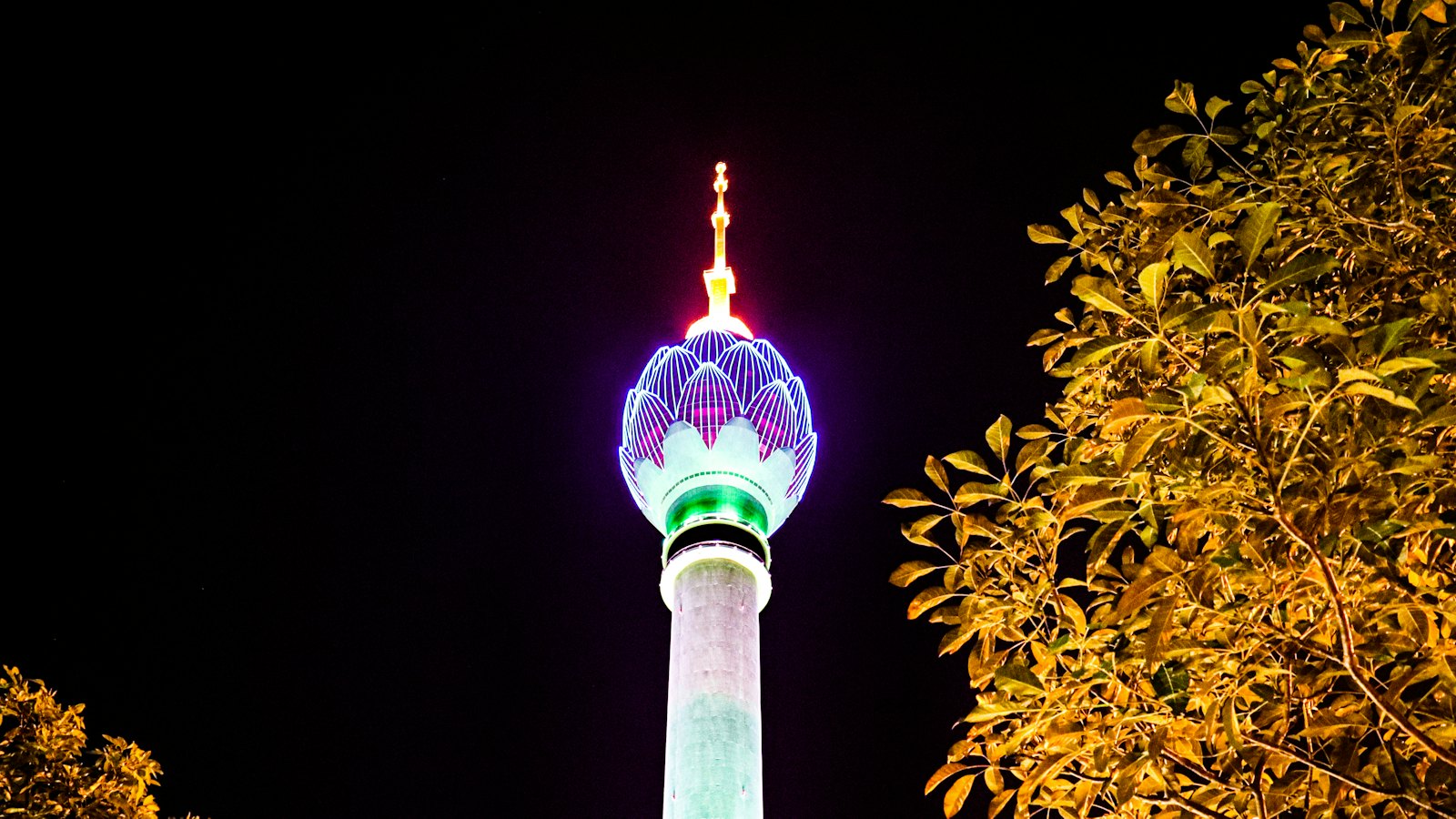
- Lotus Tower: 351.5 metres tall, with a public observation deck since 2022.
- National Museum and Viharamahadevi Park: island history beside the city's oldest and largest park.
- Kompanna Veediya: the old Malay quarter south of the Fort, settled since Dutch times.
- Coastal train: Fort to Mount Lavinia with the Indian Ocean beside the tracks.
What to eat in Colombo
Coconut, curry leaves, chilli and rice anchor Sri Lankan cooking, so Malaysians feel at home, though the chilli runs hotter.
- Rice and curry: rice with four or five small curries (dhal, vegetables, fish or chicken) and pol sambol, a fiery grated-coconut relish. The standard lunch.
- Hoppers: bowl-shaped rice-flour pancakes with crisp edges, often with an egg in the middle. String hoppers, steamed nests of rice noodles, are close cousins of putu mayam.
- Kottu roti: chopped roti fried on a griddle with egg, vegetables and meat to the clatter of metal blades. It was created by the Moor (Muslim) community on the east coast, and Muslim-run kottu shops are everywhere.
- Buriyani: the Sri Lankan Muslim take on biryani, sold at Muslim-run eateries citywide.
- Seafood: crab and prawns at the Galle Face stalls and seafront restaurants.
- Watalappam: jaggery and coconut custard spiced with cardamom, brought by Sri Lankan Malays in the 18th century and related to serikaya. It is a Hari Raya dessert here too.
- Ceylon tea: plain or milk tea, poured at every small eatery.
One warning for Muslim readers: lamprais, the Dutch Burgher rice parcel, traditionally mixes beef, pork and chicken.
Halal food, mosques and prayer spaces
For Muslim travellers Colombo is among the easiest cities in South Asia. At the 2012 census about 31 percent of residents of the Colombo municipality were Muslim, so mosques and Muslim-run eateries are part of everyday life.
The Halal Assessment Council (HAC), based in Bambalapitiya, certifies halal products and eateries, and its free HAC Halal Index app checks certified brands and restaurants. Most small eateries, though, are Muslim-owned rather than certified: look for halal signage or Arabic script and ask when unsure. Chinese and Burgher restaurants often serve pork, many hotel restaurants pour alcohol, and a "no pork" sign does not make the chicken halal.
Where to go:
- Pettah: Jami Ul-Alfar (the Red Mosque), expanded to hold around 10,000 worshippers, surrounded by Muslim-run eateries.
- Colombo 12: the Colombo Grand Mosque on New Moor Street.
- Wellawatte: the Muhiyadeen Jumu'ah Mosque and Wellawatta Jumu'ah Mosque, with halal meals along Galle Road.
- Kompanna Veediya: the Malay quarter, Muslim for generations.
We found no prayer room listed on the airport's own website, so ask at the information desk on arrival. In the city, hotel staff can point you to the nearest mosque, and your usual prayer-time and qibla apps work normally.
Getting around Colombo
There is no metro in Colombo, so most visitors combine ride-hailing, tuk-tuks and the odd train. Galle Road jams at rush hour.
- Ride-hailing: Grab does not operate in Sri Lanka (all eight of its markets are in Southeast Asia). Use PickMe, the big local app for rides and food delivery, or Uber, which runs cars, tuk-tuks and motorbikes here. Install both before you fly.
- Tuk-tuks: everywhere. Choose one with a working meter or settle the fare before getting in. Booking through an app avoids the haggling.
- Metered taxis: less common than tuk-tuks but air-conditioned. Make sure the meter is running, or book a car through PickMe or Uber instead.
- Trains: the coastal line calls at Kollupitiya, Bambalapitiya, Wellawatta, Dehiwala and Mount Lavinia on its way to Galle. Tickets are cheap but commuter peaks are packed. Colombo Fort is the hub for Kandy trains.
- Buses: very cheap and frequent, but crowded and awkward with bags. Pay the conductor in cash.
Sample itinerary: 4 days in Colombo
This plan suits a Kollupitiya or Wellawatte base. Take a morning flight that lands on a Thursday and Day 2 becomes a Friday, ideal for Jumaat at the Red Mosque.
- Day 1: Bus 187 or an airport taxi into town. Rest through the afternoon heat, then stroll Galle Face Green at sunset with isso wade and a king coconut.
- Day 2: Early start in Pettah for the spice and textile lanes, the Dutch Museum and the Red Mosque. Buriyani for lunch, then on to the Colombo Grand Mosque. Night views from Lotus Tower.
- Day 3: Gangaramaya Temple and Seema Malaka in the cool of the morning, then a wander through Kompanna Veediya. The National Museum and Viharamahadevi Park after lunch, and hoppers and kottu in Wellawatte for dinner.
- Day 4: An early coastal train to Galle Fort for the ramparts and Dutch-era streets, or a gentler outing to Mount Lavinia beach. Flying out the next morning? Sleep in Negombo, beside the airport.
With a fifth day, add Kandy rather than squeezing more into the city.
Money, SIM and practical tips
- Currency: the Sri Lankan rupee (Rs or LKR). RM 1 bought about Rs 81 when we checked on 28 September 2026, so Rs 1,000 is roughly RM 12.
- Cash and cards: hotels, malls and bigger restaurants take Visa and Mastercard. Tuk-tuks, buses, markets and small eateries want cash.
- E-wallets: PayNet lists only Singapore, Indonesia, Thailand and Cambodia for DuitNow QR spending abroad, so it is no use here.
- SIM and eSIM: mobile operators have counters in the arrival lobby, or install a travel eSIM before leaving KL.
- Plugs: Type G at 230 V, the same three square pins as home. Some older buildings still have round-pin sockets, so pack a universal adapter.
- Tipping: optional. Check the bill for a service charge and round up for drivers.
- Scams: ignore strangers announcing a special temple "festival" today, and anyone steering you to a gem shop. Fix tuk-tuk fares first.
- Customs: declare foreign currency above USD 15,000 on arrival.
- VAT refund: Sri Lanka runs a Tourist VAT Refund Scheme, claimed at a counter by the departure check-in area, so ask shops about it on bigger purchases.
Day trips: Galle, Kandy and Negombo
Colombo makes a good base for Sri Lanka's classic short trips.
- Galle: the walled Dutch-era fort on the south coast is the favourite day out. The Southern Expressway cut Colombo to Galle (116 km) to about an hour from the city's southern edge, while the coastal train from Fort gives sea views. From the airport, the taxi counter charges Rs 23,328 (about RM 290).
- Kandy: the hill capital and home of the Temple of the Tooth, on the Main Line from Colombo Fort, which clings to sheer cliffs near Kadugannawa. Better as an overnight than a day trip. In July and August the Esala Perahera fills the streets with dancers and decorated elephants.
- Negombo: an easygoing beach and fishing town beside the airport, only Rs 3,780 (about RM 47) by airport taxi. A natural first or last night.
- Further out: Sigiriya's rock fortress and the tea hills around Ella need two or three extra days. Book train seats early for the scenic line beyond Kandy.
A car and driver shared by four is the most flexible way to cover the south coast in a day.
Before you go
- Best time to go
- The best time to visit Colombo is December to March, when the west coast is at its driest and January and February each average under 80 mm of rain. The city is hot and humid all year, much like KL. Rain peaks in October and November (both above 340 mm on average), with another wet spell from April to June. Festivals worth timing: the Navam Perahera at Gangaramaya Temple in February, Sinhala and Tamil New Year in mid-April (many shops close for days) and Vesak lanterns in May. Kandy's Esala Perahera runs in July and August. Fares from KL rise over the Malaysian school break at the end of 2026, which starts on 4 or 5 December by state and runs to the 31st, so book December trips early.
- Visa for Malaysians
- As of September 2026, Malaysians need a free Electronic Travel Authorization (ETA), applied for online at eta.gov.lk before arrival, which allows a 30-day tourist stay with double entry. Malaysia is one of the 40 countries whose tourist ETA is issued free under the notice that took effect on 25 May 2026, and you can apply before booking a flight. At immigration, carry a passport that stays valid for at least six months beyond your arrival date, a confirmed return ticket and enough money for the stay. The official site says the stay can be extended for up to six months. Passengers who transit without leaving the airport do not need an ETA. Avoid agent sites that charge for this free permit. The airport's pages mention both a paper landing card handed in at immigration and a digital arrival card, so complete whichever your airline or the immigration hall asks for. Rules can change, so check eta.gov.lk again shortly before you travel.
- Honest budget guide
- Colombo costs most visitors RM 150 to RM 380 a day per head once they land, before flights. Direct one-way tickets in our KL fare scan started at about RM 385 (AirAsia) at the time of writing and went up to about RM 489, so budget RM 770 to RM 1,000 for a return. A simple guesthouse costs about RM 100 to RM 180 a night, and a comfortable mid-range hotel about RM 250 to RM 450. Rice and curry, kottu and hoppers at local eateries are cheap, so food runs about RM 40 to RM 100 a day. Tuk-tuks and app rides add RM 15 to RM 40 daily, and the airport bus is about RM 4. A 4-day, 3-night trip in a shared mid-range double works out around RM 1,700 to RM 2,400 each, flights in. Treat every figure as indicative.
Frequently asked questions
Do Malaysians need a visa for Sri Lanka?
Malaysians need an Electronic Travel Authorization (ETA), which is free as of September 2026. Apply at eta.gov.lk before arriving. It covers a 30-day tourist stay with double entry. Carry a passport valid for six months from arrival, a return ticket and proof of funds, and recheck eta.gov.lk before flying.
Is there a direct flight from KL to Colombo?
Yes, four airlines do. AirAsia leaves from KLIA Terminal 2, while Batik Air, Malaysia Airlines and SriLankan Airlines use Terminal 1 (check your e-ticket). Flying time is about three and a half hours, and the lowest direct one-way price we tracked was about RM 385 at the time of writing.
Is Colombo Muslim-friendly?
Very. About 31 percent of Colombo's residents were Muslim at the 2012 census, and Pettah, Wellawatte and the old Malay quarter are full of mosques and Muslim-run eateries. Most are Muslim-owned rather than certified, and the Halal Assessment Council's free app lists certified brands and restaurants. Skip lamprais unless the shop confirms it is halal.
Can I use Grab in Colombo?
No, Grab does not operate in Sri Lanka. Use PickMe, the main local app, or Uber, which offers cars, tuk-tuks and motorbikes in Colombo and picks up at the airport. Install both before leaving KL and carry rupees for street tuk-tuks.
How many days in Colombo is enough?
Two to three days covers the city: Galle Face Green, Pettah and the Red Mosque, Gangaramaya Temple, Lotus Tower and a proper food crawl. With four or five days you can add a day trip to Galle Fort or a night in Kandy.
What is the best month to visit Colombo?
January and February are Colombo's driest months, and December to March is the most comfortable stretch overall. October and November are the wettest. February brings the Navam Perahera at Gangaramaya Temple and May brings Vesak lanterns. Expect higher December fares during Malaysian school holidays.
How much money do Malaysians need for 5 days in Colombo?
Allow RM 150 to RM 380 a day each once you land, depending mostly on your hotel, plus return flights of roughly RM 770 to RM 1,000 at the time of writing. Five days sharing a mid-range room usually adds up to RM 2,000 to RM 2,800 each with flights. Figures are indicative.
How do I get from Colombo airport to the city?
The cheapest way is air-conditioned Bus 187 from the departure terminal porch to Colombo Fort, running 24 hours for Rs 325 (about RM 4). Airport taxi counters charge a fixed Rs 8,100 (about RM 100) to central areas such as Kollupitiya, and Uber and PickMe also collect at the airport.
Jom pergi
Ready to go Colombo? Compare available flights and hotels for your dates. Check baggage, cancellation terms and the final total on the booking provider before paying.






