




On this page12 sections
Dhaka is intense, crowded and endlessly absorbing, with Mughal architecture, colourful rickshaws, river traffic and memorable Bengali rice dishes. It suits a short trip from Malaysia because nonstop flights leave from KLIA, daily costs are moderate and halal food is widely available. Getting around is the main challenge, since even a short journey can take much longer than a map suggests when roads are congested. This guide explains flights and terminals, airport transfers, suitable neighbourhoods, local food, urban transport, major sights and the entry arrangements Malaysian passport holders should prepare before departure.
Getting there from Kuala Lumpur
AirAsia, Batik Air Malaysia, Biman Bangladesh Airlines, Malaysia Airlines and US-Bangla Airlines operate nonstop flights between Kuala Lumpur International Airport and Dhaka. A direct journey normally takes about four hours, although the exact duration and timetable vary by service. Terminal assignments at KLIA vary by airline and can change, so confirm the terminal shown on your reservation before travelling to the airport, especially if you are connecting from another part of Malaysia.
A fare search found a one-way AirAsia ticket for RM542 on 10 June 2027, without a stop. The approximate median price for a one-way journey is RM650. Fares can change quickly and may not include checked baggage, meals or seat selection. Search listings also feature AirAsia, Batik Air, THAI and US-Bangla Airlines. Connecting options include Colombo from approximately RM643, Bangkok from RM933, Guangzhou from RM1,132 and Hong Kong from RM1,894 one way. Check the connection length, transit requirements and baggage rules before choosing one. Unless a direct flight has unsuitable timing or luggage terms, flying nonstop will usually reduce both travel time and effort.
Airport transfers into Dhaka
Hazrat Shahjalal International Airport, identified by the code DAC, is north of central Dhaka. Distance alone is a poor guide to transfer time. A journey completed in 30 minutes on clear roads may take more than 90 minutes during severe congestion. For simple estimates, RM1 is roughly Tk29, although exchange rates and transport prices fluctuate.
- Ride-hailing car: Request Uber or Pathao after establishing a mobile connection. Trips to Gulshan, Banani and Uttara generally cost Tk500 to Tk1,200, about RM17 to RM41. Central districts and Old Dhaka may cost Tk800 to Tk1,800, about RM28 to RM62.
- Airport taxi: Reserve one at an official desk or use a clearly identified metered operator. Trips towards central Dhaka often range from Tk1,000 to Tk2,000, about RM34 to RM69. Confirm whether parking fees and tolls are included.
- CNG auto-rickshaw: This compact vehicle works for light luggage but provides less comfort and may require bargaining. Allow Tk400 to Tk900, about RM14 to RM31.
- Train: Services leave Airport Railway Station for stops including Kamalapur, but schedules and baggage access may be inconvenient.
- Local bus: Fares are commonly below Tk100, about RM3.50, although crowded vehicles are difficult to use with suitcases.
Keep your hotel's address available in both English and Bengali. During rush hour, allowing generous extra time is more useful than relying on the fastest estimate shown by a navigation app.
Choosing where to stay
Choose a base close to the places that matter most during your visit. Crossing Dhaka at peak hours can consume several hours, so an inexpensive hotel far from your planned activities may provide poor value once transport time and fares are considered.
- Gulshan: A comfortable option for a first visit, with diplomatic offices, supermarkets, restaurants and streets that are comparatively easy to navigate. Rooms cost more here, but international food and app-booked cars are readily available.
- Banani: A useful choice for business visitors and younger travellers interested in cafes, evening meals and convenient access to Gulshan. Congestion still affects even short trips.
- Uttara: Practical for an overnight connection, an early flight or work near the airport. Local restaurants and shops are plentiful, but reaching Old Dhaka can take a long time.
- Dhanmondi: A residential district near cultural venues, neighbourhood restaurants and lakeside walking areas. It offers a worthwhile view of contemporary city life beyond the diplomatic quarters.
Old Dhaka is captivating to explore during daylight, but its noise, narrow lanes and restricted vehicle access can make an overnight stay demanding. Gulshan, Banani or Dhanmondi will generally be easier for Malaysian visitors. Before booking, compare the hotel's location with your daily itinerary instead of judging it only by its distance from the airport.
Things to do and places to visit
Start sightseeing early, combine nearby attractions into one outing and keep spare time between appointments. Dhaka's traffic rarely supports a rigidly timed schedule, particularly when an itinerary crosses between Old Dhaka and the northern neighbourhoods.
- Lalbagh Fort: Walk through the gardens and surviving structures of this unfinished Mughal complex before the strongest afternoon heat.
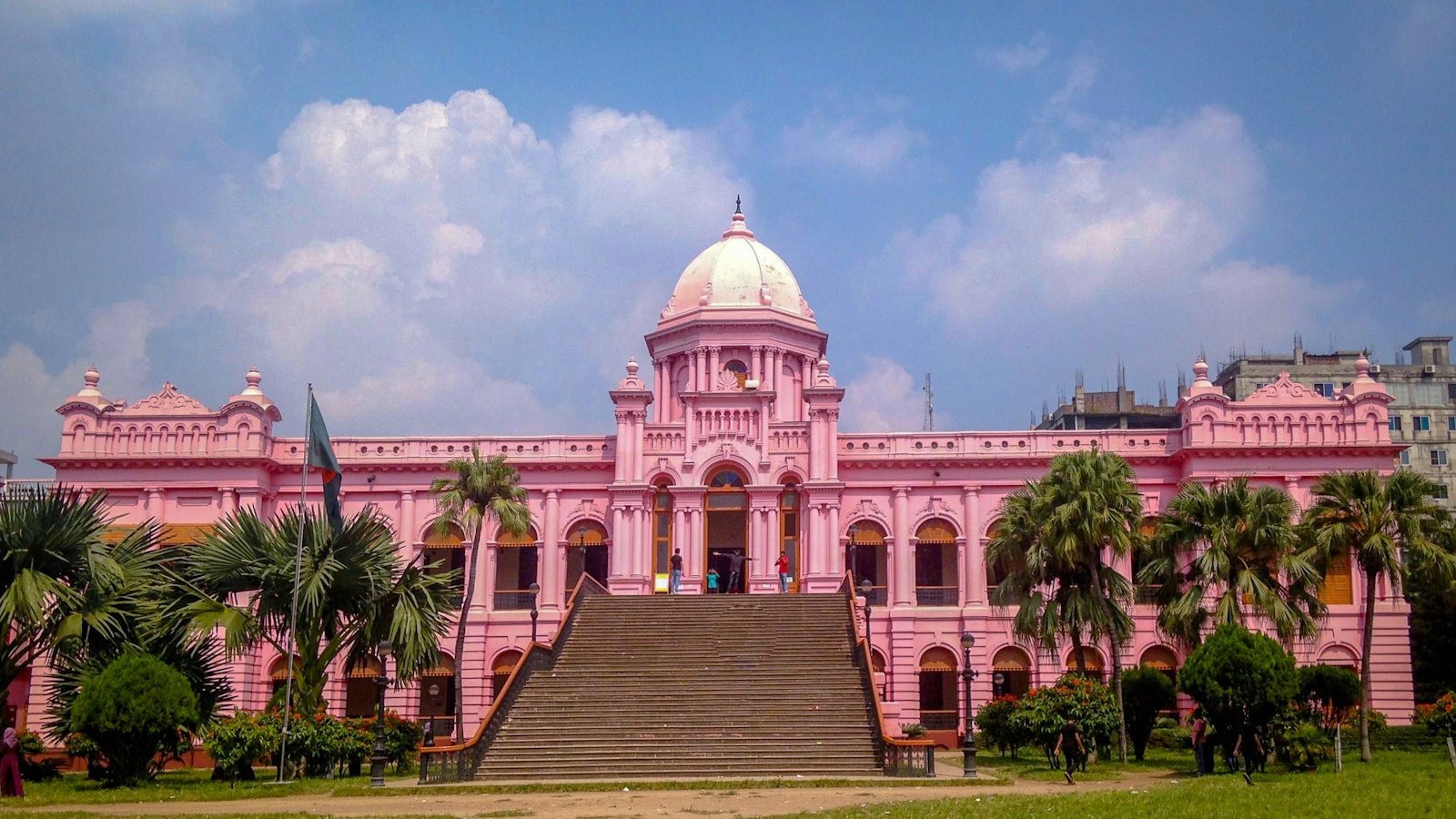
- Ahsan Manzil: Visit the pink riverside palace and learn about Dhaka's former nawabs.
- Sadarghat: Observe launches, ferries and small boats moving along the crowded Buriganga waterfront. A local guide can help with the surrounding lanes.
- Armenian Church: Enter a peaceful historic site connected with Armenian merchants who once influenced this district.
- Star Mosque: Study its blue and white tiles while respecting prayers and worshippers.
- Dhakeshwari National Temple: Visit an important Hindu sanctuary while wearing conservative clothing.
- National Parliament complex: View Louis Kahn's monumental architecture from publicly accessible areas, since entry to the interior may be restricted.
- Bangladesh National Museum: Explore Bengali art, regional history and material concerning the 1971 Liberation War.
- Dhanmondi Lake: Join residents for a gentler evening walk.
- Rickshaw-art spotting: Notice painted animals, cinema scenes and bright patterns decorating the city's cycle rickshaws.
Opening arrangements can change around public holidays and religious events. Confirm access locally before making a long journey for one attraction.
Bengali food to try
Dhaka's cooking uses rice, river fish, beef, chicken, lentils, mustard oil and aromatic spices. Ordering several dishes for the table lets a group taste more of the local cuisine without creating needless leftovers.
Kacchi biryani is a celebrated dish of fragrant rice, marinated mutton, potato and spices. Tehari is a more everyday rice preparation, often made with beef and mustard oil. Morog pulao pairs gently seasoned rice with chicken, while khichuri combines lentils and rice in a comforting dish associated with rainy weather. Bhorta describes ingredients such as aubergine, potato, lentils or dried fish mashed with onion, chilli and mustard oil. Bangladesh's prized ilish, also called hilsa, may be served fried or in a mustard gravy. Beef kala bhuna is darker and has an especially concentrated spice flavour.
Old Dhaka is the place to seek biryani, kebabs, bakarkhani bread and traditional sweets. Gulshan, Banani and Dhanmondi have calmer sit-down restaurants. Finish a meal with mishti doi, a sweetened yoghurt, or try roshogolla and chomchom. Drink sealed or correctly filtered water. For street food, favour busy vendors that cook each serving freshly over strong heat, and avoid items that have been sitting uncovered.
Halal dining and places to pray
Dhaka is generally straightforward for Muslim travellers. Most Bangladeshi restaurants serve halal meat because the majority of their customers are Muslim, although businesses may not display the certification symbols familiar in Malaysia. If formal assurance matters, ask the staff where the meat comes from and whether alcohol is served on the premises. Seafood, vegetable curries, dal and bread provide simple alternatives.
Mosques are found throughout residential and commercial districts. Baitul Mukarram, the National Mosque, is the best-known example and is located near important central shopping streets. Neighbourhood mosques make prayer convenient in Old Dhaka, Uttara, Dhanmondi, Banani and Gulshan. Arrangements for women vary between buildings, so enquire before entering or use a larger mosque where facilities are more likely to be available. Carrying a portable prayer garment can be helpful.
Hazrat Shahjalal International Airport provides places to pray, but their locations may move as terminal arrangements change. Follow airport signs or ask an employee for directions. Prayer rooms can also be found in some newer office buildings and larger shopping centres. Local residents and restaurant staff are often more useful than halal apps because halal dining forms part of everyday life across Dhaka.
Transport within the city
Dhaka has no single visitor pass that covers every useful form of transport. The MRT can bypass road congestion when its stations and route match your plans, but the network does not yet serve every district visitors may want to reach. Buy a ticket at the station or ask the staff which stored-value products are currently available.
Grab does not operate in Bangladesh. Use Uber or Pathao when you want an app-booked car or motorcycle. A car is usually the practical choice for families, groups and passengers carrying luggage. Motorcycles may move through congestion faster, but they leave riders more exposed to road hazards. Wear a helmet and refuse the trip if the conditions appear unsafe. Short car rides frequently cost Tk200 to Tk500, about RM7 to RM17. A longer journey across the city may reach Tk600 to Tk1,200, about RM21 to RM41.
Some CNG auto-rickshaw drivers negotiate instead of using the meter. Agree on the fare before leaving when necessary. Cycle rickshaws are useful for brief local trips and commonly cost Tk50 to Tk200, about RM2 to RM7, though they cannot use certain larger roads. Buses and ordinary taxis also operate, but apps are easier for new visitors. Save destinations in Bengali, check that the driver understands the correct branch or entrance, and allow at least twice the map estimate during busy periods.
Three days in Dhaka
- Day 1: Begin at Lalbagh Fort, then continue through Old Dhaka to the Armenian Church, Star Mosque and Ahsan Manzil. Stop for kacchi biryani or tehari before visiting Sadarghat during daylight. A local guide can simplify navigation and explain the crowded waterfront's history.
- Day 2: Visit the Bangladesh National Museum and Shahbag, followed by the Dhakeshwari National Temple. Continue to Dhanmondi for Bengali food and an evening beside the lake. Keep the schedule flexible because a short transfer can expand considerably during rush hour.
- Day 3: See the National Parliament complex from an authorised public viewpoint. Spend the remaining hours in Banani and Gulshan, shopping for clothing, crafts or packaged sweets before a final meal of rice, fish and bhorta.
Avoid adding several distant attractions to the same day. Beginning early improves your chances of reaching the main sights before congestion becomes severe, while a flexible lunch stop prevents one delayed transfer from disrupting everything that follows.
Visitors who prefer a slower pace should allow four days. Use the extra day for Sonargaon, the former historic capital outside Dhaka, and Panam City when public access is available. Leave early, treat the excursion as a full-day trip and anticipate an unpredictable return because of road traffic.
Money and practical travel tips
The Bangladeshi taka is written as BDT or Tk. For planning, RM1 is approximately Tk29, but check the current exchange rate before changing money. Carry cash for markets, rickshaws and smaller businesses. Major hotels, malls and restaurants accept cards more consistently. Malaysia's DuitNow QR system is not widely supported in Bangladesh.
Authorised outlets at the airport and around the city sell local SIM cards, normally after passport registration. A compatible eSIM purchased before departure is another possibility. Download offline maps and keep a screenshot of your hotel's address. Bangladesh uses plug types C, D and G with electricity supplied at 220V to 240V. A Malaysian three-pin plug may fit certain sockets, but a universal adaptor is still useful.
Tipping is appreciated but does not follow one strict formula. Round up a small fare or add 5 to 10 percent for good restaurant service if the bill has no service charge. Dress modestly and ask permission before photographing people. Keep your phone secure in crowded markets. Use official airport counters or pre-booked rides, politely refuse unwanted assistance and agree on the price before hiring a guide, boat or rickshaw.
Air pollution can be uncomfortable, so carrying a mask is sensible. Do not drink tap water. Leave copies of important documents in secure storage and retain enough cash for a ride if an app or card payment fails.
Before you go
- Best time to go
- The most comfortable weather usually occurs from November through February. This period is generally drier and less humid, although mornings in December and January can be cool, foggy or hazy. Malaysia's year-end school holiday overlaps with these favourable months, so stronger flight demand makes early booking worthwhile. Heat, humidity and thunderstorms build between March and May. Monsoon weather dominates from June through September, when intense rainfall can worsen congestion and cause local flooding. Bengali New Year on 14 April brings colourful public celebrations as well as crowds and road closures. Ramadan changes some restaurant hours, while Eid places exceptional pressure on transport when many residents travel to their home districts. Dhaka remains possible in any month if the itinerary includes enough flexibility for traffic and weather.
- Visa for Malaysians
- Malaysian tourists currently qualify for a Bangladesh visa on arrival. As of September 2026, the allowed tourist stay is up to 30 days, making advance visa arrangements optional. The official portal lists fees of approximately USD11 for one entry and USD24 for multiple entries for Malaysian citizens. A traveller's passport should retain at least six months of validity. Immigration officers may ask for proof of onward or return travel together with a confirmed hotel booking or an invitation from a host. Those who prefer approval before departure can submit an e-visa application through visa.gov.bd. Review that official portal shortly before travelling because eligibility, accepted payment methods, fees and processing procedures can change.
- Honest budget guide
- Allow RM140 to RM260 per traveller each day, excluding international airfare. A one-way nonstop fare from Kuala Lumpur was found from about RM542, while the approximate one-way median is RM650. Basic private rooms may cost RM50 to RM90 per night, and comfortable mid-range hotels commonly charge RM140 to RM280. Budget roughly RM30 to RM60 a day for local food and RM15 to RM45 for transport, with additional money for repeated car journeys across Dhaka. An indicative four-day total of RM1,700 to RM2,800 per person can cover return flights, accommodation, meals, local travel and modest admission charges. Private guides, higher-end hotels, a dedicated driver and substantial shopping will raise the final amount.
Frequently asked questions
Do Malaysians need a visa for Dhaka?
As of September 2026, Malaysian passport holders qualify for a tourist visa on arrival for stays of up to 30 days. Listed fees are approximately USD11 for one entry and USD24 for multiple entries. Carry a passport valid for at least six more months, accommodation details and evidence that you will leave Bangladesh. Check visa.gov.bd shortly before departure for updated rules and charges.
Is there a direct flight from Kuala Lumpur to Dhaka?
Yes. AirAsia, Batik Air Malaysia, Biman Bangladesh Airlines, Malaysia Airlines and US-Bangla Airlines offer nonstop KLIA services, normally taking around four hours. Terminal assignments vary by airline and can change, so always follow the terminal information on your own booking.
How many days are enough for Dhaka?
Three full days provide time for Old Dhaka, Lalbagh Fort, Ahsan Manzil, the National Museum, Dhanmondi and selected modern districts. Choose four days for a Sonargaon excursion or a more relaxed schedule. Organise each day around one area because road congestion matters far more than the apparent distance between sights.
Is Dhaka Muslim-friendly?
Yes. Mosques are widespread, and the country's Muslim-majority food culture makes halal local meals readily available. Formal certification is not displayed everywhere because halal meat is commonly expected, so ask the restaurant when documented assurance is important. Facilities for women differ by mosque. Prayer spaces are also available at the airport and in some larger commercial buildings.
What is the best month to visit Dhaka?
November is especially attractive because conditions are usually drier and less humid without the coolest winter mornings. December through February is also pleasant, although haze or fog may occur and year-end demand can raise flight prices. Travellers concerned about heavy rain and local flooding should avoid the main monsoon months from June through September.
How much money should I budget for four days in Dhaka?
Plan approximately RM1,700 to RM2,800 per person for four days. This estimate includes return airfare from Kuala Lumpur, basic or mid-range lodging, local food, app-booked rides and modest sightseeing costs. Daily spending within Dhaka can remain near RM140 to RM260. Premium hotels, private guiding, extensive shopping or a dedicated vehicle will increase the total.
Can I use Grab in Dhaka?
No. Grab does not operate in Bangladesh, so visitors commonly use Uber or Pathao. Cars are the simplest choice for families, luggage and unfamiliar routes. Motorcycles may pass through traffic more quickly but involve greater exposure to road hazards. Keep some taka available in case the driver cannot accept the electronic payment method chosen in the app.
Is Dhaka safe for Malaysian tourists?
Most visitors experience no serious trouble when using ordinary precautions for a large city. Common concerns include severe congestion, polluted air, dense crowds, opportunistic theft and inflated prices for newcomers. Secure valuables in markets, use recognised ride apps or official airport operators and avoid isolated streets late at night. Check current local advice before approaching demonstrations or politically sensitive places.
Jom pergi
Ready to go Dhaka? Compare available flights and hotels for your dates. Check baggage, cancellation terms and the final total on the booking provider before paying.






