




On this page12 sections
- Overview
- Flying from Malaysia to Paro
- Reaching Paro town or Thimphu from the airport
- Where to stay in Paro Valley
- Essential temples, walks and cultural sights
- Bhutanese dishes and dining habits
- Halal food and places to pray
- Getting around the valley
- Three-day Paro itinerary
- Money and practical travel tips
- Before you go
- FAQ
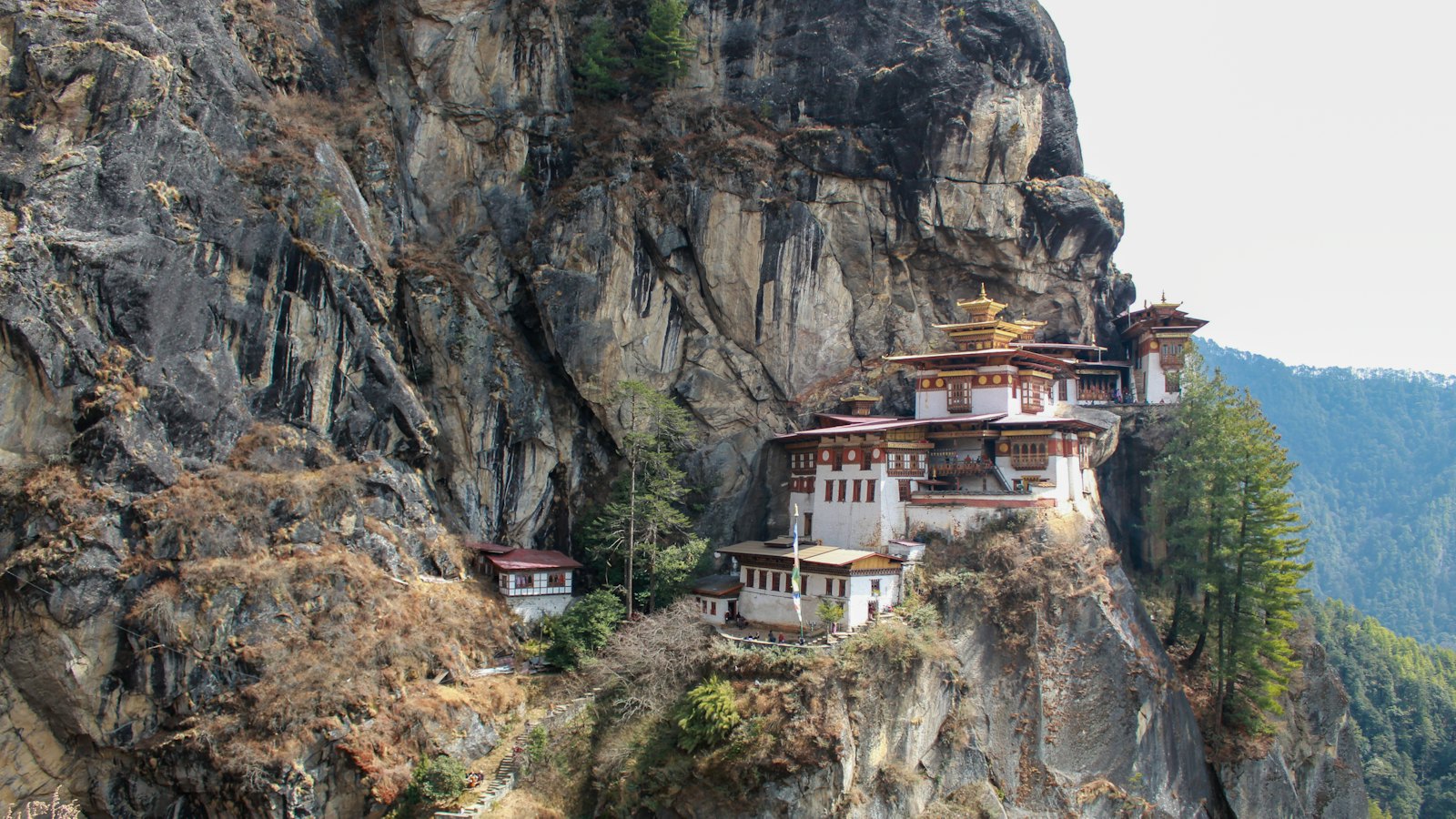
Most international journeys to Bhutan begin in Paro, but this peaceful valley deserves more than a quick transfer to Thimphu. Visitors can explore ancient temples, traditional homes, wooded hills and the cliffside Tiger's Nest monastery. Malaysians need to arrange connecting flights, obtain visa approval in advance and include Bhutan's Sustainable Development Fee in their budgets. This guide covers travel from Kuala Lumpur, airport transfers, places to stay, halal food limitations, local transport, seasonal weather and a comfortable three-day plan. It also explains how elevation and unpredictable mountain conditions can affect sightseeing and flights.
Flying from Malaysia to Paro
There is no nonstop flight between Kuala Lumpur and Paro as of September 2026. Malaysian travellers normally change planes in a city connected to Bhutan, with Bangkok, Delhi, Kolkata and Kathmandu among the usual possibilities. Bhutan-bound services operate on limited schedules, so some journeys involve an overnight transit or tickets issued separately by different airlines.
A convenient combination may take about 8 to 14 hours. An overnight connection makes the journey much longer. Aircraft can enter or leave Paro only when visibility, daylight and weather meet operating requirements. Leave ample time for a self-transfer and avoid scheduling an important meeting or an unprotected onward flight soon after your expected arrival.
Your first carrier determines the departure terminal at Kuala Lumpur International Airport. Many full-service international flights use Terminal 1, while some low-cost airlines operate from Terminal 2. Always follow the terminal stated on the latest booking confirmation.
No dependable promotional fare is currently available for this route. For planning, allow approximately RM 1,500 to RM 3,000 each way. Baggage charges, transit hotels and protection against missed connections can increase the cost of separate tickets.
Reaching Paro town or Thimphu from the airport
Paro International Airport is approximately 6 kilometres from central Paro. Under normal conditions, the drive takes around 10 to 20 minutes. Many Bhutan travel arrangements already include a vehicle, guide or driver, so visitors often meet their local representative outside the arrivals area.
- Arranged vehicle: This is generally the simplest option and may already be covered by a hotel or tour package. When charged separately, expect roughly Nu 500 to Nu 1,000, equal to about RM 25 to RM 50, for the trip into Paro.
- Taxi: Vehicles are usually present around flight arrivals, although availability can be modest. Agree on the fare first. A ride to central Paro commonly costs Nu 500 to Nu 800, or about RM 25 to RM 40.
- Transfer to Thimphu: Bhutan's capital is about 50 kilometres away. The curving road journey normally requires 1 hour 15 minutes to 2 hours. Private transport may cost Nu 2,500 to Nu 4,000, approximately RM 125 to RM 200.
The airport has no railway service. Store the driver's name, vehicle information and an emergency telephone number offline before leaving Malaysia.
Where to stay in Paro Valley
Accommodation is scattered across a wide valley. Two properties that look close together on a map may still be separated by a winding road, river crossing or steep slope. Check the exact location before confirming a room, particularly if you want to walk to restaurants and shops.
- Central Paro: This is a convenient base for a first visit because small stores, restaurants and taxis are nearby. The town becomes quiet early compared with large Malaysian cities.
- Bondey and the airport area: These locations work well for a late arrival or early departure and often have broad valley views. Most guests need a vehicle for meals and attractions.
- Satsam and the Taktsang side: Staying here reduces the morning drive to the Tiger's Nest trailhead. The surroundings are rural, and dining within walking distance is limited.
- Upper Paro Valley: Farm stays and secluded hotels offer forest scenery and a slower atmosphere. Road journeys can take longer than the map distance suggests.
Basic accommodation may cost RM 140 to RM 250 per night, while comfortable mid-range rooms often fall between RM 300 and RM 600. Confirm heating, hot water, included meals and transport access before relying on a property's star category.
Essential temples, walks and cultural sights
Paro brings together major religious monuments, countryside walks, dramatic landscapes and traditional village life. Dress conservatively inside sacred places, take off your shoes when requested and respect restrictions on cameras or phones.
- Tiger's Nest Monastery: Climb the demanding path to Taktsang, which stands against a high cliff. Start in the morning and keep most of the day free.
- Rinpung Dzong: Enter the permitted areas of this fortress-monastery to see its courtyards, timber details and commanding valley position.
- National Museum of Bhutan: Examine religious art, ceremonial masks, natural-history displays and objects connected with Bhutanese society.
- Kyichu Lhakhang: Spend time at one of Bhutan's oldest and most revered temples.
- Drukgyel Dzong: Visit this historic fortress site in the upper valley, where clear weather may reveal distant peaks.
- Chele La: Book a drive towards the high pass only when the road and weather are suitable.
- Farmhouse experience: Learn about domestic architecture, food and rural customs through a visit organized with local permission.
- Archery activity: Observe Bhutan's national sport or try a supervised introductory session.
Plan a mild schedule after landing. Rest and gradual acclimatization make Paro's altitude, stairways and steep paths easier to handle.
Bhutanese dishes and dining habits
Bhutanese cooking is filling, warming and often hotter than newcomers anticipate. Chillies are treated as a central ingredient rather than a minor seasoning, so ask for reduced heat if you are sensitive to spicy food.
Ema datshi pairs chillies with local cheese. Other versions include kewa datshi, prepared with potatoes, and shamu datshi, made with mushrooms. Red rice is served with many meals. Momos are dumplings that may be steamed or fried and filled with vegetables, cheese or meat. Phaksha paa uses pork and chillies, while jasha maru is a seasoned chicken preparation. Suja is Bhutanese butter tea with a salty flavour. Ara is a traditional alcoholic beverage.
Most independent places to eat are concentrated in Paro town. Rural hotels frequently serve fixed menus or buffets, and finding another meal after nightfall can be difficult. Ask whether breakfast and dinner are part of the room rate before selecting isolated accommodation.
Vegetarian food is generally obtainable, including rice, potatoes, mushrooms and cheese-based dishes. However, the word vegetarian does not confirm separate cooking tools or stock without meat. State allergies, religious needs and preparation restrictions clearly to both the guide and kitchen staff.
Halal food and places to pray
Restaurants with clearly verifiable halal certification are uncommon in Paro. Muslim travellers should give their dietary requirements to the operator before entering Bhutan and request written confirmation. Repeat those instructions at every hotel rather than assuming they were passed along. Chicken should not be considered halal unless its source is confirmed, while pork is used in numerous Bhutanese dishes.
Practical lower-risk options can include unopened packaged foods, whole fruit, eggs, plain rice and vegetarian meals prepared without alcohol, animal-derived stock or shared utensils. Fish may also be appropriate when offered. Asking only for no pork does not address lard, sauces, meat sourcing or contact with other ingredients. Even a request excluding both pork and lard requires a discussion about cookware and preparation. Zabihah and HalalTrip might show possible leads, but Paro coverage is limited and every listing should be checked directly.
Dedicated public prayer facilities are unusual at local attractions and at the airport. Pack a small prayer mat, use your hotel room when possible and ask the guide to identify a private, clean location during long outings. Save qibla directions on your phone for offline access.
Getting around the valley
A private vehicle with a driver is the easiest way to reach Paro's widely separated attractions. Many itineraries connected with the visa process include ground transport, which is useful when a short visit covers temples, trailheads and rural districts. Before paying, confirm whether the package includes airport collection, parking, waiting time and longer excursions such as Chele La.
Taxis operate around the airport and town, although drivers may not consistently use meters. Agree on the amount before entering the vehicle. A short journey within the area may cost about Nu 200 to Nu 500, equivalent to roughly RM 10 to RM 25. Prices for longer trips depend on the route and how long the driver must wait. A hotel can arrange a known driver when an early start is required.
Grab does not operate in Bhutan. Public buses are cheaper, but their routes and schedules are generally inconvenient for short-stay visitors heading to countryside attractions.
The middle of Paro is suitable for walking, although pavements and other surfaces can be uneven. Lighting is limited at night. Allow additional road time when rain, construction, livestock or slow traffic affects the winding routes.
Three-day Paro itinerary
- Day 1: Meet the arranged driver at Paro International Airport and settle into your accommodation. Use the afternoon to adjust to the elevation instead of beginning with a strenuous activity. Walk through central Paro and, if arrival time permits, see Rinpung Dzong and the National Museum. Have an early dinner, then organize water, layered clothing and sturdy footwear for the next morning.
- Day 2: Start the Tiger's Nest excursion early. Reserve five to seven hours for the return walk, rest stops and time within the monastery complex. High elevation and a steep trail make a steady personal rhythm more sensible than rushing. After descending, return to town for a warm Bhutanese meal and a quiet evening.
- Day 3: Visit Kyichu Lhakhang before continuing into the upper valley for Drukgyel Dzong. Choose either a planned farmhouse visit or a supervised archery session. When skies are clear and the route is open, a pre-arranged Chele La trip can replace the farmhouse activity. Attempting every option in one day creates an unnecessarily tight schedule.
Add a fourth day if you plan to include Thimphu or want extra protection against disrupted departures caused by mountain weather.
Money and practical travel tips
Bhutan uses the ngultrum, abbreviated as Nu, which is maintained at the same value as the Indian rupee. A useful estimate is RM 1 to about Nu 19 to Nu 21, but the current conversion should be checked before travel. Indian rupees circulate in Bhutan, while Malaysian ringgit is unsuitable for ordinary transactions.
Carry cash for taxis, gratuities, countryside stops and small retailers. Cards are accepted by some hotels and larger establishments, but unreliable connections can interrupt payment terminals. DuitNow QR is not a standard payment method in Bhutan. Obtain enough local currency in Paro or Thimphu before entering less populated areas.
Ask the operator whether it can assist with a Bhutanese SIM at the airport or in town. If choosing an international eSIM, make certain that Bhutan is specifically included. Electrical sockets vary and frequently include types D, F and G, so Malaysian travellers should pack a universal adaptor.
Purchase travel insurance that includes hiking and emergency evacuation. Stay hydrated, protect yourself from strong sunlight and use only properly authorized guides and currency services. Avoid buying wildlife products whose origin or legality is uncertain.
Before you go
- Best time to go
- Spring and autumn are the preferred seasons for many Paro visitors. From March through May, daytime conditions are generally moderate, flowers appear across the landscape and walking is comfortable. Late September to November often brings sharper visibility and a stronger chance of distant mountain views, although evenings become cold from October onward. The monsoon runs from June through August, when cloud, rain, slippery trails and road disruption are more likely. Winter is usually quieter and comparatively dry, but temperatures after sunset can drop below freezing. Flights and rooms fill quickly during religious festivals, so reserve them well ahead. Malaysian school holiday periods may also raise prices in transit cities. Since inadequate visibility can disrupt operations at Paro's mountain airport, leave spare time before any separately booked journey or fixed appointment.
- Visa for Malaysians
- Malaysian citizens must secure an e-visa before travelling to Bhutan as of September 2026. Passport holders from India, Bangladesh and Maldives are exempt, but Malaysians cannot receive a visa on arrival. Approval usually corresponds with the confirmed itinerary and is subject to a permitted visit of up to 90 days. The application is generally submitted online before departure, sometimes with support from a licensed Bhutanese operator or participating hotel. Budget about USD 40 for the single visa fee. Each adult must also pay a Sustainable Development Fee of approximately USD 100 for every day of the visit, normally before arrival. The passport must stay valid for the entire trip. Procedures, charges and payment arrangements can change, so consult Bhutan's official tourism website and confirm the final requirements before flying.
- Honest budget guide
- Allow roughly RM 650 to RM 1,100 per person for each day in Bhutan. This range includes the Sustainable Development Fee but excludes international flights. Because no confirmed low PBH fare is currently available, use RM 1,500 to RM 3,000 in each direction from Kuala Lumpur as a general estimate for connecting services. A basic room may be RM 140 to RM 250 per night, while comfortable mid-range lodging commonly costs RM 300 to RM 600. Set aside RM 70 to RM 150 daily for food and RM 80 to RM 250 for transport when it is outside the package. Including return flights, visa costs, daily fees, accommodation and ground arrangements, a three-night trip may total RM 5,000 to RM 8,500 per traveller. Festival dates, seasonal demand and personal itinerary choices can alter the final amount considerably.
Frequently asked questions
Do Malaysians need a visa for Paro, Bhutan?
Yes. As of September 2026, Malaysian passport holders must obtain an e-visa before departure and are not eligible for a visa on arrival. Approval generally follows the confirmed itinerary and may permit a visit of up to 90 days. Allow about USD 40 for the visa and approximately USD 100 per adult for each day as the Sustainable Development Fee. Confirm current figures on Bhutan's official tourism website.
Is there a direct flight from Kuala Lumpur to Paro?
No nonstop KUL to PBH service is listed as of September 2026. Travellers generally connect through Bangkok, Delhi, Kolkata or Kathmandu, depending on the operating timetable. Some combinations require separate tickets or an overnight stay. Review baggage rules carefully, provide a generous connection window and avoid placing a strict engagement immediately after your expected arrival in Bhutan.
How many days are enough for Paro?
Three full days can cover central Paro, Tiger's Nest, Kyichu Lhakhang and the upper valley without excessive rushing. Four days are preferable if you want to include Chele La, visit a farmhouse or retain weather flexibility. A combined Paro and Thimphu journey is more comfortable over five or six days. Keep your arrival day gentle while adjusting to the elevation.
Is Paro Muslim-friendly?
Paro is peaceful and hospitable, but facilities intended specifically for Muslims are limited. Reliably verified halal restaurants and public prayer rooms are hard to locate. Send detailed food requirements to the operator beforehand and ask about ingredients, stock, utensils and preparation. Carry sealed snacks and a small prayer mat. Your guide can help identify a clean private area for prayer during a long excursion.
What is the best month to visit Paro?
October is a popular choice for cool hiking conditions, relatively clear skies and possible mountain views, though nights are cold and demand can be high. April and May bring spring growth and milder weather. June through August receives monsoon rain. December to February is less crowded but markedly colder. Bring layers regardless of the month because valley temperatures and visibility can shift quickly.
How difficult is the Tiger's Nest hike?
The Tiger's Nest walk is moderately demanding because it rises steeply at high elevation and has many steps near the monastery. Reasonably fit visitors often need five to seven hours for the complete outing with breaks. Begin early, drink water, move at a sustainable speed and wear footwear with dependable traction. Anyone with heart, breathing or mobility concerns should seek medical advice and discuss alternatives with the guide.
Can I use Grab in Paro?
No. Grab does not provide service in Bhutan. Visitors commonly rely on a reserved car and driver, often included in an organized itinerary. Taxis are useful for shorter journeys, but you should settle the price before leaving because meters are not always used. Central Paro is walkable, while Tiger's Nest, Chele La and upper-valley destinations require transport by road.
How much money should I budget for three days in Paro?
A three-night trip from Kuala Lumpur can cost approximately RM 5,000 to RM 8,500 for each person. This broad calculation includes connecting return flights, the visa, Sustainable Development Fees, lodging, meals and local travel. Festival demand, higher-end hotels, private services and separate air tickets may raise the total. Keep some ngultrum for refreshments, small purchases, tips and occasional taxi rides even when major services are prepaid.
Jom pergi
Ready to go Paro? Compare available flights and hotels for your dates. Check baggage, cancellation terms and the final total on the booking provider before paying.






