




On this page12 sections
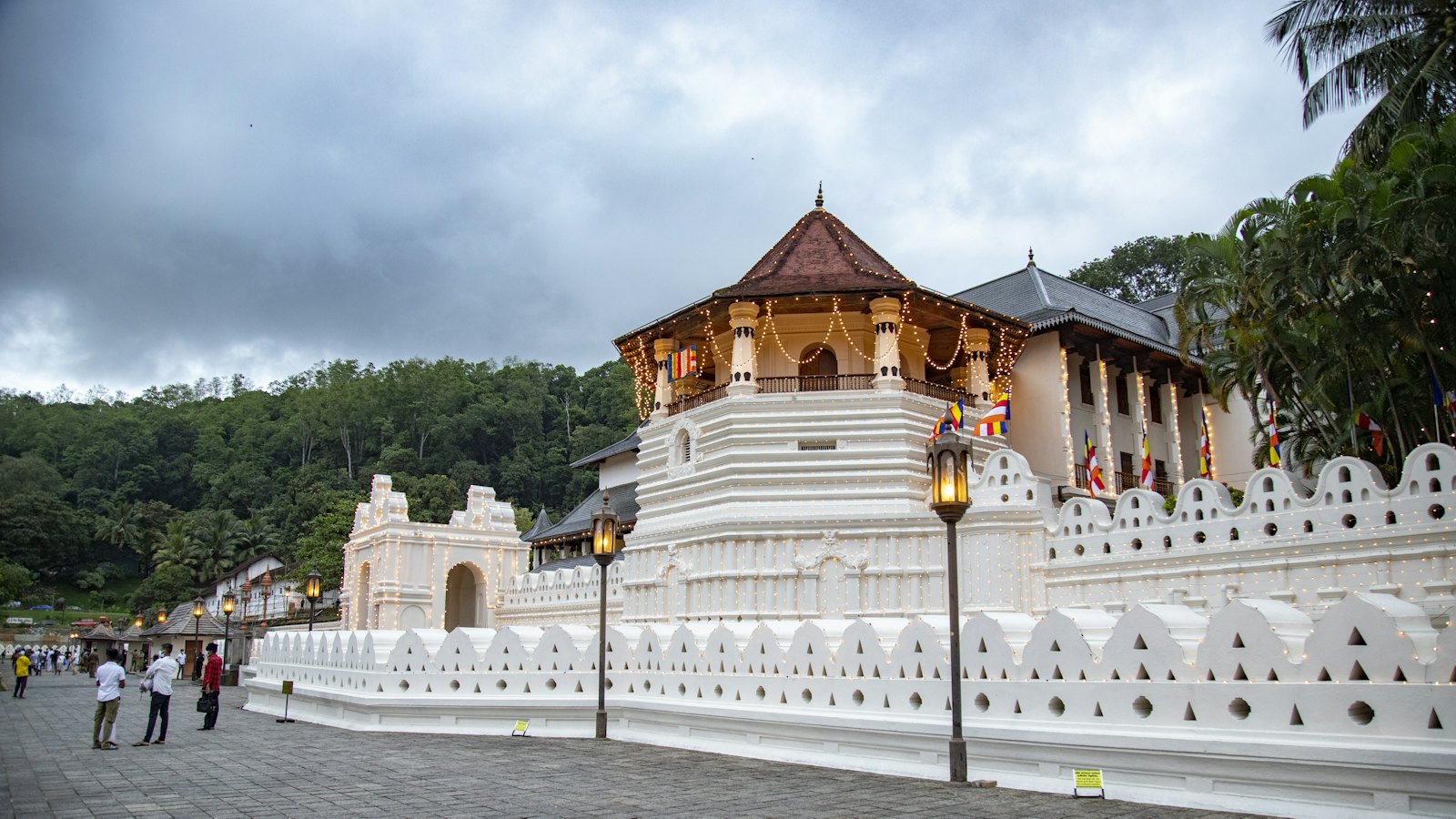
Kandy offers a gentler change of pace after Colombo, with forested hills, a lake at its centre and Sri Lanka's most important Buddhist shrine. Malaysian travellers can spend their days exploring royal-era landmarks, tasting rice and curry, visiting tea country and watching the evening light settle over the hills. Kandy has no commercial airport, so the journey begins with a direct flight from KLIA to Colombo, followed by roughly three hours on the road or a longer scenic train journey. This guide covers that connection, useful areas to stay, Muslim-friendly food, local transport and a practical three-day plan.
Getting there from Kuala Lumpur
Kandy has no commercial airport. Fly from Kuala Lumpur International Airport to Colombo Bandaranaike International Airport (CMB), then continue inland by road or train. The direct flight from Kuala Lumpur takes roughly 3 hours 30 minutes to 4 hours.
As of September 2026, AirAsia, Batik Air Malaysia, FitsAir, Malaysia Airlines and SriLankan Airlines operate direct services between KLIA and Colombo. KLIA terminal assignments vary by airline and can change, so always check the terminal listed on your booking or e-ticket.
At the time of writing, Amaboxly's KL fare scan shows direct one-way fares from RM385 on AirAsia for travel on 10 October 2026. The median one-way fare found is also RM385, with AirAsia and Batik Air appearing in the scan. These prices reflect a live-market snapshot rather than fixed rates. Baggage, meals and seat selection may increase the final total.
For the easiest arrival, book a morning flight and continue to Kandy by car. Travellers who want the famous rail experience can spend a night in Colombo and take a daylight train from Colombo Fort.
Colombo airport to Kandy
Bandaranaike International Airport is north of Colombo, while Kandy lies inland. A direct road transfer normally takes about three to four hours, but traffic around Colombo and roadworks can add time. For rough conversion, LKR7,000 is about RM100.
- Pre-booked car: The simplest option after a flight, particularly for families or groups. Expect roughly LKR25,000 to LKR40,000 (RM360 to RM570) per vehicle, depending on vehicle size, pickup time and waiting charges.
- Airport taxi: Official taxi counters can arrange a metered or fixed-price ride. Confirm the total, tolls and air-conditioning before leaving the terminal. The cost is broadly similar to a pre-booked car.
- Train via Colombo Fort: Travel from the airport to Colombo Fort by taxi or airport transport, then take an intercity train to Kandy. The airport-to-station transfer can take 45 to 90 minutes, and the train typically takes around 2 hours 30 minutes to 3 hours 30 minutes. Reserved seats are worth securing for a comfortable journey.
- Bus: The lowest-cost route usually requires reaching Colombo or Negombo and changing for Kandy. Allow five hours or more and carry small notes for fares.
Late arrivals are better handled with a road transfer or an overnight stay near Colombo.
Where to stay in Kandy
Kandy spreads across steep hills, so a property that appears close on a map may involve a demanding climb. Check both road access and walking gradients before booking.
- Kandy Lake and city centre: Best for first-time visitors who want markets, restaurants, the railway station and the Temple of the Sacred Tooth Relic within a short ride or walk. It is convenient but busy, with traffic noise during the day.
- Lake east and south: A calmer choice with hillside views and easy access to the lake circuit. Some guesthouses sit above narrow roads, so tuk-tuks may be necessary even for short distances.
- Peradeniya: Suitable for travellers prioritising the Royal Botanic Gardens, the university surroundings or onward trains. It feels less central, but accommodation may offer better value and more space.
- Hanthana hills: Good for cool air, greenery and quiet evenings. Choose this area if scenery matters more than being able to walk into town. Road transfers take longer, especially during rain.
Air-conditioning is less essential than in Colombo, though a fan and screened windows remain useful. Confirm hot water, vehicle access and whether the quoted room price includes taxes and breakfast.
Things to do in Kandy
- Temple of the Sacred Tooth Relic: Visit Sri Lanka's most revered Buddhist complex, dress modestly and leave footwear at the designated counter. Non-Buddhist visitors should observe ceremonies quietly.
- Kandy Lake: Walk part of the shaded lakeside circuit in the morning, when traffic and heat are lighter.
- Royal Botanic Gardens, Peradeniya: Set aside two to three hours for palm avenues, orchids, giant trees and broad lawns.
- Udawattakele Forest Reserve: Follow forest paths above the city and watch for monkeys and birds. Carry water and protect food from macaques.
- Ceylon Tea Museum: Learn how tea leaves are processed and see machinery connected with the hill country's plantation history.
- Kandyan cultural performance: An evening show introduces regional drumming, dance and traditional costumes. Buy through a reputable venue or accommodation.
- Central Market: Browse fruit, spices and household goods, keeping valuables secure in crowded aisles.
- Bahirawakanda hill: Visit the large Buddha statue and viewpoint for a broad look across Kandy's rooftops and surrounding ridges.
For a slower day, combine only the temple, lake and gardens. Kandy's traffic makes an overfilled sightseeing list tiring.
What to eat
Kandyan meals often centre on rice with several curries, combining dhal, vegetables, sambol and a choice of meat or fish. Ask how spicy each dish is because local heat levels can be stronger than the average Malaysian restaurant version.
Try hoppers, bowl-shaped rice-flour pancakes commonly eaten with curry or sambol, and string hoppers, fine steamed noodle cakes served at breakfast or dinner. Kottu roti is chopped flatbread stir-fried on a hot plate with vegetables, egg or meat. Lamprais, influenced by Sri Lanka's Burgher community, packages rice, curry and accompaniments in a banana leaf. For snacks, look for savoury lentil vadai, vegetable roti and fish-filled pastries. Curd with palm syrup makes a cooling dessert.
The city centre and roads around the lake have the widest range of casual restaurants, bakeries and vegetarian eateries. Peradeniya also has inexpensive cafes serving students and commuters. Busy places with steady turnover are usually the safest choice. Drink sealed or properly filtered water, and choose freshly cooked food that arrives hot. At buffets, inspect how long meat and rice have been sitting out before filling your plate.
Halal food and prayer spaces
Kandy is manageable for Muslim travellers, but halal status should be checked rather than assumed. Muslim-owned Sri Lankan, Indian and biryani shops are concentrated around the city centre, market streets and transport hub. Ask whether all meat is halal and whether alcohol or non-halal meat is handled in the same kitchen. A sign saying "no pork" does not confirm halal preparation.
Rice and curry, dhal, hoppers and vegetarian thali are useful fallbacks, although strict travellers should still ask about shared utensils. Seafood dishes can also work when cooked without alcohol or non-halal stock. Google Maps, Zabihah and recent reviews from Muslim travellers help identify current options, but confirm in person because ownership and suppliers can change.
Central Kandy has a mosque that serves as the main reference point for congregational prayer. Dress respectfully and ask locally about women's prayer space and current access. Bandaranaike International Airport has designated prayer facilities, making it sensible to pray before beginning the long transfer if the timing works. Carry a compact prayer mat and use a qibla app when visiting the gardens, tea country or hillside areas where dedicated facilities are limited.
Getting around Kandy
Central Kandy is compact on a map, but hills, heat and narrow pavements make walking slower than expected. The lake, temple and market can be linked on foot, while Peradeniya and hillside accommodation require transport.
Tuk-tuks are the most practical choice for short trips. Agree on the fare before departure unless the driver uses a meter. A short central ride is commonly around LKR300 to LKR800 (RM4 to RM12), while longer or uphill journeys cost more. Ask your accommodation for an indicative fare before negotiating.
PickMe, Sri Lanka's main ride-hailing app, works in Kandy and can show tuk-tuk and car prices. Grab is not the standard ride-hailing service in Sri Lanka, so Malaysians should install PickMe before travelling. Driver availability may be thinner late at night or outside the centre.
Local buses are very cheap, often costing only a few hundred rupees, but routes and destination boards can be confusing. Pay the conductor in cash and keep small notes. Trains are useful for Peradeniya, Colombo and hill-country journeys, not for moving between central attractions. There is no tourist transit card equivalent to Touch 'n Go; cash remains important for buses and many tuk-tuks.
A practical three-day Kandy itinerary
- Day 1: Arrive from Colombo, check in and take an easy walk beside Kandy Lake. Visit the Temple of the Sacred Tooth Relic in the late afternoon, allowing time for security and footwear storage. Finish with a Kandyan cultural performance and dinner in the city centre.
- Day 2: Spend the morning at the Royal Botanic Gardens in Peradeniya before the warmer part of the day. Return for lunch, then explore the Central Market and climb or ride to the Bahirawakanda viewpoint. Keep the evening unhurried because cross-town traffic can be slow.
- Day 3: Visit the Ceylon Tea Museum and continue into the Hanthana hills, or choose a guided nature outing towards the Knuckles region if walking is the priority. Return before dark and prepare for the next day's train or road transfer.
A fourth day allows Udawattakele Forest Reserve, a cooking experience or a relaxed excursion into nearby tea country. If travelling onwards to Nuwara Eliya or Ella, reserve the relevant train sector early and treat the ride as part of the itinerary, not simply transportation. Leave flexibility during heavy rain.
Money, SIM cards and practical tips
Sri Lanka uses the Sri Lankan rupee (LKR). A useful planning rate is roughly LKR70 to RM1, although exchange rates move, so check the current rate before departure. Carry cash for markets, buses, tuk-tuks and small eateries. Larger accommodation, supermarkets and established restaurants generally accept cards. DuitNow QR is not a normal payment method in Sri Lanka.
Tourist SIM packages are sold at Colombo airport, with the main local networks offering data suitable for maps and ride-hailing. An eSIM is convenient for immediate connectivity, but compare its allowance and coverage with a physical tourist SIM. Save offline maps before the drive to Kandy.
Sri Lanka commonly uses Type D, G and M electrical sockets. Malaysia's Type G plug may fit some outlets, but a universal adaptor is useful. Tipping is appreciated rather than compulsory. Round up small fares or leave about 5 to 10 percent for good service when no service charge appears.
Kandy is generally straightforward with normal precautions. Watch bags in markets, avoid isolated forest paths after dark and do not feed monkeys. Decline unofficial guides who approach aggressively, confirm tuk-tuk prices in advance and reject detours to gem shops or commission-based attractions unless you genuinely want to visit.
Before you go
- Best time to go
- December to March is the easiest period for Kandy. Conditions are generally drier then, with comfortable hill-country temperatures, although rain remains possible at any time. May to July and October to November can bring wetter spells and slippery paths. July or August usually brings the Esala Perahera season, when major religious processions draw large crowds and accommodation prices rise sharply. Dates vary with the lunar calendar. Book well ahead if the procession is your reason for visiting, or avoid its busiest nights if you prefer quiet streets. Malaysian school holidays around December and year-end can also push up airfares. February and March offer a useful balance of drier weather, manageable crowds and pleasant mornings.
- Visa for Malaysians
- Malaysian passport holders need a free Electronic Travel Authorization before arriving in Sri Lanka. As of September 2026, it allows a 30-day tourist stay with double entry. Apply online at eta.gov.lk before travelling and avoid agent sites that charge for this free permit. Carry a passport valid for at least six months beyond arrival, a confirmed return ticket and evidence of sufficient funds. The official site states that the stay can be extended for up to six months. Airside transit passengers who do not leave the airport do not need an ETA. The airport refers to both paper and digital arrival cards, so complete whichever form your airline or immigration officers request. Rules can change, so confirm the requirements on eta.gov.lk shortly before you travel.
- Honest budget guide
- Plan on RM180 to RM400 per person per day in Kandy, excluding international flights. At the time of writing, direct one-way fares from Kuala Lumpur to Colombo appear from RM385, before optional baggage and seat fees. A simple guesthouse room may cost around RM70 to RM150 a night, while a comfortable mid-range room is roughly RM180 to RM350. Allow RM35 to RM80 per person daily for local meals and RM15 to RM50 for tuk-tuks or buses, with more for a private driver. A three-night trip for two people can total roughly RM2,200 to RM4,000 including return flights, accommodation, food, transfers and moderate sightseeing. Private airport transfers and premium hill properties raise that substantially. All figures are indicative, and exchange rates, festivals and school holidays affect prices.
Frequently asked questions
Do Malaysians need a visa for Kandy, Sri Lanka?
As of September 2026, Malaysians need a free online ETA for Sri Lanka. It permits a 30-day tourist stay with double entry. Apply through eta.gov.lk before travelling and carry a passport valid for at least six months beyond arrival, a return ticket and proof of sufficient funds. Confirm the rule on the official site before departure.
Is there a direct flight from Kuala Lumpur to Kandy?
Kandy has no commercial airport, so there is no direct flight to the city. AirAsia, Batik Air Malaysia, FitsAir, Malaysia Airlines and SriLankan Airlines fly directly from KLIA to Colombo as of September 2026. From Colombo airport, continue to Kandy by car in about three to four hours or travel through Colombo for the train.
How much is a flight from Kuala Lumpur to Kandy?
Flights are booked to Colombo, not Kandy. At the time of writing, Amaboxly's fare scan shows direct one-way Kuala Lumpur to Colombo fares from RM385 on AirAsia, with a median of RM385. Checked baggage, meals and seats may cost extra. Add roughly RM360 to RM570 per vehicle for a direct airport-to-Kandy road transfer.
Is Kandy Muslim-friendly?
Kandy is reasonably manageable for Muslims, with Muslim-owned eateries and a central mosque, but halal choices are less extensive than in Kuala Lumpur. Confirm that meat is halal and ask about shared kitchens. Vegetarian curry, dhal and seafood are practical alternatives. Carry a prayer mat for gardens and countryside trips.
How many days are enough for Kandy?
Three days are enough for the temple, lake, Royal Botanic Gardens, a cultural performance and one tea or nature outing. Add a fourth day for a slower schedule, Udawattakele or a longer excursion towards the Knuckles region. One night feels rushed after the road or rail journey from Colombo.
What is the best month to visit Kandy?
February and March are strong choices for generally drier weather, comfortable mornings and fewer festival crowds. December and January are also popular but can coincide with Malaysian school-holiday demand. The Esala Perahera period, usually in July or August, is culturally significant but brings crowds, road restrictions and higher room prices.
Can Malaysians use Grab in Kandy?
Grab is not the standard ride-hailing service in Sri Lanka. Install PickMe, which operates in Kandy and commonly offers tuk-tuks and cars. Availability can fall late at night or in hillside areas. For street tuk-tuks, agree on the fare before leaving and keep cash in small denominations.
How much money is needed for three days in Kandy?
For two people, roughly RM2,200 to RM4,000 can cover return promotional flights to Colombo, three nights, ordinary meals, local transport, airport transfers and moderate sightseeing. Solo travellers sharing no transfer or room may pay more per person. Festival dates, checked baggage, private drivers and higher-end accommodation can increase the total.
Jom pergi
Ready to go Kandy? Compare available flights and hotels for your dates. Check baggage, cancellation terms and the final total on the booking provider before paying.






