




On this page13 sections
- Overview
- Getting there from KL: flights, terminals and fares
- From Velana Airport to Malé, Hulhumalé or your island
- Where to stay: city, local island or resort
- Things to do in the Maldives
- What to eat: tuna, coconut and teashop short eats
- Halal food and prayer spaces
- Getting around: taxi apps, buses, ferries and seaplanes
- Sample itinerary: 4 days on a local island and Malé
- Money, SIM and practical tips
- Resort or local island: choosing your Maldives
- Before you go
- FAQ
The Maldives is closer than most Malaysians think: a little over four hours non-stop from KLIA to lagoons clear enough to count the fish from the jetty. It is famous as a honeymoon splurge, yet it is also a Muslim nation where local islands serve halal food, the azan drifts across the water at dusk and a guesthouse costs a fraction of a resort. This guide covers the free visa on arrival and IMUGA form, flights from KLIA Terminals 1 and 2, airport transfers in ringgit, and how to choose between a resort and a local island.
Getting there from KL: flights, terminals and fares
AirAsia and Malaysia Airlines both fly non-stop from KLIA to Velana International Airport (MLE), which sits on Hulhulé island beside the capital, Malé. AirAsia departs from KLIA Terminal 2 and has flown the route up to twice daily in recent schedules. Malaysia Airlines leaves from KLIA Terminal 1, with about 10 to 11 flights a week in its published 2026 schedules. T1 and T2 are different buildings linked by a quick train, so check your booking.
The outbound flight takes a little over four hours and the return slightly longer. The Maldives runs three hours behind Malaysia, so a morning departure lands before local lunchtime, early enough for a same-day speedboat.
At the time of writing (our KL fare scan of 28 September 2026), the lowest one-way seat was about RM 504, on AirAsia non-stop for a 10 November 2026 departure. The 20 one-way prices we pulled had a middle value of about RM 607 and topped out around RM 743. SriLankan via Colombo started near RM 652, handy for a Sri Lanka stopover, while routings through Bangkok or the Gulf cost far more. Budget fares exclude checked bags, so add luggage before comparing.
From Velana Airport to Malé, Hulhumalé or your island
Your transfer depends on where you sleep; resort guests are met outside arrivals. Prices are indicative, at roughly MVR 3.8 to RM 1.
- Airport ferry to Malé: the official airport guide lists sailings every 15 minutes from 5.30am to midnight for MVR 15 (about RM 4), cash or card, from the counter near Terminal 2.
- RTL public bus: buses cross the Sinamalé Bridge to Malé and also serve Hulhumalé, for roughly MVR 10 to MVR 15 (under RM 4).
- Taxi: fixed fares of around MVR 70 (RM 18) to Malé and MVR 80 to MVR 85 (about RM 22) to Hulhumalé, plus a few rufiyaa between midnight and 6am.
- Resort speedboat: resorts in North and South Malé Atoll collect guests at the airport jetty; the closest are under 30 minutes away.
- Seaplane: distant resorts use the seaplane terminal on the airport island. Seaplanes do not fly after dark and can cost over USD 700 (about RM 2,850) per person.
- Guesthouse islands: shared speedboats to Maafushi and similar islands leave from the airport jetty or Malé. Government ferries are far cheaper but slow, often sail once a day and are limited on Fridays.
Landing late for a distant resort? Sleep in Hulhumalé first.
Where to stay: city, local island or resort
The Maldives is a scatter of atolls rather than one city, so picking a base means picking a style of holiday. Immigration wants a prepaid, confirmed booking at a registered property, so cross-check yours against the Visit Maldives directories of resorts, hotels and guesthouses.
- Hulhumalé: a reclaimed island a short drive from the terminal, with a long public beach, cafés and mid-range hotels. Ideal for a first or last night and for families watching costs.
- Malé: the compact capital, full of scooters and government offices. One night covers its mosques, markets and museum, but there is little beach.
- Maafushi and other local islands in Kaafu Atoll: inhabited islands with guesthouses, dive shops, excursion desks and a designated bikini beach. The best value in the country, provided you dress modestly in the village.
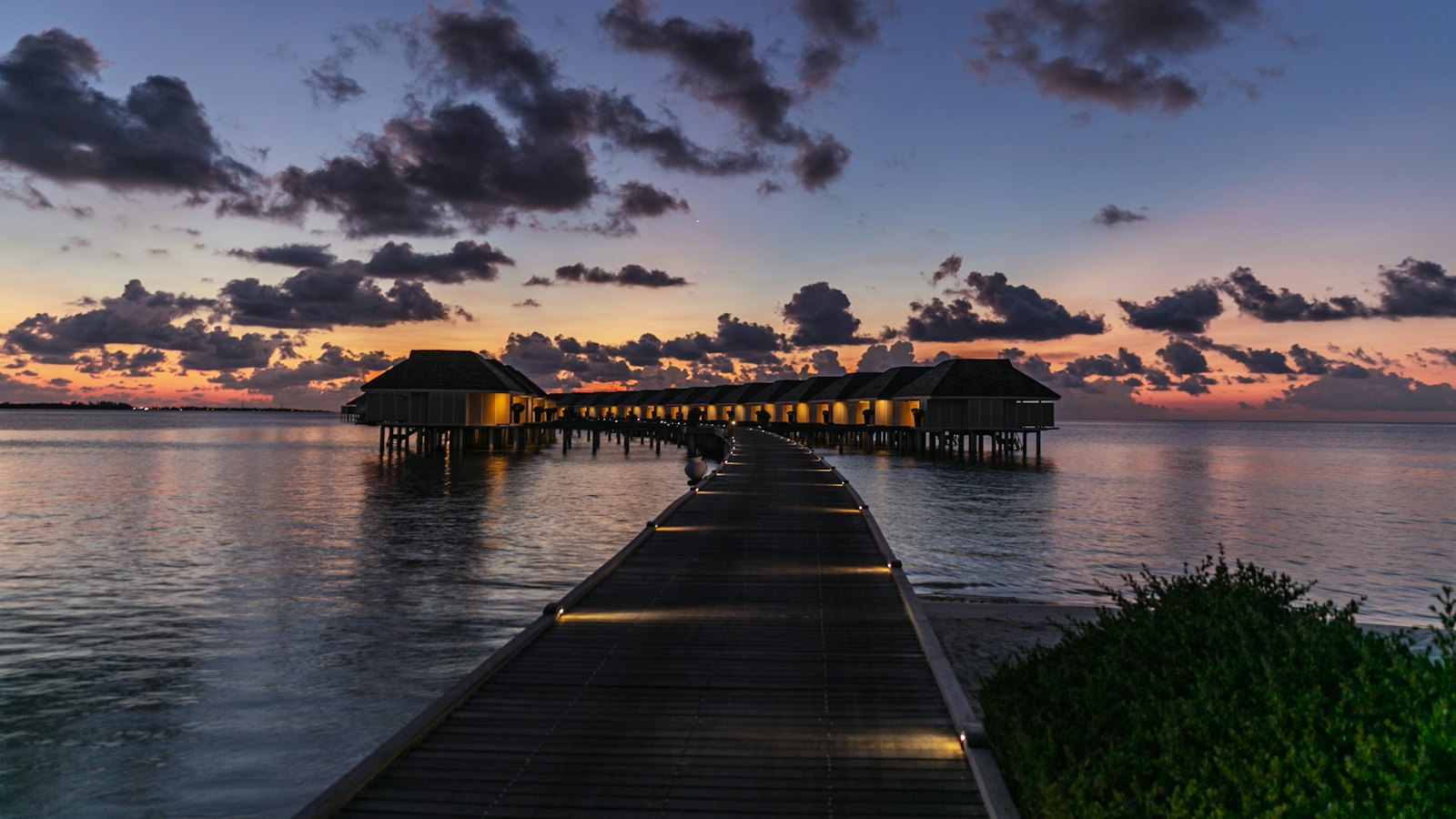
- Resort islands: one island, one hotel, with overwater villas, house reefs and meal plans. Speedboat-distance resorts save hundreds of ringgit on transfers; seaplane resorts in the outer atolls are quieter and pricier.
Keen divers sometimes skip land and book a liveaboard boat instead.
Things to do in the Maldives
Nearly everything here happens in, on or under the water, and guesthouses or resorts sell most trips.
- Snorkel a house reef: many resort islands sit on their own reef, so you can wade in from the beach and meet reef fish, and with luck a turtle.
- Whale sharks in South Ari: Visit Maldives calls the South Ari Marine Protected Area a year-round aggregation site with the highest re-sighting rate of any whale shark hotspot. Keep your distance in the water.
- Manta Point, North Malé Atoll: mantas gather to feed here during the south-west monsoon, May to October.
- Wreck diving: the Maldives Victory, a cargo ship that sank in 1981, lies at about 35 metres and is thick with coral. Certified divers only.
- Sandbanks and dolphins: half-day trips to a sandbank, and sunset cruises that look for dolphins.
- A resort day visit: guesthouses on local islands can often arrange a day at a nearby resort.
- Malé on foot: the coral-stone Old Friday Mosque (Hukuru Miskiy, completed in 1658), the gold-domed Islamic Centre, the King Salman Mosque, Sultan Park with the National Museum, and the fish market.
- Surfing: March to October, with the biggest swells from June to August.
What to eat: tuna, coconut and teashop short eats
Maldivian cooking rests on fish and coconut, with a South Indian accent that Malaysians will recognise from mamak and Kerala-style kitchens. Tuna turns up in almost every meal, smoked, dried, curried or in broth.
- Mas huni: the classic breakfast of shredded tuna, grated coconut, onion, chilli and lime, scooped up with roshi flatbread.
- Garudhiya: clear tuna broth eaten with rice, lime, chilli and onion.
- Riha: curries, usually fish, with rice or roshi.
- Hedhikaa (short eats): teatime snacks such as kulhi boakibaa (a spicy tuna fish cake), little samosa-like bajiyaa, and masroshi, flatbread filled with tuna and coconut.
- Theluli faiy: crisp fried moringa leaves on the side.
- Bon'di bai: sweetened sticky rice, for anyone with a sweet tooth.
For the real thing, eat at a hotaa, the small teashops of Malé and Hulhumalé, where short eats and sweet tea cost very little. The cafés by the Malé fish market fill with fishermen in the afternoon, and many guesthouses will make a Maldivian breakfast on request.
Resorts serve international buffets and set menus, sometimes with Maldivian dishes, at several times Malé prices, which is why many Malaysian couples pick a meal plan.
Halal food and prayer spaces
The Maldives is officially a Sunni Muslim country and its citizens are Muslim by law, an easy trip for Muslim Malaysians. On Malé, Hulhumalé and the inhabited islands, food is halal by default, pork is not sold and alcohol is banned. Airport customs guidance says pork and alcohol cannot be imported without prior approval, and duty-free liquor is confiscated on arrival.
Resorts are the exception: they are licensed to serve alcohol, and some serve pork too. If that matters, ask before booking how the resort sources its meat and whether pork has a separate kitchen, and request halal meals in writing.
Local islands have their own mosques. In Malé you can pray at the Old Friday Mosque, the Grand Friday Mosque at the Islamic Centre, or the King Salman Mosque, which opened for prayers in 2022 and holds about 10,000 worshippers. Velana Airport has dedicated prayer rooms, and at a resort you can ask reception for the qibla and a prayer mat.
The weekend is Friday and Saturday. Many Malé shops close briefly after each prayer, and in Ramadan many cafés outside the resorts stay shut until sunset. Muslim Pro handles prayer times.
Getting around: taxi apps, buses, ferries and seaplanes
Moving around the capital area is cheap; travelling between atolls is where the money goes.
- Grab: not available in the Maldives. The airport's transport page lists local apps instead: Avas Ride, Nala Taxi and Malé Taxi Line, which cover Malé and Hulhumalé.
- Taxis: fixed fares rather than meters, roughly MVR 30 (about RM 8) within Malé and more across the bridge, with a small late-night surcharge.
- RTL buses: Raajje Transport Link connects Malé, the airport and Hulhumalé, and there are city routes within Malé and Hulhumalé. The RTL app has routes, schedules and tickets.
- Walking: Malé is compact, and most sights are a short walk from the airport ferry jetty.
- Public ferries: frequent 10-minute hops link Malé with Villimalé, an hourly ferry runs to Hulhumalé, and slower government ferries serve the atolls, often once a day.
- Speedboats: shared speedboats reach guesthouse islands in under an hour; OdiApp lists schedules and charters.
- Seaplanes and domestic flights: for the outer atolls, resorts arrange a seaplane or a domestic flight plus a speedboat and bill you for it.
On local islands you mostly walk. Boats depend on the weather, so leave slack on travel days.
Sample itinerary: 4 days on a local island and Malé
This plan keeps costs down with a Maafushi guesthouse and a final afternoon in the capital. Honeymooners can swap in a resort for Days 2 and 3.
- Day 1: Fly out of KLIA in the morning and land before lunch local time. Take a shared speedboat to Maafushi, check in and spend the afternoon on the bikini beach or watching boats come into the harbour.
- Day 2: Half-day snorkelling trip to nearby reefs and a sandbank, a lazy midday, then a sunset cruise to look for dolphins.
- Day 3: Either a full-day whale shark trip toward South Ari (a long ride that depends on the sea) or a day visit to a resort with a proper house reef.
- Day 4: Morning speedboat to Malé. Walk from the Old Friday Mosque to the Islamic Centre and Sultan Park, eat short eats at a teashop near the fish market and pray Zuhur in town before an evening flight home; late-evening departures to KL have featured in recent AirAsia and Malaysia Airlines schedules.
A fifth day? Spend it on Hulhumalé beach.
Money, SIM and practical tips
- Currency: Maldivian rufiyaa (MVR). RM 1 bought about MVR 3.8 in late September 2026, and US$1 was about RM 4.08. Resorts price everything in US dollars.
- Cards and cash: cards work at resorts, hotels and most Malé shops; carry clean US dollar notes and some rufiyaa for teashops and ferries.
- DuitNow QR: not an option, as the Maldives is not on PayNet's cross-border list.
- Hidden extras: room rates often exclude 17% tourism GST (since July 2025), a 10% service charge and green tax of USD 6 per person per night at guesthouses and smaller hotels or USD 12 at resorts (since January 2025). Departure tax is already in your air fare.
- SIM: Dhiraagu and Ooredoo sell tourist SIMs and eSIMs at counters outside arrivals.
- Plugs: 230V, with several socket types including the British three-pin, so pack a universal adapter.
- Tipping: optional, since the service charge is already added.
- Customs: leave alcohol, pork, vapes and religious idols at home, and never take coral, shells or sand out.
- Dress: cover shoulders and knees on local islands; bikinis belong at resorts and marked bikini beaches.
- Safety: the sea is the main risk. Some beaches, including parts of Villimalé, have strong currents, so never snorkel alone. Police: 119, ambulance: 102.
Resort or local island: choosing your Maldives
Most Malaysians picture the Maldives as an overwater-villa honeymoon, but that is only one of two very different holidays.
A resort gives you privacy, a house reef and staff who handle every transfer, but room, meal plan, transfer and taxes stack up fast. Resorts reached by speedboat avoid the seaplane bill entirely. Many resorts also set their clocks one to two hours ahead of Malé time for more daylight, so confirm pickup times against the resort clock.
A local island gives you everyday Maldivian life: the call to prayer, teashops, fishing boats unloading at the harbour, halal food everywhere and prices far below resort rates. The trade-offs are modest dress in the village, no alcohol, bikinis only on the designated beach and boat trips at the mercy of the weather.
A popular compromise is to split the trip: two or three guesthouse nights for snorkelling and excursions, then two resort nights to finish in style. Put the resort at the end so its transfer never threatens your flight home.
Before you go
- Best time to go
- December to April is the best time for most visitors, when the dry north-east monsoon brings calm seas, clear water and the most sunshine, along with peak prices. From May to November the south-west monsoon brings more rain, stronger winds and rougher crossings, though showers are often brief and rates drop. That wetter half is also manta season at North Malé Atoll (May to October) and peak surf (June to August), while whale sharks stay off South Ari all year. It is 26°C to 31°C in every month. Most Malaysian states close schools from 5 December 2026, right into the Christmas and New Year peak, so book early. Ramadan 2027 should begin around 8 February, when many cafés outside resorts close by day.
- Visa for Malaysians
- As of September 2026, Malaysians need no visa in advance for the Maldives: tourist entry is granted free on arrival if you meet the basic entry conditions. Maldives Immigration asks for a machine-readable passport valid for at least one month, a confirmed return ticket, a prepaid confirmed booking at a registered resort, hotel or guesthouse, and enough money for your stay. Every foreign traveller, children included, must submit a free Traveller Declaration on the IMUGA portal (imuga.immigration.gov.mv) within the 96 hours before arrival. A yellow fever certificate is needed only if you come from, or recently passed through, a country with yellow fever risk. Most nationalities get 30 days; the airline check-in database (IATA Timatic) lists Malaysians for up to 90, but Immigration's own page states no length, so ask before planning a stay beyond 30 days. Keep your bookings on your phone for the officer. Confirm the latest rules on immigration.gov.mv before you fly.
- Honest budget guide
- Budget about RM 300 to RM 600 a day for each traveller on a local island, and RM 900 to RM 2,500 or more at a resort, flights excluded. Flights: Amaboxly's fare scan puts AirAsia's non-stop one-way seats from about RM 504 at the time of writing, so a return is roughly RM 1,000 to RM 1,300. A guesthouse double on Maafushi or Hulhumalé is roughly USD 50 to USD 100 (RM 200 to RM 410) a night before taxes; entry-level resorts start at several hundred US dollars. Local-island meals come to about RM 60 to RM 150 a day, and each excursion adds RM 150 to RM 500. A five-day local-island trip with a shared room lands somewhere between RM 2,800 and RM 4,000 per head including airfare. These are indicative numbers only.
Frequently asked questions
Do Malaysians need a visa for the Maldives?
No advance visa is needed. Malaysians are admitted free on arrival with a passport valid for at least one month, a confirmed return ticket, a prepaid booking at a registered property and enough funds. Airline data lists stays of up to 90 days, but check with Maldives Immigration before staying beyond 30. Everyone, children included, must also file the free IMUGA Traveller Declaration within 96 hours before arrival.
Is there a direct flight from KL to the Maldives?
Yes. AirAsia flies non-stop from KLIA Terminal 2 and Malaysia Airlines from Terminal 1, landing at Velana International Airport a little over four hours later. Our fare scan, at the time of writing, priced AirAsia one-way seats from about RM 504, with most close to RM 600.
Is the Maldives Muslim-friendly?
Very. It is a Sunni Muslim country, so food on Malé, Hulhumalé and the local islands is halal, pork is not sold and alcohol is banned outside resorts. Local islands have mosques and the airport has prayer rooms. Resorts may serve alcohol and sometimes pork, so ask how they source meat.
How many days in the Maldives is enough?
Four to five days suits most Malaysians: two full days of snorkelling and excursions from a local island, plus half a day in Malé. For a honeymoon, five or six nights split between a guesthouse island and a resort avoids rushed transfers.
What is the best month to visit the Maldives?
February to April usually brings calm seas, clear water and plenty of sun without the Christmas and New Year price peak. May to November is wetter and windier but cheaper, and it is manta season at North Malé Atoll. Whale sharks can be seen off South Ari in any month.
What does a 5-day Maldives trip cost from Malaysia?
Staying on a local island and sharing a room, set aside roughly RM 2,800 to RM 4,000 each, return flights from KL included. A resort can cost RM 6,000 to over RM 12,000 each. Check whether quotes include the 17% tourism GST, service charge and green tax.
Can I use Grab in the Maldives?
No, Grab does not operate in the Maldives. In Malé and Hulhumalé use local taxi apps such as Avas Ride, Nala Taxi or Malé Taxi Line, where fares are fixed. RTL buses link the airport, Malé and Hulhumalé cheaply, and islands are reached by ferry, speedboat or seaplane.
Can I visit the Maldives on a budget without a resort?
Yes. Guesthouses operate on inhabited islands such as Maafushi, a shared speedboat ride from the airport or Malé, and rooms, meals and trips cost far less than at a resort. In return you dress modestly in the village, go without alcohol and keep bikinis to the designated beach.
Jom pergi
Ready to go Maldives? Compare available flights and hotels for your dates. Check baggage, cancellation terms and the final total on the booking provider before paying.






