




On this page13 sections
- Overview
- Getting there from KL: non-stop flights to Delhi
- From Delhi Airport into the city
- Where to stay in Delhi
- Things to do in Delhi
- What to eat in Delhi
- Halal food, mosques and prayer spaces
- Getting around Delhi
- A four-day Delhi itinerary
- Money, SIM cards and practical tips
- Day trip to Agra and the Taj Mahal
- Before you go
- FAQ
Delhi is where many Malaysians first meet North India: Mughal mosques and garden tombs, the wide avenues the British laid out, and markets selling everything from wedding saris to plates of chaat. It is also the springboard for the Taj Mahal, a morning train ride away in Agra. Better still, India waives the fee for the 30-day e-Tourist Visa for Malaysians until 31 December 2026. Below you will find the non-stop flights from KLIA, the metro in from the airport, where Muslim visitors find halal kebabs and space to pray, how to dodge the winter smog, and what it all costs in ringgit.
Getting there from KL: non-stop flights to Delhi
Kuala Lumpur to Delhi takes about five and a half to six hours, and India runs two and a half hours behind Malaysia.
The current non-stop choices all leave from KLIA Terminal 1:
- Malaysia Airlines: the national carrier.
- Batik Air Malaysia: the cheapest non-stop in our November fare check.
- Air India: which added extra weekly flights from late 2025.
AirAsia X, the only non-stop operator from Terminal 2, is dropping its four-weekly Delhi service when the winter schedule starts on 25 October 2026. After that, low-cost travellers typically connect, for example on AirAsia and Thai AirAsia X through Bangkok.
Price check: at the time of writing, our KL fare scan (refreshed 21 September 2026) had Batik Air's non-stop from about RM 617 one-way for a mid-November date. Air India non-stops mostly sat near RM 940, and December dates, which fall in the Malaysian school holidays, started around RM 1,007. The cheapest one-stop routing was AirAsia with Thai AirAsia X via Bangkok, from near RM 799.
All international arrivals in Delhi use Terminal 3.
From Delhi Airport into the city
Terminal 3 at Indira Gandhi International Airport (DEL) handles every international flight. Prices are indicative, at roughly Rs 23.5 to RM 1.
- Airport Express metro (Orange Line): the station links directly to Terminal 3, and the airport lists ticket machines in the arrivals area. New Delhi station is about 20 to 25 minutes away, and a single ticket costs roughly Rs 60 to Rs 65 (under RM 3); change there to the Yellow Line for Rajiv Chowk (Connaught Place) or Chandni Chowk. The first trains leave at 4:45 am, and the last city-bound train sets off from Dwarka Sector 21 at 11:15 pm.
- Prepaid taxi: pay only at the official prepaid booths, never to touts in the hall. Fares to the centre have been reported at around Rs 500 to Rs 600 (RM 21 to RM 26), but go by the rate the booth quotes, and hold on to the receipt until you arrive.
- App cabs: Uber and Ola collect passengers on Level 0 of the Terminal 3 multi-level car park, where electric Evera cabs are also available. App prices swing with demand, so compare them with the prepaid rate.
- Hotel pickup: worth it after midnight, when trains have stopped and touts target tired arrivals.
Travelling light, take the metro; with toddlers or bulky bags, a cab to the door is simpler.
Where to stay in Delhi
Delhi sprawls and its roads crawl, so sleep near a metro station.
- Connaught Place and Janpath: the colonial-era ring of shops and restaurants in the middle of New Delhi, sitting on top of the Rajiv Chowk interchange. Good for first-timers and mid-range budgets.
- Paharganj and Karol Bagh: inexpensive hotels, with Paharganj right beside New Delhi railway station and the Airport Express terminus. Handy for early Agra trains, but noisy, with touts near the station. Karol Bagh works for families who want a market outside the door.
- South Delhi (Hauz Khas, Saket, Greater Kailash, Lajpat Nagar): leafier, pricier areas with guest houses, malls and cafes, mostly on the Yellow, Magenta and Violet lines. Suits couples and second-time visitors.
- Aerocity: international chain hotels one stop from Terminal 3 on the Airport Express, best for a late landing or a dawn flight.
Some Muslim visitors choose small hotels near Jama Masjid or Nizamuddin to keep halal meals and a mosque within walking distance; expect simpler rooms and crowded lanes.
Things to do in Delhi
Foreigners pay several hundred rupees at most heritage sites, and the Red Fort closes on Mondays.
- Jama Masjid: Shah Jahan's great mosque, finished in 1656 with space for 25,000 worshippers. Muslims can pray here; sightseers must stay out at prayer times.
- Chandni Chowk: Old Delhi's Mughal-era market street, best by cycle rickshaw, with Fatehpuri Masjid (1650) at its western end.
- Red Fort: Shah Jahan's red sandstone palace, completed in 1648 and now a UNESCO site.
- Humayun's Tomb: a garden tomb commissioned in 1558 and completed in 1572 that set the pattern for Mughal royal mausoleums, culminating in the Taj Mahal.
- Hazrat Nizamuddin Dargah: shrine of the Sufi saint Nizamuddin Auliya, with qawwali after Maghrib every evening. By tradition, women do not enter the inner sanctum.
- Qutb Minar: a 72.5-metre tower begun in 1199, beside the ruined Quwwat-ul-Islam, one of the oldest surviving mosques in India.
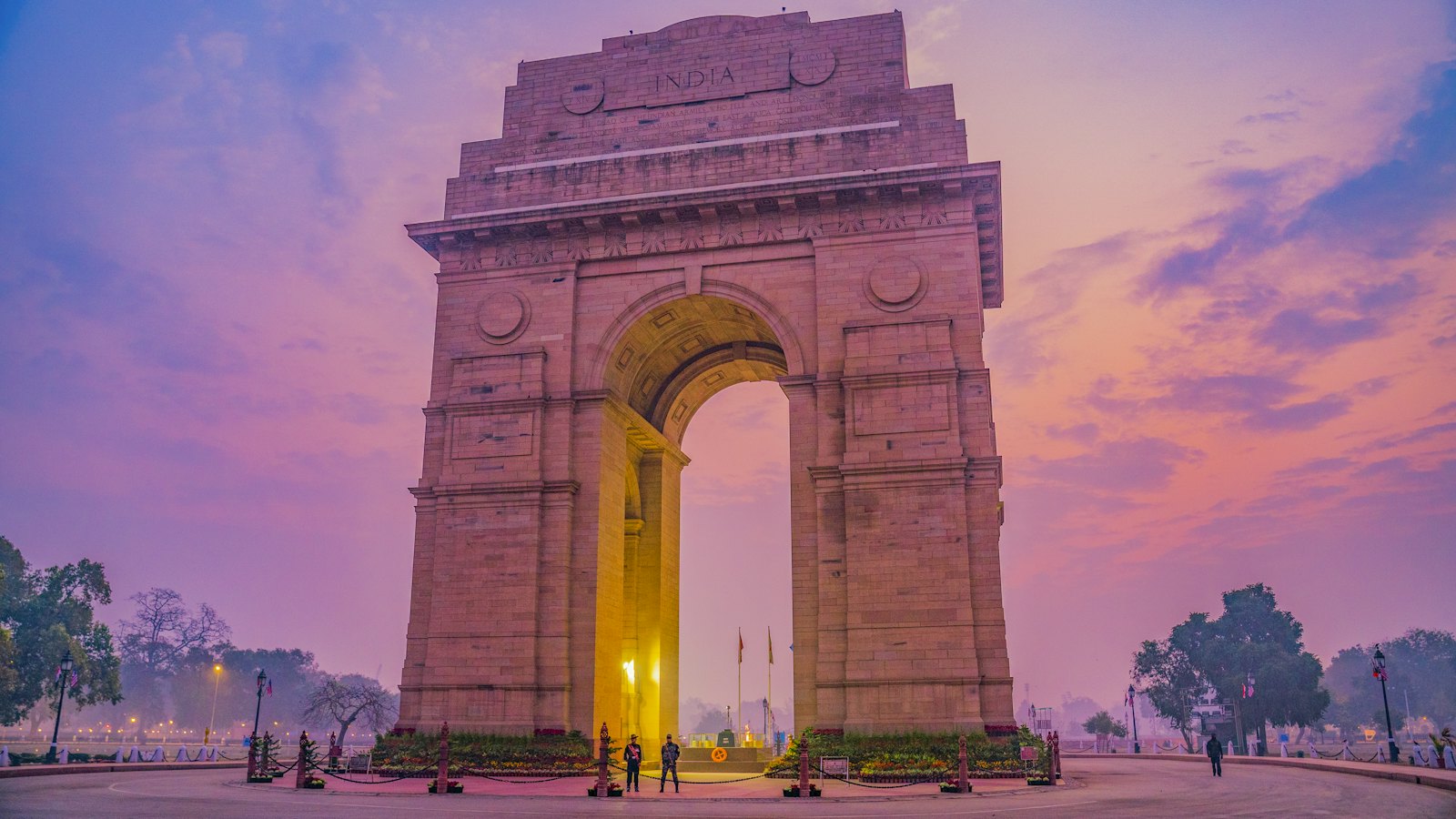
- India Gate and Kartavya Path: the war memorial and ceremonial boulevard, busy with families at dusk.
- Lotus Temple: the Baha'i House of Worship, shaped like a half-open lotus.
- Akshardham: the vast Swaminarayan temple complex on the Yamuna's east bank, opened in 2005.
- Shopping: Sarojini Nagar for bargain fashion, Lajpat Nagar for mid-priced Indian wear and Dilli Haat for regional crafts.
What to eat in Delhi
Delhi cooking is North Indian and Punjabi: wheat breads, tandoor grills and rich tomato and butter gravies, with much less coconut and seafood than the mamak and banana-leaf meals back home. Delhi sits far inland, so order chicken, mutton or vegetarian dishes rather than seafood.
- Butter chicken (murgh makhani): popularised in the 1950s by Moti Mahal in Daryaganj, and now on nearly every menu.
- Nihari and kebabs: slow-cooked mutton nihari and seekh kebabs are the pride of the lanes by Jama Masjid, where Karim's has served Mughlai food since 1913.
- Parathas: stuffed flatbreads fried in ghee along Paranthe Wali Gali, a heavier cousin of roti canai.
- Chaat: golgappa shells filled with potato and spiced water, papdi chaat and other tangy snacks under yoghurt and chutney.
- Chole bhature: spicy chickpeas with puffed fried bread, a big breakfast.
- Sweet things: hot jalebi, kheer, kulfi, lassi and masala chai, Delhi's reply to teh tarik.
Street food is half the pleasure: pick busy stalls that cook to order, drink bottled or filtered water, and ease in gently to avoid Delhi belly.
Halal food, mosques and prayer spaces
Delhi is mostly Hindu, yet roughly one resident in eight is Muslim (12.9 percent in the 2011 census), so halal meals are easy once you know the neighbourhoods.
- Certification: India has no government body like JAKIM. Private organisations such as Jamiat Ulema-e-Hind issue certificates, few restaurants display one and some sellers self-declare, so most visitors go by Muslim ownership.
- Where to eat: the kebab and nihari lanes around Jama Masjid, and the Nizamuddin West market beside the dargah, where many eateries are Muslim-run.
- Elsewhere: many Hindu and Sikh-run kitchens use jhatka meat, the slaughter method most meat-eating Sikhs and many Hindus prefer, which is not halal. When a restaurant cannot confirm halal meat, go vegetarian: pure veg places serve no meat or fish, though they carry no halal certificate.
For Friday prayers, Jama Masjid and Fatehpuri Masjid are Old Delhi's landmark mosques, and the Nizamuddin complex has its own Jamat Khana Masjid. Delhi Airport lists prayer rooms among its facilities, but elsewhere a surau is hard to count on, so pack a light prayer mat and use Muslim Pro for prayer times and qibla.
Getting around Delhi
The Delhi Metro beats the traffic and reaches Gurugram and Noida too.
- Tickets: single-journey QR tickets are sold at stations and through ticketing apps. A stored-value smart card (Rs 50 refundable deposit) suits frequent riders, and one-day or three-day tourist cards give unlimited travel. Most central hops cost roughly Rs 20 to Rs 35, about RM 1 to RM 1.50.
- Women: the front carriage of every train is for women only, and the rule is enforced.
- Ride-hailing: Grab is not available in India, so install Uber, Ola or Rapido before leaving Malaysia. Uber's bike option is handy for solo trips in heavy traffic.
- Auto-rickshaws: drivers seldom use the meter, so settle the fare before getting in.
- Cycle rickshaws: made for Old Delhi's lanes; agree the price first too.
Use the metro for long distances and a cab for the last stretch. December fog can disrupt roads, trains and flights, so leave a buffer.
A four-day Delhi itinerary
Shuffle the days so you avoid the Red Fort on a Monday and the Taj Mahal on a Friday.
- Day 1: Old Delhi. Jama Masjid in the morning, a cycle rickshaw along Chandni Chowk to Fatehpuri Masjid, then kebabs and nihari for lunch. The Red Fort in the afternoon and India Gate at dusk.
- Day 2: Mughal and Sufi Delhi. Humayun's Tomb in the soft morning light and a long lunch, then cross Mathura Road to Hazrat Nizamuddin Dargah (the emperor's tomb was sited to be near it) for qawwali after Maghrib and dinner in the market.
- Day 3: Agra. An early train from New Delhi, the Taj Mahal and Agra Fort, and back by evening; see the Agra section below.
- Day 4: South Delhi. Qutb Minar before the crowds, then Sarojini Nagar or Lajpat Nagar for clothes, Dilli Haat for crafts and the Lotus Temple if time allows, before the ride to Terminal 3.
A fifth day fits Akshardham or another unhurried morning in the Old Delhi bazaars. With a week, carry on to Jaipur to complete the Golden Triangle.
Money, SIM cards and practical tips
- Currency: Indian rupees. At the time of writing RM 1 is worth about Rs 23.5, which makes Rs 100 roughly RM 4.30 and Rs 1,000 about RM 43.
- Paying: DuitNow QR does not work in India; at the time of writing PayNet lists only Singapore, Indonesia, Thailand and Cambodia for cross-border QR payments. Keep small notes for stalls, rickshaws and shoe minders, and use Visa or Mastercard in hotels and malls.
- Mobile data: tourist SIM cards are sold in the airport arrivals hall; bring your passport, or set up an eSIM before leaving KLIA.
- Power: sockets are types C, D and M on 230 V, so your Malaysian square-pin chargers need an adapter.
- Tipping: taxi drivers do not expect it; porters and good guides appreciate a little extra.
- Air and water: drink sealed bottled or filtered water, and pack N95 masks for October to February.
- Scams: walk away from anyone saying your hotel is shut, the road is closed or foreigners need a special ticket office. Private agencies near Connaught Place pose as the government tourist office. At Jama Masjid, decline self-appointed guides.
- Safety: women should dress modestly, use the women-only carriage and book cabs after dark. Mind pickpockets in bazaars.
Day trip to Agra and the Taj Mahal
Most Malaysians who come to Delhi also want to see the Taj Mahal, around 200 km away in Agra, and it works as a long day trip.
- Train: about 20 trains a day link Delhi and Agra, taking roughly two to five hours. The Vande Bharat Express from New Delhi is among the quickest, and the long-running Shatabdi Express leaves New Delhi early in the morning and reaches Agra Cantonment about two hours later, with a meal served on board. Check current times and book on IRCTC early in peak season.
- Car: allow at least three and a half hours each way via the Yamuna Expressway with a hired driver, agreeing the day rate, tolls and waiting time up front.
- Tickets: foreigners, Malaysians included, pay Rs 1,100 (about RM 47) for the Taj grounds and Rs 200 more for the main mausoleum. It opens 30 minutes before sunrise, closes 30 minutes before sunset and is shut to sightseers every Friday.
- In Agra: be at the gate at opening time, use licensed guides only, and move between the Taj and Agra Fort by cab, auto-rickshaw or the Agra Metro, whose first line serves both.
With a night to spare, add Fatehpur Sikri, the deserted Mughal capital outside town. Touts swarm every Agra monument; a polite but firm no does the job.
Before you go
- Best time to go
- Aim for mid-February to March or early October, when Delhi is warm, dry and pleasant for walking and you miss both the summer furnace and the worst winter smog. From late October to February the air is often poor or worse, and Diwali, on 8 November 2026, usually adds firework smoke to the haze. December and January are cool (January nights average about 8°C), with dense fog that can delay flights and trains. April to June is brutal, with average highs near 40°C, and the monsoon lasts from late June to mid-September. Holi, the festival of colours, lands in March, and the Republic Day parade on 26 January centres on India Gate and Kartavya Path. The Malaysian school break, running from early December to 31 December 2026, drives up December fares, so book ahead.
- Visa for Malaysians
- Malaysians need a visa for India, and as of September 2026 the 30-day e-Tourist Visa is issued free of charge to Malaysian passport holders until 31 December 2026. Apply on the official portal, indianvisaonline.gov.in, between 120 and four days before arrival; the government charges no express fees, so skip copycat sites that add their own. The High Commission of India in Kuala Lumpur describes the free visa as double entry, and the portal says the 30 days run from your first arrival and cannot be extended. Other e-visas are charged, including one-year and five-year tourist versions at US$40 and US$200. Bring a passport with six months' validity at application and two empty pages, your ETA printout and an onward or return ticket. In the 72 hours before landing you can also submit the e-Arrival Card online or via the Indian Visa Su-Swagatam app. Check indianvisaonline.gov.in for changes before flying.
- Honest budget guide
- Budget about RM 130 to RM 400 a day per person in Delhi, not counting flights; the hotel you pick makes most of the difference. Flights: Amaboxly's KL fare tracker priced the cheapest one-way seat at about RM 617 (Batik Air, non-stop) at the time of writing, with most non-stops near RM 940, so a return works out at very roughly RM 1,250 to RM 1,900. Budget hotels run under about Rs 4,000 (RM 170) a night and good mid-range ones Rs 4,000 to Rs 8,000 (RM 170 to RM 340), plus taxes. Meals cost about RM 40 to RM 100 a day, and the metro with occasional cabs RM 15 to RM 50. The Taj Mahal alone costs foreigners Rs 1,300 (about RM 55) with the mausoleum. Sharing a mid-range room, five days and four nights comes to roughly RM 2,200 to RM 3,700 each with flights. Treat every figure as indicative.
Frequently asked questions
Do Malaysians need a visa for Delhi?
Yes, but the 30-day e-Tourist Visa costs nothing for Malaysians until 31 December 2026. Apply at least four days ahead on indianvisaonline.gov.in, with a passport valid for six more months and two blank pages. You can also file the e-Arrival Card online in the 72 hours before landing.
Is there a direct flight from KL to Delhi?
Yes. Malaysia Airlines, Batik Air Malaysia and Air India fly non-stop from KLIA Terminal 1 in about five and a half to six hours. AirAsia X is ending its Delhi flights from 25 October 2026. In our 21 September 2026 fare check, the cheapest non-stop was Batik Air at about RM 617 one-way.
Is Delhi Muslim-friendly?
Largely, yes. Around one in eight residents is Muslim, and Old Delhi near Jama Masjid and the Nizamuddin area are full of Muslim-run kebab and nihari shops. Formal halal certificates are rare and many other kitchens use jhatka meat, so ask or eat vegetarian. Major mosques welcome Muslim visitors, and Delhi Airport lists prayer rooms.
How many days in Delhi is enough?
Three full days cover Old Delhi, the Mughal tombs, Qutb Minar and some shopping, and a fourth adds a train trip to the Taj Mahal. With a week, continue to Jaipur. Leave slack for traffic and winter fog.
What is the best month to visit Delhi?
February and March, with warm days, cool nights and cleaner air than midwinter, plus Holi in March. Early October is the other sweet spot. November to January brings smog and fog, April to June is scorching, and the monsoon runs from late June to mid-September.
What does a 5-day trip to Delhi cost from Malaysia?
Roughly RM 2,200 to RM 3,700 per person for five days and four nights including flights, staying mid-range and sharing a room. Daily spending runs about RM 130 to RM 400 each, covering your share of the room, meals, transport and tickets. Bring cash, as DuitNow QR does not work in India.
Can I use Grab in Delhi?
No. Grab does not run in India; Uber, Ola and Rapido fill that role, and Uber and Ola pick up at Delhi Airport's Terminal 3. For longer trips the metro is quicker than any car, and street auto-rickshaws rarely run the meter, so fix the fare first.
How do I get from Delhi Airport to the city?
Take the Airport Express metro from Terminal 3: about 20 to 25 minutes to New Delhi station for roughly Rs 60 to Rs 65 (under RM 3), then change to the Yellow Line for Connaught Place. Official prepaid taxis have been quoted at around Rs 500 to Rs 600 (RM 21 to RM 26), and Uber and Ola pick up at the Terminal 3 car park.
Jom pergi
Ready to go Delhi? Compare available flights and hotels for your dates. Check baggage, cancellation terms and the final total on the booking provider before paying.






