




On this page13 sections
Goa mixes Arabian Sea beaches, Portuguese-era streets, grand churches, Hindu temples and a food culture shaped by coconut, seafood and spice. It is also more spread out than many first-time visitors expect, so choosing the right base matters. North Goa suits travellers who want markets, nightlife and busy beaches, while South Goa offers quieter sand and slower evenings. This guide covers one-stop flights from KLIA, transport from Dabolim Airport, realistic costs in ringgit, halal considerations and a balanced four-day itinerary. It also explains the free 30-day eVisa available to Malaysian passport holders as of September 2026.
Flying from Kuala Lumpur to Goa
There is no listed direct flight from Kuala Lumpur International Airport to Goa as of September 2026, so plan for at least one stop. Common connection points include Bengaluru, Chennai, Mumbai and Ahmedabad. Journey time is usually about eight to fourteen hours, depending on the transfer, while an awkward or overnight connection can take longer.
At the time of writing, Amaboxly's fare scan shows the cheapest one-way trip at RM1,635 on Malaysia Airlines and IndiGo, with one stop in Bengaluru, for travel on 10 November 2026. The median one-way fare is RM1,830. Other indicative one-way findings include RM1,650 via Chennai, RM1,930 via Mumbai and RM2,233 via Ahmedabad. SriLankan and Air India combinations also appeared in the results.
These connections generally begin at KLIA Terminal 1, but always follow the terminal printed on your booking because operating arrangements can change. Check that baggage is transferred through to Goa, especially when combining airlines. Search specifically for Goa Dabolim Airport, code GOI, because results may also show the newer Manohar International Airport, code GOX, in North Goa.
Dabolim Airport to your Goa base
Goa International Airport, commonly called Dabolim Airport, sits near Vasco da Gama. It is convenient for central and South Goa, but reaching the northern beach belt can take well over an hour in traffic. For rough conversions, ₹100 is about RM5, although exchange rates move.
- Prepaid taxi: Use the official counter in the arrivals area. Expect roughly ₹800 to ₹1,200 (RM40 to RM60) to Margao, ₹1,000 to ₹1,500 (RM50 to RM75) to Panaji, and ₹1,500 to ₹2,200 (RM75 to RM110) to Calangute or Candolim. Palolem can cost around ₹1,800 to ₹2,500 (RM90 to RM125). Travel normally takes 30 to 90 minutes, depending on your destination and traffic.
- App taxi: GoaMiles operates in Goa, although vehicle availability and pickup arrangements vary. Compare the quoted fare with the prepaid counter before confirming.
- Local bus: The cheapest route involves reaching Vasco da Gama and changing to a bus for Panaji or Margao. Fares are generally below ₹100 (RM5), but this is inconvenient with luggage and services thin out at night.
- Hotel transfer: A pre-arranged vehicle is useful for late arrivals, families or remote beach accommodation. Confirm the total price before departure.
Where to stay in Goa
Goa is a state rather than a compact resort town. Moving between distant beaches consumes time, so choose an area that matches the trip you actually want.
- Panaji: Best for Portuguese-era streets, local restaurants, river views and access to Old Goa. It feels more like a small working capital than a beach resort. Miramar Beach is nearby, but travellers seeking a classic beach holiday may prefer the coast farther north or south.
- Candolim and Calangute: Convenient for first-time visitors who want restaurants, shops, watersports and an active evening scene. Candolim is generally calmer, while central Calangute and neighbouring Baga can become crowded and noisy.
- Anjuna and Vagator: Suited to cafés, markets, sunset spots and nightlife. Accommodation ranges from hostels to design-led stays, but weekend traffic can be frustrating.
- Colva, Benaulim, Agonda or Palolem: Better for a slower South Goa stay. Colva and Benaulim have easier access to Margao, while Agonda and Palolem feel more removed. Palolem has more visitor facilities; Agonda is the quieter choice.
Split stays only make sense if you have at least five or six days.
Things to do in Goa
Goa rewards travellers who mix heritage, coast and inland scenery rather than spending every day on the same beach.
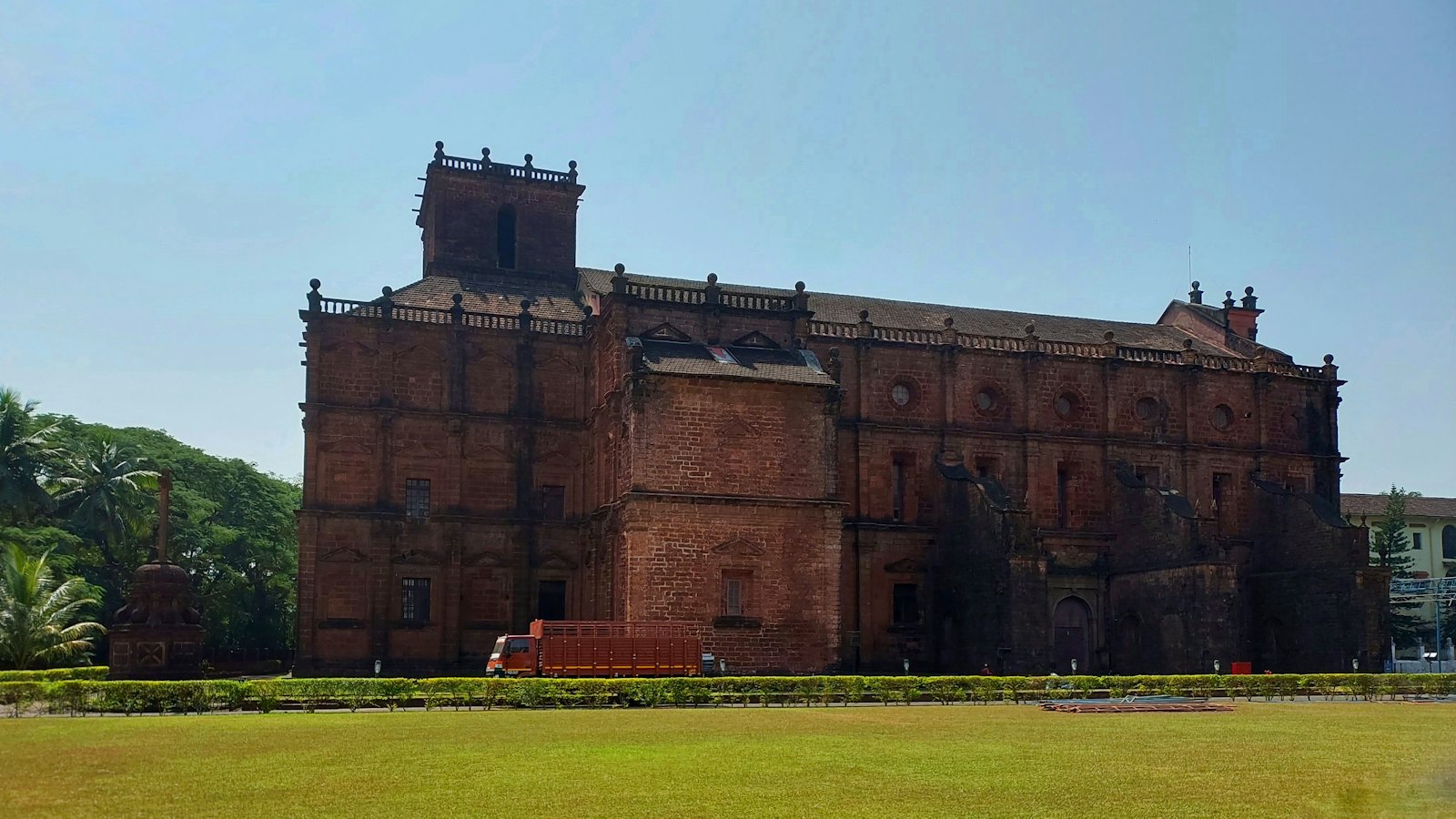
- Explore Old Goa: Visit the Basilica of Bom Jesus and the imposing Sé Cathedral, dressing respectfully at active religious sites.
- Walk through Fontainhas: Panaji's old Latin Quarter has colourful houses, narrow lanes and tiled details. Residents still live here, so keep voices and photography considerate.
- Watch sunset from a fort: Chapora Fort pairs ruined ramparts with wide coastal views, but the exposed climb is hot around midday.
- Choose a northern beach: Candolim is a practical all-rounder, while Vagator has a more dramatic shoreline.
- Slow down in South Goa: Agonda and Palolem suit swimming, reading and unhurried evenings, subject to sea conditions.
- See Dudhsagar Falls: Water flow is strongest around and after the monsoon. Access rules and jeep operations can change with weather.
- Visit a spice plantation: Inland estates introduce Goa's pepper, cardamom and tropical crops, often with a local meal.
- Browse a market: Flea and night markets are seasonal. Treat them as an evening outing rather than a source of guaranteed bargains.
- Cruise the Mandovi River: Short evening cruises leave from around Panaji, with experiences ranging from quiet sightseeing to loud entertainment boats.
Goan dishes worth trying
Goan cooking draws from Konkan ingredients and centuries of Portuguese influence. Coconut, kokum, vinegar, chilli and seafood recur across menus, but recipes differ between Hindu, Catholic and Muslim kitchens.
Try fish curry rice for an everyday introduction, followed by prawn curry, crab xec xec or rava-fried fish. Chicken cafreal is green with herbs and spice, while chicken xacuti has a deeper roasted coconut flavour. Vegetarian travellers can look for mushroom xacuti, vegetable caldin, dal, bhaji and thali meals. Poi, a round local bread, works well with curry or a breakfast omelette. Bebinca is Goa's best-known layered dessert, and serradura is another Portuguese-influenced sweet commonly encountered.
Pork vindaloo, sorpotel and chouriço are prominent Goan specialities but are not suitable for Muslim diners. Ask about cooking wine, pork stock and shared utensils rather than assuming that a seafood dish is halal. Panaji, Margao, Vasco da Gama and the established beach strips provide the widest choice. Beach shacks are enjoyable for sunset dining, but prices and hygiene standards vary. Choose busy places, order seafood that looks properly chilled and drink sealed or filtered water.
Halal food and prayer spaces
Goa is manageable for Muslim travellers, but halal certification is less visible than in Malaysia. Muslim-owned restaurants and halal meat are easier to find in Panaji, Vasco da Gama, Margao and some parts of Calangute. Ask directly whether the meat is halal and whether alcohol or pork enters the same kitchen. A sign saying no pork or no lard does not by itself confirm halal preparation.
Seafood and vegetarian meals are useful fallbacks, although Goan recipes may contain alcohol or be cooked on shared equipment. Search recent reviews on Google Maps or Zabihah, then confirm with staff because listings can become outdated. Carry packaged food for remote beaches or long day trips if strict assurance is important.
Jama Masjid in Panaji is a practical prayer point when sightseeing in the capital, while Safa Masjid in Ponda is a notable historic mosque for an inland itinerary. Do not assume every beach, shopping area or airport zone has an accessible dedicated prayer room. At Dabolim Airport, ask staff whether a quiet space is available and perform prayers before leaving your accommodation when timings allow. A compact prayer mat and offline qibla app are useful.
Getting around Goa
Goa does not have a metro, a single tourist transit card or a public transport network comparable with Kuala Lumpur. Distances between beaches are substantial, and buses are designed mainly for local journeys.
Public buses connect towns such as Panaji, Mapusa, Margao and Vasco da Gama, with onward services to many beach areas. Fares are usually around ₹15 to ₹60 (below RM3), but routes can require changes and become less convenient after dark. They work best for travellers carrying little luggage and staying near a main road.
Grab does not operate in Goa. GoaMiles is the principal local ride-booking option, but availability can be uneven. Traditional taxis are widespread and often negotiate fixed prices rather than relying on a familiar Malaysian-style meter. Agree on the fare, waiting time and number of stops before entering. A half-day or full-day car with a driver can be better value for Old Goa, spice country or multiple beaches.
Scooter rental is popular, commonly around ₹400 to ₹800 (RM20 to RM40) a day before fuel. Rent only with the correct licence and insurance, inspect the helmet and vehicle, photograph existing damage, and avoid riding after drinking. Goa's narrow roads, animals, sudden turns and monsoon surfaces require defensive driving.
A four-day Goa itinerary
This plan combines heritage, beaches and inland Goa without turning the holiday into a race. It works best from Panaji or with two nights in North Goa and two in South Goa.
- Day 1: Arrive at Dabolim, check in and keep the first afternoon light. Walk through Fontainhas, see central Panaji and finish beside the Mandovi River or at Miramar Beach.
- Day 2: Start early in Old Goa for the Basilica of Bom Jesus and Sé Cathedral. Continue to Ponda for Safa Masjid, a temple area or a spice plantation, choosing stops that match your interests. Return before evening traffic becomes heavy.
- Day 3: Spend the morning around Candolim, Vagator or another northern beach, then visit Chapora Fort later in the afternoon. Allow time for the uphill walk and sunset traffic. Travellers based in South Goa can instead dedicate the day to Agonda and Palolem.
- Day 4: Enjoy a slow breakfast and one final swim or market visit before travelling to the airport. Leave generous time for the drive, especially from North Goa.
Add a fifth day for Dudhsagar Falls or a relaxed South Goa excursion rather than squeezing it into this schedule.
Money, SIMs and practical advice
India uses the rupee, written as ₹ or INR. A useful rough calculation is ₹100 to about RM5, but check the current rate before travelling. Carry smaller notes for buses, markets, tips and modest restaurants. Cards work at many established hotels and businesses, yet cash remains important. Malaysian DuitNow QR does not function as India's domestic UPI payment system, and foreign visitors should not assume they can activate local payment apps.
An Indian prepaid SIM may require passport and visa checks, so an eSIM arranged before departure is often simpler for a short stay. Coverage can weaken on remote stretches of coast. Download offline maps and save accommodation details before travelling.
India commonly uses Type C, D and M plugs, with a 230V supply. Malaysian two-pin plugs may fit some sockets, but a universal adapter is safer. Tipping is not compulsory; rounding up or leaving about 5 to 10 percent for good service is reasonable when no service charge appears.
Goa is generally straightforward with normal precautions. Watch drinks, avoid isolated beaches after dark and follow lifeguard flags because currents can be dangerous. Confirm taxi prices beforehand. At markets, bargain politely and inspect purchases. Avoid anyone offering drugs, unofficial money changing or suspiciously cheap tours.
Choosing North Goa or South Goa
North and South Goa offer noticeably different trips. North Goa is the easier choice for a first visit centred on social beaches, restaurants, markets and nightlife. Candolim is relatively convenient and balanced, Calangute and Baga are busy, while Anjuna and Vagator attract travellers seeking cafés and late evenings. Traffic and music can make the north tiring during popular weekends and year-end holidays.
South Goa generally suits couples, families and travellers who value space over nightlife. Benaulim offers a useful middle ground with access to Margao, while Agonda feels quieter and Palolem has more cafés and visitor services. The far south is less convenient for Panaji, Old Goa and northern markets, so repeated cross-state trips waste holiday time and taxi money.
For three or four days, select one side and take a focused day trip. For five to seven days, dividing the stay can work well: begin around Panaji or the north for heritage and activity, then finish beside a southern beach. Confirm the exact map position before booking, since properties sometimes use a famous beach name even when they are several kilometres inland.
Before you go
- Best time to go
- The best time for most Malaysian visitors is from November to February, when Goa is generally drier, less humid and comfortable for beaches and sightseeing. December and early January bring the liveliest atmosphere, but also peak accommodation prices, fuller beaches and heavier traffic. Malaysian year-end school holidays overlap this busy period, so book flights and rooms early. March to May becomes increasingly hot and humid, although room prices can soften outside holiday weekends. The southwest monsoon usually dominates from June to September, bringing heavy rain, rough seas and reduced beach activity. The countryside becomes green and Dudhsagar Falls gains volume, but swimming restrictions and disrupted outdoor plans are possible. October is a transitional month, with improving weather but some lingering showers.
- Visa for Malaysians
- As of September 2026, Malaysian passport holders need an Indian visa, and the 30-day eVisa is free until 31 December 2026. It permits double entry, runs for 30 days from first arrival and cannot be extended. Apply only through indianvisaonline.gov.in between 120 days and at least four days before arrival; there is no government express fee. Your passport must be valid for six months from the application date and have two empty pages. Carry a printed visa approval and an onward or return ticket. Within 72 hours before landing, visitors can submit the free e-Arrival Card through the official visa portal, boi.gov.in or the Indian Visa Su-Swagatam app. Longer tourist e-visas cost US$40 for one year or US$200 for five years, plus a 3 percent bank charge, with a limit of 180 days in India per calendar year. Confirm all requirements on indianvisaonline.gov.in before flying.
- Honest budget guide
- Budget around RM180 to RM350 per person per day in Goa, excluding international flights. A budget room commonly costs about RM80 to RM160 a night, while a comfortable mid-range stay is roughly RM200 to RM400. Allow RM50 to RM100 daily for meals and RM30 to RM100 for transport, depending on whether you use buses, scooters or taxis. At the time of writing, Amaboxly's fare scan found one-way travel from KL at RM1,635 via Bengaluru, with a median of RM1,830. A typical four-day trip may total about RM4,000 to RM6,000 per person when indicative return flights, accommodation, food, local travel and modest activities are combined. Couples sharing rooms and taxis can reduce the per-person cost. These figures are indicative and rise sharply around Christmas, New Year and popular holiday weekends.
Frequently asked questions
Do Malaysians need a visa for Goa?
Yes. As of September 2026, Malaysian passport holders need an Indian visa. The 30-day eVisa is free for Malaysians until 31 December 2026 and allows double entry. Apply only at indianvisaonline.gov.in between 120 days and at least four days before arrival. It cannot be extended. Confirm the rules on the official portal before flying.
Is there a direct flight from Kuala Lumpur to Goa?
No direct KUL to GOI service is listed as of September 2026, so most journeys require at least one stop. Bengaluru and Chennai produced the lowest fares in Amaboxly's recent scan, while Mumbai and Ahmedabad also appeared as connection points. Total journey time is commonly eight to fourteen hours, depending on the layover.
Which Goa airport should I book?
Book GOI if you want Goa International Airport at Dabolim, which is convenient for Vasco da Gama, Margao, Panaji and much of South Goa. Goa also has Manohar International Airport, code GOX, in the north. Check the airport code carefully because search engines may display both, and a mistaken booking can add a long road transfer.
Is Goa Muslim-friendly?
Goa is manageable for Muslim visitors, but halal certification is not as widespread or obvious as in Malaysia. Muslim-owned food is easier to locate in Panaji, Vasco da Gama, Margao and parts of Calangute. Confirm halal meat and kitchen practices directly. Seafood and vegetarian dishes offer fallbacks, while Jama Masjid in Panaji is a useful prayer stop.
How many days are enough for Goa?
Four days are enough for a first trip combining Panaji, Old Goa and one beach area. Five to seven days are better if you want both North and South Goa or an inland excursion such as Dudhsagar Falls. With only three days, choose one base and avoid repeatedly crossing the state, since traffic can consume a surprising amount of time.
What is the best month to visit Goa?
January and February are excellent for generally dry weather, comfortable sightseeing and beach time after the busiest festive weeks. November is also attractive as seasonal businesses reopen. December has the strongest holiday atmosphere but higher prices and larger crowds. June to September suits travellers who enjoy monsoon scenery, although rain and rough seas limit beach plans.
How much money should I budget for four days in Goa?
Allow roughly RM720 to RM1,400 per person for four days on the ground, excluding flights and based on shared accommodation where relevant. Including indicative return flights from Kuala Lumpur, a practical total is about RM4,000 to RM6,000 per person. Year-end travel, private taxis, premium beach resorts and nightlife can push the total higher.
Can I use Grab in Goa?
No, Grab does not operate in Goa. GoaMiles offers app-based bookings, but availability can be inconsistent. Official prepaid airport taxis, locally arranged drivers and public buses are the main alternatives. Traditional taxi fares are often negotiated, so agree on the price, waiting time and stops before travelling. For several attractions, hiring one driver for the day can be economical.
Jom pergi
Ready to go Goa? Compare available flights and hotels for your dates. Check baggage, cancellation terms and the final total on the booking provider before paying.






