




On this page12 sections
- Overview
- Getting there from Kuala Lumpur
- Reaching the city from Islamabad Airport
- Choosing an area to stay
- Landmarks, museums and outdoor sights
- What to eat: Pakistani dishes and dining districts
- Halal meals, mosques and prayer etiquette
- Transport between Islamabad's sectors
- Suggested four-day itinerary
- Money and tips: cash, connectivity and precautions
- Before you go
- FAQ
Islamabad offers a gentler introduction to Pakistan than its larger cities. Leafy sectors, broad avenues and national landmarks spread beneath the Margalla Hills, while neighbouring Rawalpindi adds crowded bazaars and lively street scenes. Malaysian travellers will find halal meals readily available, mosques throughout the city and English understood at many hotels and visitor attractions. This guide explains flight connections from KLIA, transfers from the airport, useful districts for accommodation, local transport, major sights and likely expenses in ringgit. It also outlines the eVisa arrangements Malaysian passport holders should complete before departure.
Getting there from Kuala Lumpur
No carrier offers a scheduled nonstop service between Kuala Lumpur International Airport and Islamabad, as of September 2026. Travellers therefore need a connecting itinerary with at least one stop. Practical routings include THAI through Bangkok, Etihad through Abu Dhabi, Qatar Airways through Doha and Emirates through Dubai. Depending on the transfer window, the complete trip generally lasts about 11 to 16 hours. A poorly timed connection can extend it considerably.
Amaboxly's Kuala Lumpur fare check found a lowest one-way price of RM 1,224 on THAI through Bangkok for departure on 10 February 2027. Across the scanned results, the median one-way price was RM 1,521. Sample alternatives were RM 1,422 through Abu Dhabi, RM 1,543 through Doha and RM 1,638 through Dubai. Airfares can shift rapidly near Eid, Malaysian school holidays and the year-end travel season.
Most international options leave from KLIA Terminal 1, although the terminal shown on the confirmed ticket is the one to follow. Terminals 1 and 2 occupy different buildings. Anyone booking separate tickets should allow ample transfer time and establish whether checked bags must be retrieved and submitted again.
Reaching the city from Islamabad Airport
Islamabad International Airport lies approximately 30 kilometres west of the central sectors. The drive normally takes 35 to 60 minutes, although congestion can lengthen it. For a simple price comparison, RM 1 equals roughly PKR 65, but the actual exchange rate will fluctuate.
- Metrobus: The airport branch is the least expensive way toward Islamabad. A journey with any necessary transfer should cost about PKR 100 to PKR 200, or RM 1.50 to RM 3. It works best with light bags because another bus, taxi or app car may be needed for the final sector.
- App-based car: inDrive is commonly used, and the price is settled through the app before pickup. Central destinations typically cost PKR 1,500 to PKR 3,000, equal to around RM 23 to RM 46.
- Airport taxi: Allow approximately PKR 2,500 to PKR 4,500, or RM 38 to RM 69. Confirm the amount before setting off and choose an authorised counter or identifiable airport vehicle.
- Hotel transfer: Many hotels and guesthouses can organise collection. This is convenient for families, heavy luggage and late arrivals, but usually costs more than an app ride.
Save the property's address and telephone number offline. Similar sector names can otherwise cause confusion.
Choosing an area to stay
Islamabad uses a planned grid of numbered sectors. Selecting a well-positioned base reduces daily driving, since addresses usually refer to a sector, sub-sector and street instead of a conventional neighbourhood.
- Blue Area and F-7: These central locations suit first visits, with restaurants, shops and useful road links close by. They are convenient rather than historic, and room prices can be higher than elsewhere.
- F-6: This green district has markets, cafes and access to important government areas. It is relatively comfortable for short walks and appeals to couples or visitors wanting peaceful evenings.
- E-7 and northern F-6: Stay here for proximity to Faisal Mosque, the Margalla Hills and attractive views. The surroundings are quiet, though most daily outings require a car.
- Rawalpindi Saddar: This busier alternative offers cheaper rooms, traditional markets and a more intense urban atmosphere. Reaching central Islamabad may take 30 to 60 minutes when roads are crowded.
Guesthouses are widely available, but quality is inconsistent. Before paying, read recent comments about cleanliness, hot water, winter heating and backup electricity. Foreign visitors should also verify that the property can register and accommodate them.
Landmarks, museums and outdoor sights
Two days can cover Islamabad's principal landmarks, while extra time allows for museums, hill walks and an excursion into Rawalpindi.
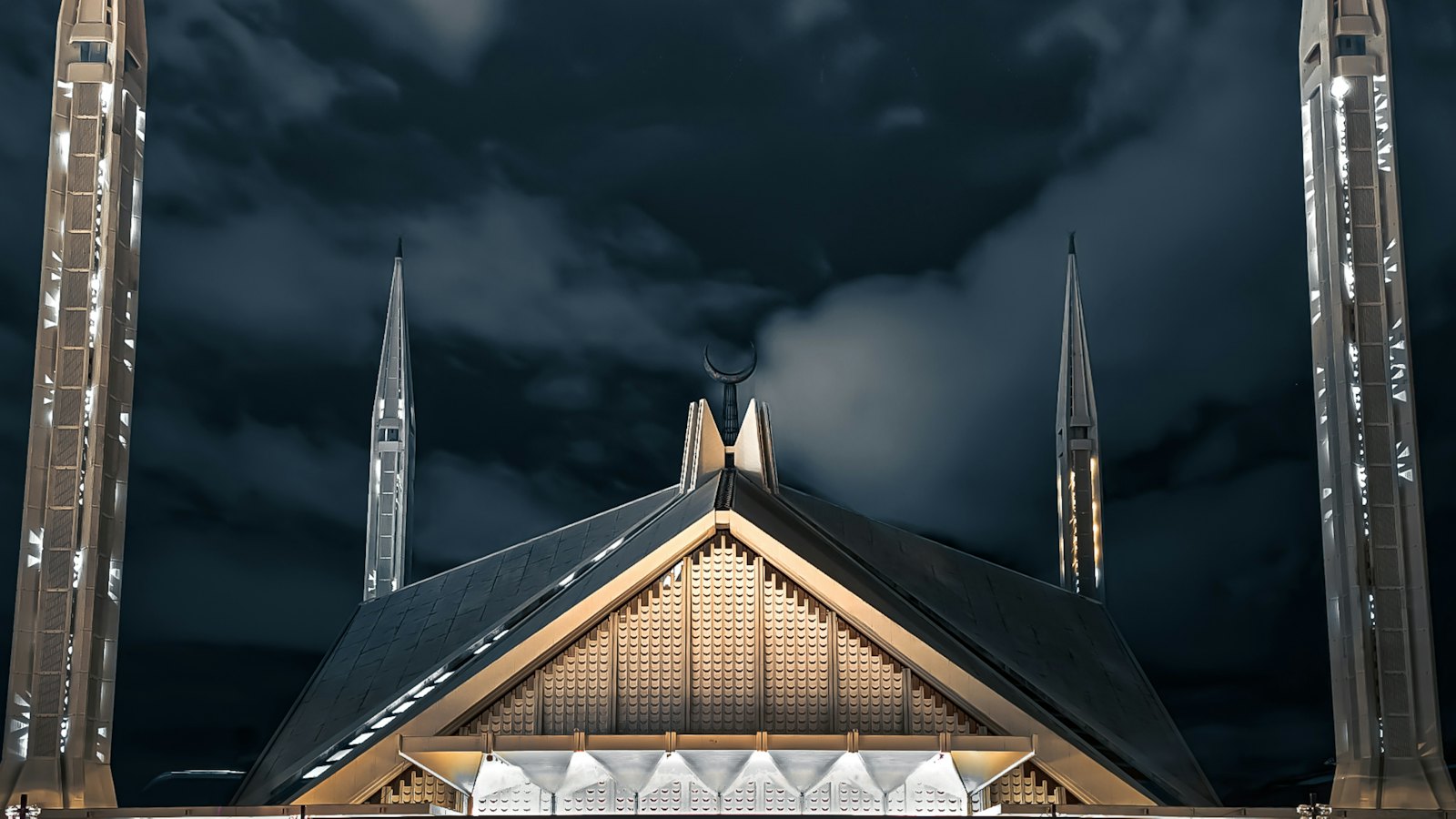
- Faisal Mosque: See Pakistan's celebrated modern mosque against the Margalla Hills. Wear modest clothing, respect worshippers and avoid prayer periods if visiting only for sightseeing.
- Pakistan Monument: Walk around the distinctive petal-shaped structure and enjoy the view over the planned capital from Shakarparian Hills.
- Pakistan Monument Museum: Use its exhibits to understand the independence movement and the country's subsequent development.
- Lok Virsa Museum: Explore displays of regional dress, music, crafts and household traditions from across Pakistan.
- Margalla Hills: Follow a recognised trail appropriate to your ability, take sufficient water and begin while daylight is plentiful.
- Daman-e-Koh: Visit this elevated lookout for a wide city panorama when the air is clear.
- Saidpur Village: Wander through a restored settlement containing historic religious buildings and several restaurants.
- Rawal Lake and Lake View Park: Enjoy waterside scenery, open space and activities aimed at families.
- Rawalpindi bazaars: Browse Raja Bazaar or Saddar for textiles, spices and household goods amid a livelier streetscape.
Cameras can attract attention near diplomatic, government or military property. Obey posted restrictions and immediately follow instructions from security officers.
What to eat: Pakistani dishes and dining districts
Restaurants in Islamabad serve cooking traditions from across Pakistan, while nearby Rawalpindi is especially good for informal food and long-established eateries. Servings are often generous, making shared dishes a sensible approach.
Chicken or mutton karahi is an essential introduction. It combines meat with tomato, chilli, ginger and spices in a metal cooking vessel. Chapli kebab is a broad, seasoned minced-meat patty linked with northwestern Pakistan. Rice lovers can look for biryani, pulao or the richer kabuli pulao. Nihari is a slowly cooked meat stew traditionally enjoyed in the morning, while haleem blends meat, lentils and grains into a dense savoury bowl. A local breakfast might include paratha, omelette, chickpeas or yoghurt, followed by sweet milk tea.
F-6 Markaz, F-7 Markaz and Blue Area have accessible restaurants and contemporary cafes. Casual food courts and sector shopping areas provide less formal choices. For kebabs, pulao, samosas and traditional sweets in a crowded market environment, travel into Rawalpindi.
Ask about chilli levels when ordering because descriptions do not always indicate heat. Choose sealed bottled water and favour freshly prepared dishes that arrive thoroughly hot over food left exposed.
Halal meals, mosques and prayer etiquette
Muslim visitors can navigate Islamabad easily because halal food is the everyday standard. Pork and alcohol rarely appear on normal restaurant menus. Travellers applying especially strict standards may still ask about the meat supplier, and labels on imported packaged products should be inspected.
Faisal Mosque functions both as the capital's leading mosque and as a major national landmark. Numerous neighbourhood mosques serve Islamabad and Rawalpindi, so congregational prayer is readily accessible. Prayer rooms are also often found at the airport, shopping centres and larger public venues. Their locations and access arrangements can change, so ask an information desk or security employee for the nearest musalla.
Ramadan substantially alters daily routines. Daytime dining becomes more limited, businesses may adjust their hours and restaurants grow busy after sunset. At mosques and other religious places, cover shoulders and legs, remove footwear when instructed and refrain from photographing people at prayer without consent.
A specialised halal restaurant app is rarely needed in the capital. Mapping services and recent diner reviews are more helpful for confirming current hours, accessibility and the availability of family seating.
Transport between Islamabad's sectors
The capital appears spacious and orderly, but its wide roads and separated sectors limit practical walking. Short walks within a markaz or commercial centre are manageable. Travelling between attractions usually requires public transport or a car, and several major roads are awkward to cross on foot.
Metrobus provides the lowest-cost travel along its established corridors, including routes connected with Rawalpindi and the airport branch. Expect fares of approximately PKR 50 to PKR 200, from under RM 1 to around RM 3. Stations do not serve every attraction directly, so carry small rupee notes and ask staff about platforms and transfers.
Grab is unavailable in Islamabad. Visitors often choose inDrive for convenient journeys between sectors, with the proposed price visible or agreed inside the app. Confirm the vehicle registration before getting in. A short city ride frequently costs PKR 400 to PKR 1,000, or about RM 6 to RM 15, while cross-city travel is dearer.
Traditional taxis operate throughout the area, but drivers may not use meters consistently. Establish the price in advance. Hiring a vehicle with a local driver can be efficient for a full day combining museums, the hills and Rawalpindi. Self-driving offers flexibility, but checkpoints, parking and unfamiliar driving practices make it unattractive for many short-stay visitors.
Suggested four-day itinerary
- Day 1: Check into a central sector and begin at Faisal Mosque. Continue uphill to Daman-e-Koh before sunset, then have karahi or kebabs at F-6 or F-7 Markaz.
- Day 2: Visit the Pakistan Monument and its museum in the morning before exploring the collections at Lok Virsa Museum. If conditions are pleasant, spend part of the afternoon beside Rawal Lake or at Lake View Park. Leave enough time to return before evening congestion.
- Day 3: Start a marked Margalla Hills trail early, selecting a route that matches your experience and fitness. After lunch and a rest, explore Saidpur Village and one of the nearby commercial centres. Stay away from isolated paths once daylight begins to fade.
- Day 4: Travel to Saddar or Raja Bazaar in Rawalpindi with few valuables and a secure cross-body bag. Look for textiles, spices and handicrafts, then try pulao for lunch. Allow extra time for the trip back into Islamabad.
Three complete days are sufficient for the leading capital attractions. A fourth prevents the hill walk and Rawalpindi visit from feeling rushed. Museum schedules can change, so confirm weekly closure days before deciding the final sequence.
Money and tips: cash, connectivity and precautions
Pakistan's currency is the Pakistani rupee, shown as PKR. PKR 65 to RM 1 is a convenient approximate calculation, though travellers should check the live rate before exchanging funds. Cash is still important at bazaars, modest restaurants, ticket counters and for transport. International cards may work in established hotels, malls and larger restaurants, but occasional payment failures make a cash reserve essential. Malaysian DuitNow QR is not a general payment option in Pakistan.
Purchase a local SIM at an authorised counter, where passport registration is normally required. Mobile coverage is generally reliable across central Islamabad but may weaken in the Margalla Hills. Travellers with compatible phones can consider an eSIM after checking the included network and data package.
Electrical outlets commonly accept Type C and Type D plugs, and the supply is 230V. Pack a universal adapter and a charged power bank. Tips are optional but appreciated. Rounding a small bill upward or leaving 5 to 10 percent for good service is appropriate.
Apply ordinary urban precautions. Keep away from demonstrations, military zones and restricted government compounds, and follow current security guidance. Guard belongings in busy markets, settle taxi and shopping prices beforehand, and never hike alone after dark. Winter fog and poor air quality can occasionally affect road travel, flights and hill views.
Before you go
- Best time to go
- October to November and March to April offer Islamabad's most agreeable weather. Autumn tends to provide comfortable temperatures and clearer conditions for exploring the Margalla Hills. Spring brings mild days and fresh greenery. Nights can be cold from December through February, while fog sometimes interferes with flights and road journeys. May and June are hot. The monsoon from July to September creates humidity, heavy showers and slippery trails. Events surrounding Pakistan Day in March and the Eid holidays can increase domestic demand or alter opening hours. Connecting flights may also become more expensive during Malaysian school breaks and year-end holidays, so travellers tied to those dates should reserve earlier.
- Visa for Malaysians
- Malaysian passport holders need a Pakistani eVisa to enter Pakistan, as of September 2026. The eVisa allows a stay of up to three months. Visa on arrival is not generally available for tourists, so apply online in advance through the Pakistan Online Visa System. The application typically needs a passport valid for at least six months, a digital photo, travel details and an online processing fee. Processing can take from a few days to a few weeks, so apply well ahead of your trip and follow the dates printed on the approved visa. Confirm the current fee, permitted stay and documentary requirements on the official visa website before applying, and check them again before you fly.
- Honest budget guide
- A sensible daily allowance is RM 180 to RM 350 per person, excluding international airfare. Basic guesthouses are often RM 60 to RM 130 nightly, while comfortable mid-range properties generally cost RM 180 to RM 350. Allow RM 35 to RM 80 each day for local food and another RM 20 to RM 60 for Metrobus fares and several app-based rides. The Kuala Lumpur airfare scan recorded a lowest one-way result of RM 1,224 and a median of RM 1,521. Including return flights, lodging, meals, city transport and straightforward sightseeing, four days may cost roughly RM 3,400 to RM 5,500 per traveller. These are planning estimates rather than fixed prices. Sharing accommodation and car journeys can reduce the final amount.
Frequently asked questions
Do Malaysians need a visa for Islamabad?
Yes. Malaysian passport holders need an eVisa to enter Pakistan, as of September 2026. The eVisa allows a stay of up to three months. Submit the application through the Pakistan Online Visa System well ahead of departure. Read the dates on the approval carefully and confirm the current requirements on the official site before flying.
Is there a direct flight from Kuala Lumpur to Islamabad?
A scheduled nonstop route is not offered, as of September 2026, so most trips need at least one stop. Available itineraries connect through cities such as Bangkok, Abu Dhabi, Doha or Dubai and usually take about 11 to 16 hours in total. Amaboxly's fare check found RM 1,224 as the lowest one-way result, using THAI through Bangkok for travel on 10 February 2027.
How many days are enough for Islamabad?
Three full days can include Faisal Mosque, the Pakistan Monument, Lok Virsa Museum, a hill viewpoint and a brief Rawalpindi outing. Choose four days if you want an unhurried Margalla Hills walk, time beside Rawal Lake and a longer bazaar visit. Further nights are mainly useful when using Islamabad as a starting point for destinations to the north.
What is the best month to visit Islamabad?
October and November are strong choices for pleasant temperatures, relatively clear views and walks in the Margalla Hills. March and April provide another comfortable window, with spring growth and moderate daytime weather. A low airfare should not be the only consideration because intense summer heat, monsoon downpours and winter fog can materially affect sightseeing and transport.
Is Islamabad Muslim-friendly?
Yes. Halal meals are the normal expectation, mosques are present across the city's sectors and prayer rooms are often provided at the airport and larger shopping centres. Faisal Mosque is both the principal landmark mosque and an active place of worship. During Ramadan, daytime food availability decreases and restaurants can become particularly crowded after sunset.
Can I use Grab in Islamabad?
No. Grab has no Islamabad service. Many residents and visitors instead use inDrive, where the proposed fare is displayed or negotiated through the application. Match the driver's identity and vehicle registration before entering. Metrobus costs less on routes it serves, while conventional taxis are also available if the price is agreed before the journey begins.
How much money do I need for four days in Islamabad?
Plan on approximately RM 3,400 to RM 5,500 per person for four days when return flights from Kuala Lumpur, accommodation, food, local travel and basic sightseeing are included. Without airfare, a working allowance of RM 180 to RM 350 per day is reasonable. Keep some Pakistani rupees because small restaurants, markets and transport providers frequently depend on cash.
Is Islamabad safe for Malaysian tourists?
Central Islamabad is relatively orderly, but visitors should follow current official advice and avoid protests, military installations and restricted government property. Choose registered taxis or verified app vehicles, secure valuables in Rawalpindi's crowded bazaars and use recognised routes in the Margalla Hills. Do not walk the trails alone after nightfall, and ask your accommodation about any temporary local restrictions.
Jom pergi
Ready to go Islamabad? Compare available flights and hotels for your dates. Check baggage, cancellation terms and the final total on the booking provider before paying.






