




On this page13 sections
- Overview
- Flying from KL: direct routes, KLIA terminal, fares
- Mumbai airport (BOM) to the city
- Where to stay in Mumbai
- Things to do in Mumbai
- What to eat: vada pav, chaat and Irani cafes
- Halal food and prayer spaces
- Getting around Mumbai
- Sample itinerary: 4 days in Mumbai
- Money, SIM and practical tips
- Bollywood, cricket and saree shopping
- Before you go
- FAQ
Mumbai is India's finance and film capital, a coastal megacity of Gothic railway stations, Art Deco sea fronts and snack stalls on every corner. For Malaysians it is closer than it feels: about five hours non-stop from KLIA Terminal 1, with a tourist e-Visa that currently costs nothing. Around one in five residents is Muslim, so kebabs, biryani and mosques are easy to find, and vegetarian food is everywhere. Below: direct flights and our KL fare scan, the metro from the airport, neighbourhoods to base yourself in, halal eating and prayer rooms, transport without Grab, four days of plans and the ringgit costs.
Flying from KL: direct routes, KLIA terminal, fares
Right now (late September 2026) two carriers link KLIA and Mumbai non-stop, both from KLIA Terminal 1:
- Malaysia Airlines: at least daily.
- Batik Air Malaysia: daily.
Flying time is about five hours into Chhatrapati Shivaji Maharaj International Airport (BOM), where all international flights use Terminal 2. Clocks in India run 2.5 hours behind Malaysian time, so an evening departure from KLIA can land before midnight in Mumbai.
Our own scan of KL fares, run in late September 2026, turned up one-way tickets from about RM 1,080 on THAI with a change in Bangkok. SriLankan through Colombo started around RM 1,200, and routings through Muscat near RM 1,280. No non-stop fares appeared in that scan, so price the two direct airlines yourself before accepting a long layover; comparison sites often show Batik Air as the cheaper of the pair.
A second airport, Navi Mumbai (NMI), opened in December 2025 far across the harbour, so check the airport code on any connecting itinerary.
Mumbai airport (BOM) to the city
Terminal 2 is in Sahar, Andheri East, about 28 km by metro from the city's southern tip. Rates are indicative (₹23.5 is roughly RM 1).
- Metro Aqua Line: the best value since the underground line was completed in October 2025. CSMI Airport T2 station connects to the terminal; follow the metro signs from arrivals. Official fares from T2: ₹30 to BKC, ₹50 to Worli, ₹60 to CSMT and ₹70 (about RM 3) to Churchgate or Cuffe Parade, the last stop near Colaba. Allow about an hour to the southern end.
- App cabs: Uber, Ola and Rapido all serve Terminal 2, with pickups in the multi-level car park; the exact bay differs by app, so follow the in-app directions. Fares swing with demand.
- Prepaid and metered taxis: book at the arrivals counters. The coupon or meter shows the fare, typically several hundred rupees to Colaba and more for air-conditioned cars. The drive can be under an hour late at night but much longer at rush hour.
- Bus and train: BEST route 308 runs from T2 to Andheri (East) station for Western line trains to Churchgate. Cheap, but hopeless with big suitcases at peak times. Premium air-conditioned buses also run to Colaba and BKC.
If someone loads your bags onto a trolley and then demands a "baggage fee", refuse. No such charge exists.
Where to stay in Mumbai
Mumbai is long, narrow and slow to cross by road, so sleep near what you came to see. Rooms are expensive by Indian standards.
- Colaba: the classic first-timer base at the southern tip, near the Gateway of India, the landmark Taj Mahal Palace hotel and the Causeway stalls. It also has a cluster of budget guesthouses.
- Fort and Churchgate: Victorian landmarks, the Kala Ghoda museums, Marine Drive, both big rail terminuses and several Aqua Line stations. Good for heritage fans and business trips, and a short cab ride from Crawford Market and the Mohammed Ali Road food streets.
- Bandra West: leafy lanes, cafes, sea promenades and plenty of nightlife, roughly halfway between the airport and South Mumbai. Suits repeat visitors and younger groups.
- Andheri East and BKC: practical for a one-night stopover near the airport or meetings in the Bandra Kurla Complex, both on the Aqua Line. Fine for sleeping, dull for a holiday.
Cheap hotels near railway stations are often very basic, so read recent reviews.
Things to do in Mumbai
- Gateway of India: the grand arch on the Colaba waterfront, liveliest at sunset and the departure point for harbour boats.
- Elephanta Caves: UNESCO-listed rock-cut temples to Shiva on an island about an hour by ferry from the Gateway of India waterfront. Expect around 120 steps. Closed on Mondays, and ferries to the island stop in the afternoon, so go in the morning.
- CSMT: the UNESCO-listed Victorian Gothic railway terminus, still packed with commuters.
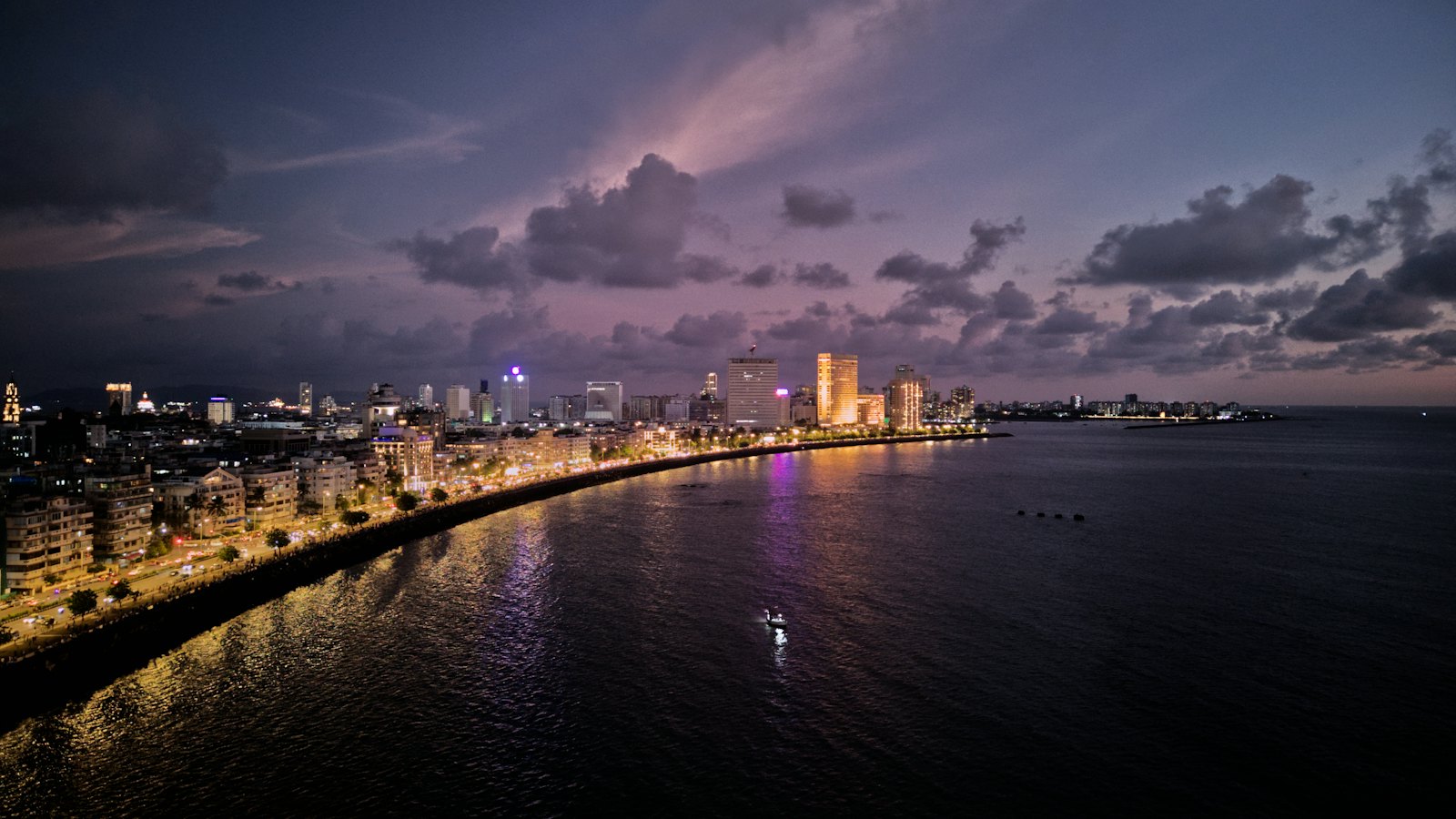
- Marine Drive and the Oval Maidan: the seafront curve and the Art Deco and Gothic facades facing each other across the Oval form a third UNESCO site. Walk it at dusk.
- Kala Ghoda: the city's main museum (Chhatrapati Shivaji Maharaj Vastu Sangrahalaya) and two major galleries sit a few streets apart.
- Haji Ali Dargah: a 15th-century shrine on an islet in Worli Bay, reached by a causeway that is only passable at low tide.
- Dhobi Ghat: the city's famous open-air laundry at Mahalaxmi.
- Bandra: cross the Bandra-Worli Sea Link, stroll Bandstand and visit Mount Mary basilica.
- Sanjay Gandhi National Park: forest, leopards and the ancient Kanheri Caves inside city limits.
What to eat: vada pav, chaat and Irani cafes
Street snacks are the soul of Mumbai food, and most of the famous ones are vegetarian.
- Vada pav: a spiced potato fritter in a soft bun with chutneys, the city's cheapest filling snack. Pick busy stalls.
- Pav bhaji: buttery mashed vegetable curry scooped up with toasted bread rolls.
- Bhel puri and sev puri: puffed rice or crisp puris with tamarind and green chutneys, classic at Girgaon Chowpatty or Juhu beach, followed by kulfi.
- Pani puri: hollow puris filled with spiced water, eaten in one bite. Stick to vendors using packaged water.
- Irani cafes: milky chai with bun maska (buttered bun) in the old Persian-style cafes of South Mumbai, some also serving Parsi dishes such as dhansak and berry pulao.
- Seafood: Konkan coast crab, prawns and pomfret curries.
- Indian-Chinese: a fiery Mumbai take on Chinese cooking, down to "Chinese bhel", and nothing like the Chinese food back home.
Malaysian Indians craving familiar breakfasts will find dosa (our thosai) and idli at the city's Udupi restaurants, with Matunga, home to a long-settled South Indian community, the classic area for it. Muslim readers should check the next section before ordering meat at non-Muslim places.
Halal food and prayer spaces
Mumbai is one of the easier big Indian cities for Muslim travellers: about 20% of residents were Muslim at the 2011 census, and Bohra, Khoja and Konkani Muslim communities go back centuries.
- Certification: there is no JAKIM equivalent. Halal certificates are optional and issued by private bodies such as Jamiat Ulama-e-Hind, and some outlets claim halal without one, so most Malaysian Muslims simply choose Muslim-owned kitchens and ask.
- Where to eat: the old Muslim quarter around Mohammed Ali Road and Bhendi Bazaar, known for its Bohri food lanes, is the best area for kebabs, biryani and sweets. In Colaba, Bademiya, a kebab stall behind the Taj hotel started in 1946 by Mohammad Yaseen, is a late-night institution; ask about halal status at any outlet if it matters to you.
- Beef: cattle slaughter has been largely banned in Maharashtra since 2015, so meat is usually mutton, chicken or fish.
- Vegetarian fallback: Udupi restaurants, thali houses and most street snacks are meat-free.
- Mosques: the Jama Masjid in Kalbadevi, near Crawford Market, dates from the early 1800s, and Muslim Pro or a similar app shows the nearest masjid and prayer times.
- Airport: Terminal 2 has prayer rooms open to all faiths in international departures after immigration, near gates 47 and 65.
Getting around Mumbai
Grab does not operate in India, so install Uber or Ola before you land (Rapido is another local option). The free m-Indicator app lists fares and timetables.
- Metro: the air-conditioned Aqua Line is the comfortable way to travel north to south, with fares from ₹10 to ₹70. Buy QR tickets at the station or in the official MetroConnect3 app; the line also accepts the National Common Mobility Card (NCMC), sold at some stations.
- Local trains: the Western line (from Churchgate), Central line (from CSMT) and Harbour line carry millions daily. Second class starts at about ₹5 and first class at about ₹50, and a one-day tourist ticket covers first class on all three lines. Avoid 8.30am to 10.30am heading south and 5.30pm to 8.30pm heading north, stay clear of the open doors, and women travelling alone can use the ladies' coaches.
- Taxis: hail metered cabs in South Mumbai and insist on the meter.
- Auto rickshaws: allowed only north of Bandra and Sion, so none in Colaba or Fort. The minimum fare was ₹26 in 2025.
- Buses: BEST buses are cheap but slow in traffic.
Sample itinerary: 4 days in Mumbai
Four days covers South Mumbai properly with one outing further north. Do not schedule Elephanta for a Monday.
- Day 1: Ride the Aqua Line south and check in around Colaba or Fort. Walk to the Gateway of India, browse Colaba Causeway and end with sunset on Marine Drive.
- Day 2: Take a morning ferry to the Elephanta Caves and return by mid-afternoon. Spend the rest of the day in Kala Ghoda's museums, then have dinner in the Mohammed Ali Road and Bhendi Bazaar food lanes.
- Day 3: Start at CSMT and Crawford Market, visit Haji Ali Dargah at low tide and look over Dhobi Ghat at Mahalaxmi. Cross the Sea Link to Bandra for an evening on Bandstand.
- Day 4: Visit the National Museum of Indian Cinema, make a last shopping run for sarees or spices, then take the metro back to Terminal 2, arriving three hours before an international departure.
With a fifth day, head north to Sanjay Gandhi National Park and the Kanheri Caves.
Money, SIM and practical tips
- Currency: the Indian rupee, at about ₹23.5 per ringgit in late September 2026, so a ₹100 note is a little over RM 4.
- Paying: cards (Visa, Mastercard) work in hotels, malls and chain restaurants, but carry small notes for taxis and stalls, and watch for a driver swapping your ₹500 note for a ₹100.
- QR payments: DuitNow cross-border QR does not work in India (PayNet lists only Singapore, Indonesia, Thailand and Cambodia). Locals pay by UPI QR, and visitors can try tourist UPI apps such as UPI One World, though cash is simpler.
- SIM and eSIM: Jio, Airtel and Vi sell prepaid SIMs against identity documents; a travel eSIM bought before departure is less hassle.
- Plugs: 230V, round-pin Type D and M sockets, so your square-pin chargers need an adapter.
- Tipping: not expected but appreciated; skip it when the bill already carries a service charge.
- Safety: Mumbai is generally safe for visitors, but pickpockets work trains, stations and markets.
- Scams: apply for your visa only on the official portal, never through agents promising speed, and at taxi ranks ask for the meter or a prepaid slip.
Bollywood, cricket and saree shopping
Plenty of Malaysians grew up on Hindi films, and Mumbai is where most of them are made.
- Cinema history: the National Museum of Indian Cinema in South Mumbai follows the industry from silent films to modern blockbusters. The studio lots of Film City are in the northern suburbs.
- Cricket: Wankhede Stadium, home of the Mumbai Indians IPL side, and the older Brabourne Stadium are both close to Churchgate.
- Sarees and textiles: Dadar is the everyday saree district, busy all year round. Bargain firmly.
- Markets: Crawford Market (Mahatma Phule Market) is good for fruit, spices and household goods, while Colaba Causeway has clothes, costume jewellery and souvenirs. The "pashmina" shawls there are rarely genuine.
Timing a Deepavali shopping trip? Diwali falls on 8 November in 2026, when the city is at its most crowded, so book rooms early.
Before you go
- Best time to go
- Mumbai is at its most pleasant from November to February, with drier air, warm days of about 31 to 34°C and nights that can dip to about 17°C. March to May is hot and increasingly humid, with highs in the low to mid 30s, and June to September brings the monsoon: heavy rain, flooded roads, disrupted trains and frequent weather alerts. Ganesh Chaturthi (14 September in 2026, around 4 September in 2027) fills the streets for ten days, ending with huge idols carried to the sea at Girgaon Chowpatty. Diwali lights up the city around 8 November 2026, and the nine-day Kala Ghoda Arts Festival starts in late January or early February. Ramadan in 2027 runs roughly 8 February to 8 March. Schools in most Malaysian states break from 5 December 2026 until the new year, right in peak season, so book early.
- Visa for Malaysians
- Malaysians must hold an e-Visa to enter India as of September 2026, though the 30-day tourist version costs nothing for Malaysian passports. Submit the application on indianvisaonline.gov.in between 120 days and four days before your arrival date. That 30-day visa allows multiple entries but cannot be extended. Longer multiple-entry versions cost US$40 (one year) or US$200 (five years), each capped at 180 days in India per calendar year, plus a 3% bank charge on paid fees. Have six months left on your passport when applying, at least two empty pages, and proof of a return or onward flight. Visa on arrival is not offered to Malaysians. Foreigners can file the e-Arrival Card online in the 72 hours before landing, and fingerprints are taken at immigration. Rules change, so check indianvisaonline.gov.in before you book.
- Honest budget guide
- Plan on roughly RM 150 to RM 600 per person per day on the ground in Mumbai, excluding flights, with your room taking the biggest share. Flights: our KL fare scan found one-way tickets from about RM 1,080 (THAI via Bangkok) at the time of writing, and no non-stop fares, so compare Malaysia Airlines and Batik Air too. Rooms are pricey by Indian standards: a basic guesthouse room runs about ₹2,000 to ₹3,500 (RM 85 to RM 150) a night and a decent mid-range hotel in South Mumbai ₹5,000 to ₹11,000 (RM 210 to RM 470). Food costs about ₹1,000 to ₹2,500 (RM 45 to RM 105) a day, and metro, trains and app cabs RM 15 to RM 45. A five-day, four-night trip at mid-range level, two to a room, lands around RM 3,000 to RM 4,300 each, assuming a return fare near twice that one-way price. Every figure here is indicative.
Frequently asked questions
Do Malaysians need a visa to visit Mumbai?
Yes. As of September 2026 you need an e-Visa before flying to India, but the 30-day tourist version is free for Malaysian passports. Apply online at indianvisaonline.gov.in four to 120 days before arrival, with six months left on your passport. India offers no visa on arrival to Malaysians, and the e-Arrival Card can be filed online within 72 hours of landing.
Is there a direct flight from KL to Mumbai?
Yes, two: Malaysia Airlines and Batik Air Malaysia fly non-stop from KLIA Terminal 1 to Mumbai's Terminal 2 in about five hours at the time of writing. One-stop tickets in our KL fare scan started near RM 1,080 one-way, but it caught no non-stop fares, so check the direct airlines' own prices.
Is Mumbai Muslim-friendly for Malaysians?
Reasonably, by Indian standards. Roughly one in five residents is Muslim, mosques are plentiful, and the Mohammed Ali Road and Bhendi Bazaar area is full of Muslim-run eateries. Few places show a halal certificate, since certification here is optional, so choose Muslim-owned places, ask, or eat vegetarian. Terminal 2 has prayer rooms after immigration.
How many days in Mumbai is enough?
Three to four days covers the Gateway of India, Elephanta Caves, CSMT, Marine Drive, Haji Ali and Bandra at a comfortable pace. Add a day for Sanjay Gandhi National Park, Bollywood sights or serious shopping. Road traffic eats time, so plan each day around one part of the city.
What is the best month to visit Mumbai?
November to February is the most comfortable stretch, with drier air and warm days of about 31 to 34°C. December is peak season and overlaps Malaysia's year-end school holidays, so book early. Skip June to September if you dislike heavy rain, because the monsoon regularly floods roads and disrupts trains.
What does a 5-day Mumbai trip cost from KL?
For a 5-day, 4-night mid-range trip with flights, sharing a room, allow around RM 3,000 to RM 4,300 each, assuming a return fare of roughly RM 2,200. On the ground, careful budget travellers manage on about RM 150 a day and mid-range travellers spend nearer RM 350 to RM 600, mostly because hotels are expensive. These figures are indicative.
Can I use Grab in Mumbai?
No. Grab runs only in Southeast Asia, not India. In Mumbai, Uber and Ola are the main ride-hailing apps, with marked app-cab pickup zones at the airport, and Rapido is a local alternative. Metered taxis, and auto rickshaws north of Bandra, fill the gaps.
What is the cheapest way from Mumbai airport to Colaba?
Take the Metro Aqua Line from CSMI Airport T2 station, which connects to the international terminal, to Cuffe Parade or Churchgate. The official fare is ₹70, about RM 3, and the ride takes roughly an hour with no traffic jams. A taxi or app cab costs many times more and crawls at rush hour.
Jom pergi
Ready to go Mumbai? Compare available flights and hotels for your dates. Check baggage, cancellation terms and the final total on the booking provider before paying.






