




On this page13 sections
- Overview
- Getting there from KL: non-stop flights to Kathmandu
- Tribhuvan Airport to Thamel and the city
- Where to stay in Kathmandu
- Things to do in Kathmandu
- What to eat in Kathmandu
- Halal food and prayer spaces
- Getting around Kathmandu
- Sample itinerary: 4 days in Kathmandu
- Money, SIM and practical tips
- Trekking, Pokhara and Everest views
- Before you go
- FAQ
Kathmandu is Nepal's capital and the gateway to the Himalaya, a valley city of stupas, pagoda temples and brick courtyards where daily worship spills onto the street. It is also close to home: non-stop flights leave KLIA every day and land under five hours later. Many Malaysians come for the heritage squares, momo and mountain views, then continue to Pokhara or a trek. This guide covers the visa on arrival, flights and fares from KL, the ride from Tribhuvan Airport, where to stay, halal food and mosques, and what the trip costs in ringgit.
Getting there from KL: non-stop flights to Kathmandu
Four airlines fly non-stop between KLIA and Tribhuvan International Airport (KTM) at the time of writing: Malaysia Airlines, Batik Air Malaysia, Himalaya Airlines and Nepal Airlines. Batik Air offers the most choice, with more than one departure on most days, Malaysia Airlines flies morning and evening on most days, Himalaya Airlines daily and Nepal Airlines a few times a week. The flight takes about 4 hours 40 minutes to just under 5 hours, and Nepal runs 2 hours 15 minutes behind Malaysia.
Malaysia Airlines and Batik Air both depart from KLIA Terminal 1. If you book Himalaya Airlines or Nepal Airlines, check the terminal on your e-ticket. AirAsia does not fly from KL to Kathmandu at the time of writing, so there is no Terminal 2 option on this route.
At the time of writing, Amaboxly's KL fare scan (data from 21 September 2026) shows the cheapest one-way seat at about RM 622 on SriLankan Airlines via Colombo, for a February 2027 date. Half the fares it logged were under roughly RM 880, and one-stop trips through Bangkok started near RM 1,380. Non-stop fares showed up too. The corridor is busy (Malaysia Airports counted close to 450,000 passengers on it in 2023), so book early for school holidays and Nepal's October and November festivals.
Tribhuvan Airport to Thamel and the city
The airport sits on the Ring Road about 6 km east of Thamel, a short distance slowed by heavy traffic. Prices are indicative, at about NPR 37.5 to RM 1.
- Prepaid taxi: pay at the counter inside arrivals before walking out. Roughly NPR 800 to 1,200 (about RM 21 to RM 32) to Thamel, Durbar Marg or Boudha. The receipt is the driver's payment, so hand it over only at your hotel.
- Kerbside taxi: drivers waiting outside will bargain, and you may shave a little off the prepaid rate, but it takes effort after a long flight.
- Ride-hailing: Pathao and inDrive both operate. inDrive accepts a foreign number, while Pathao normally needs a Nepali one, so buy a SIM in arrivals first.
- Hotel pickup: many hotels and trekking agencies include or sell transfers, the calmest choice for a late landing or a family with luggage.
- Sajha bus: Sajha has run a city bus route between the airport and Ratna Park in the centre. Local bus fares are only a few dozen rupees (around RM 1), but buses get packed, so skip them with suitcases.
Allow roughly 20 to 45 minutes to Thamel, depending on traffic. Trolley porters may walk you to your car and then ask for a tip, so keep small notes handy or push your own trolley.
Where to stay in Kathmandu
Your base shapes the trip more than your hotel does.
- Thamel: the traveller quarter north of the old city, a maze of guesthouses, trekking agencies, gear shops, money changers and restaurants of every cuisine. Loud until late, but the most convenient base for a first visit or before a trek.
- Durbar Marg and Lazimpat: wider roads, embassies and the larger international hotels, within walking distance of Thamel. The southern end of Durbar Marg is the closest area to the two main mosques by the Ghanta Ghar clock tower.
- Boudha: the area around Boudhanath Stupa, with Tibetan monasteries, rooftop cafes and simple guesthouses. Evenings are peaceful once day visitors leave, and it is nearer the airport but further from Durbar Square.
- Patan (Lalitpur): a separate old city across the Bagmati River, with its own Durbar Square, homestays in traditional Newari houses and slower streets. Good for couples and families.
Ignore anyone on the street offering to lead you to a hotel, because their commission lands on your bill. Book the first night before you arrive, ideally with a pickup.
Things to do in Kathmandu
The valley packs seven UNESCO-listed monument zones into a small area. Fees are the Nepal Tourism Board's foreign visitor rates, which Malaysians pay.
- Kathmandu Durbar Square: palaces, pagoda temples and the Kumari Ghar, home of the Living Goddess. About NPR 1,000 (RM 27).
- Swayambhunath: the hilltop stupa known for its monkeys and steep stairs, best at sunset. About NPR 200.
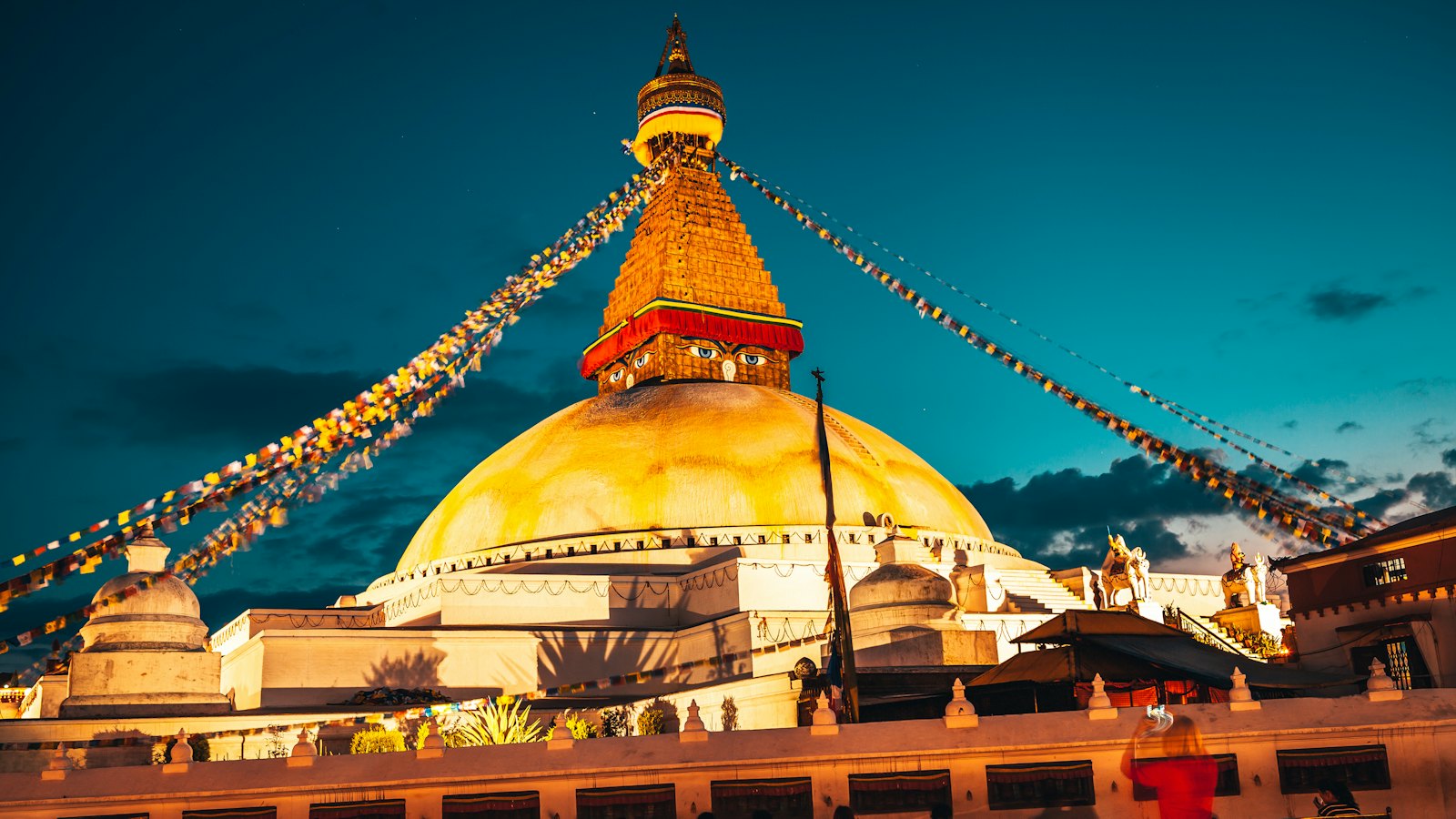
- Boudhanath: one of the largest stupas in the world. Walk the clockwise kora with pilgrims at dusk. About NPR 400.
- Pashupatinath: Nepal's holiest Hindu temple, on the Bagmati River. Non-Hindus view it from the outer grounds and far bank, and open-air cremations happen here, so be discreet with cameras. About NPR 1,000.
- Patan Durbar Square and Patan Museum: the valley's finest metalwork and woodcarving. About NPR 1,000.
- Bhaktapur: a medieval town of brick squares and pottery, famous for juju dhau (king curd). US$18 or NPR 1,800.
- Garden of Dreams: a restored neo-classical garden beside Thamel. About NPR 400.
- Nagarkot: a hill town 32 km away for Himalayan sunrises, a short hike from Changu Narayan temple.
- Thamel and Asan: pashmina shawls, singing bowls, tea and trekking gear. Bargain politely.
What to eat in Kathmandu
Nepali food is filling and built on rice, lentils and spice, while the valley's Newari cooking adds dishes found nowhere else. Muslim readers should read the halal section first, as most meat here is buffalo, goat or chicken that is not halal.
- Momo: dumplings filled with buffalo ("buff"), chicken or vegetables, steamed, fried or swimming in spicy broth as jhol momo.
- Dal bhat tarkari: the everyday set of rice, lentil soup, vegetable curry and pickle. Local eateries usually refill the rice and dal.
- Newari dishes: bara (lentil patty), chatamari (thin rice crepe with toppings), yomari (sweet steamed dumpling) and samay baji, a festival platter of beaten rice and sides. Look in Patan, Bhaktapur and around Asan.
- Tibetan food: thukpa and thenthuk noodle soups around Boudha.
- Sweets and drinks: sel roti (a fried rice-dough ring) at festivals, juju dhau in Bhaktapur, milky spiced chiya and lassi.
Tourist restaurants usually add a 10% service charge plus 13% VAT. Drink bottled or filtered water, and skip ice and raw salads where you are unsure.
Halal food and prayer spaces
Kathmandu is not a Muslim-majority city. Nepal's 2021 census counted Muslims at about 5 percent of the population, and almost all of them live in the southern Terai, so in the capital they are a small minority. Halal meals exist but need planning.
- Certified halal: we could not find a halal certification scheme in Kathmandu that Malaysians can rely on, so do not expect familiar logos.
- Muslim-owned: the most dependable option. Some Indian, Pakistani, Kashmiri and Turkish-style restaurants in Thamel and the old city are Muslim-run, but lookalikes are not, and small places come and go. Check recent reviews and ask the owner.
- "No pork" is not halal: Nepali kitchens favour buffalo, goat and chicken, none slaughtered halal by default, and many tourist restaurants also serve pork and alcohol. Vegetarian dal bhat, veg momo, paneer curries and Tibetan vegetable soups are safe fallbacks.
For prayers, the city's two best-known mosques stand close together at the southern end of Durbar Marg by the Ghanta Ghar clock tower: the Nepali Jame Masjid and the Kashmiri Masjid (Pancha Kashmiri Takiya Masjid), one of Nepal's oldest mosques, first built for Kashmiri traders who settled in the valley centuries ago. Both are roughly 15 to 20 minutes on foot from Thamel. We could not confirm a prayer room at Tribhuvan Airport, so pack a travel mat, and use Muslim Pro for prayer times and qibla.
Getting around Kathmandu
There is no metro or city rail, so you will mix walking, taxis, apps and the odd bus, paying cash on buses and in taxis.
- Walking: the best way through Thamel, Asan and the Durbar Square lanes. Pavements are patchy and motorbikes squeeze past, so stay alert.
- Taxis: small cars with a roof sign, hailed on the street or parked near main junctions. Drivers often quote a fixed price instead of using the meter, so agree the fare first. As a rough guide, about NPR 500 (RM 13) from Thamel to Patan and NPR 1,500 (RM 40) to Bhaktapur. No tip expected.
- Ride-hailing: Grab does not operate in Nepal. Pathao (cars and motorbike taxis) and inDrive are the local apps and usually undercut street taxis.
- Buses: Sajha buses run fixed routes on main roads, and the Sajha Plus app shows where buses are in real time. Packed microbuses and small electric tempos charge about NPR 20 to 30 a ride.
- Rickshaws: a slow, fun way through old-city lanes. Agree the price first.
- Car with driver: easy to book through hotels for Nagarkot, Bhaktapur or a valley day tour.
Steer clear of demonstrations, which can block roads without warning.
Sample itinerary: 4 days in Kathmandu
Four days covers the valley's highlights with a Himalayan sunrise thrown in. See temples early, before heat, crowds and haze build.
- Day 1: Land at KTM and check into Thamel. Relax in the Garden of Dreams, change money, buy a SIM and keep dinner simple with momo and dal bhat.
- Day 2: Walk south through Asan and Indra Chowk to Kathmandu Durbar Square, continue to the mosques by Ghanta Ghar for Zuhur (or Friday prayers), then taxi to Swayambhunath for sunset over the city.
- Day 3: Start at Pashupatinath during the morning riverside rituals, move on to Boudhanath for a rooftop lunch and a kora, and end in Patan at the Durbar Square and museum.
- Day 4: Leave before dawn for the Nagarkot sunrise, drop down to Changu Narayan, then spend the afternoon in Bhaktapur with a clay pot of juju dhau.
With more time, add Pokhara, an Everest mountain flight or a trek, and keep a spare day before flying home.
Money, SIM and practical tips
Nepal uses the rupee (NPR). At the time of writing Nepal Rastra Bank quotes about NPR 37.5 to RM 1 and NPR 153 to the US dollar.
- Cash and cards: cash rules outside hotels and bigger restaurants. ATMs that take foreign cards charge a fee of at least around NPR 500 per withdrawal, and single withdrawals are usually capped somewhere between NPR 20,000 and 40,000 depending on the bank, so withdraw less often. US dollars are the easiest cash to change, and Thamel's money changers are quick.
- DuitNow QR: not an option. PayNet lists cross-border QR payments for Singapore, Indonesia, Thailand and Cambodia, and Nepal is not among them.
- Leaving: change any leftover rupees before you fly home, and keep your exchange and ATM receipts, which the airport bank counter may ask to see.
- SIM and eSIM: Ncell sells SIM cards at the airport, and Nepal Telecom SIMs are sold across the city. Bring your passport and a spare passport photo. Many international eSIM providers also sell Nepal plans, so check coverage before you buy.
- Power: sockets take round pins (types C, D and M) at 230V, and Malaysian square-pin plugs will not fit without an adapter.
- Tipping: tourist restaurants usually add a service charge and taxi drivers expect nothing, but trekking guides and porters are normally tipped.
- Safety: mind pickpockets in Thamel and festival crowds, avoid protests, and expect occasional strikes (bandh) that halt shops and transport. The city lies in an earthquake zone, and drink spiking has been reported, so never leave a drink unattended.
- Scams: decline dance-bar invitations from strangers and ignore hotel touts.
Trekking, Pokhara and Everest views
For many visitors, Kathmandu is the start of a trek, and the rules have tightened.
- Guides are compulsory: under the Nepal Tourism Board's revised rules in force since 31 March 2023, foreigners trekking the listed protected-area routes must be accompanied by a licensed guide and carry a TIMS card issued through a registered agency (NPR 2,000 for non-SAARC visitors). The list includes Poon Hill and Annapurna Base Camp, Everest Base Camp, Langtang and Manaslu.
- Pokhara: the lakeside base for Annapurna treks, reached by a short domestic flight or a long day on a tourist bus.
- Everest from the air: several domestic airlines run early-morning mountain flights along the Himalaya, weather permitting, so keep a spare morning. The UK's Air Safety List currently includes every Nepali airline.
- Easier views: on clear mornings the hill town of Nagarkot shows wide mountain panoramas without a trek. October and November are the most reliable.
- Recent floods: a deadly flash flood on 26 August 2026 struck Rasuwa district near the China border, the Langtang side, with damage also in Gorkha, Nuwakot and Dhading. Roads and trails there may stay unstable, so check conditions with your agency.
Buy insurance that covers trekking altitude and helicopter evacuation, and plan acclimatisation days above about 3,000 metres.
Before you go
- Best time to go
- October to early December is the best time for Kathmandu, with clear post-monsoon skies, mild days and the sharpest Himalayan views; March to May comes second. Dashain, Nepal's biggest festival, falls between 11 and 24 October 2026 and peaks on Vijaya Dashami (20 October), when families head home and many shops close. Tihar follows with oil lamps for Laxmi Puja on 8 November and Bhai Tika on 11 November. December to February brings sunny days but nights near freezing, and spring adds rhododendrons, though skies are usually less clear than after the monsoon. The June to September monsoon brings most of the year's rain and landslides that close roads. The Malaysian school year ends with a long break from 4 December (Kumpulan A states) or 5 December (Kumpulan B) until 31 December 2026, so lock in flights early.
- Visa for Malaysians
- As of September 2026, Malaysians need a tourist visa for Nepal but can get it on arrival at Tribhuvan International Airport: US$30 for 15 days, US$50 for 30 days or US$125 for 90 days (about RM 120, RM 205 or RM 510). Fill in the online form on the Department of Immigration's Nepali Port site up to 15 days before landing, or use the airport kiosks, then pay at the bank counter by card or cash, with US dollars the preferred cash. The Department also sells an eVisa online in advance, paid by card. Visas allow multiple entries, stays are capped at 150 days a year, children under 10 go free, and passports need six months' validity. Confirm the rules on immigration.gov.np before you fly.
- Honest budget guide
- Plan on roughly RM 120 to RM 330 a day per person in Kathmandu, excluding flights, with your room making most of the difference. Flights start around RM 622 one-way in our KL fare scan at the time of writing (SriLankan via Colombo), which puts a return built from two single tickets at about RM 1,250 or more; non-stop fares also appeared in the scan. The 15-day visa adds about RM 120. Guesthouse rooms cost around US$10 to US$25 a night (RM 40 to RM 100), and a good mid-range hotel US$30 to US$70 (RM 120 to RM 290). Food runs RM 30 to RM 80 daily, and getting around about RM 15 to RM 40. A mid-range 5-day, 4-night trip, two people sharing a room, works out at about RM 2,500 to RM 3,500 each including flights. All figures are indicative.
Frequently asked questions
Do Malaysians need a visa for Nepal?
Yes, but it is simple. As of September 2026, Malaysians get a tourist visa on arrival at Kathmandu airport for US$30 (15 days), US$50 (30 days) or US$125 (90 days). Fill in the online form on the Department of Immigration website before flying (or buy the eVisa), carry some US dollars as a backup to your card, and make sure your passport has six months' validity.
Is there a direct flight from KL to Kathmandu?
Yes. At the time of writing, Malaysia Airlines, Batik Air Malaysia, Himalaya Airlines and Nepal Airlines fly non-stop between KLIA and Kathmandu in about 4 hours 40 minutes to just under 5 hours. Malaysia Airlines and Batik Air use KLIA Terminal 1; for the Nepali airlines, check your e-ticket. AirAsia does not fly the route at present.
Is Kathmandu Muslim-friendly?
Partly. Muslims are a small minority in Kathmandu and certified halal restaurants are hard to find, but some Muslim-owned Indian, Pakistani and Kashmiri-style places operate in Thamel and the old city. The Nepali Jame Masjid and Kashmiri Masjid near the Ghanta Ghar clock tower hold daily and Friday prayers, and vegetarian food is everywhere.
How many days in Kathmandu is enough?
Three to four days covers Durbar Square, Swayambhunath, Boudhanath, Pashupatinath, Patan, Bhaktapur and a Nagarkot sunrise. Many visitors add Pokhara or a trek, stretching the trip to one or two weeks. Keep a buffer day before flying home.
What is the best month to visit Kathmandu?
October and November, for clear skies, mild weather and the best mountain views, though Dashain and Tihar fall then and hotels fill up. March and April are a good second choice, while June to September is the wet monsoon, when the peaks are usually hidden.
How much does 5 days in Kathmandu cost for a Malaysian?
Roughly RM 2,500 to RM 3,500 per person for five days and four nights on a mid-range trip, covering flights, the US$30 visa, a shared room, food, transport and entry fees. Backpackers spend much less, and a trek or mountain flight adds more. Treat these figures as indicative.
Can I use Grab in Kathmandu?
No, Grab does not operate in Nepal. Use Pathao for cars and motorbike taxis, or inDrive, where you offer a fare and drivers accept or counter. inDrive works with a Malaysian number, while Pathao usually needs a Nepali SIM, sold at the airport.
Do I need a guide to trek to Annapurna Base Camp or Everest Base Camp?
Yes. Under Nepal Tourism Board rules in force since 31 March 2023, foreign trekkers on the listed routes, including Poon Hill and Annapurna Base Camp, Everest Base Camp and Langtang, must trek with a licensed guide and carry a TIMS card costing NPR 2,000 for non-SAARC visitors. A registered agency arranges both.
Jom pergi
Ready to go Kathmandu? Compare available flights and hotels for your dates. Check baggage, cancellation terms and the final total on the booking provider before paying.






